Now comes one of the easiest tricks: lift the watermelon. Compare it with other melons that are about the same size. The heavier one is often the better choice because extra weight can indicate a higher water content, which usually means a juicy and refreshing interior.
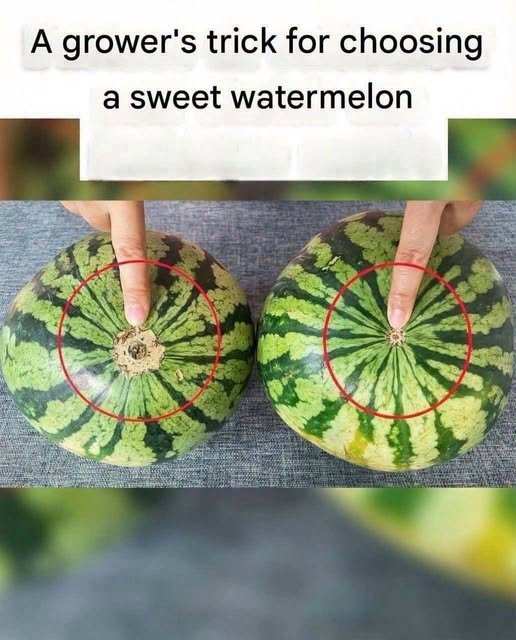
If the watermelon still has part of its stem attached, take a quick look at it. A dry, brownish stem can be a useful sign that the fruit was mature when harvested. A green stem, however, may suggest that it was picked before reaching full maturity.
You may also notice that some watermelons have a slightly dull, rather than shiny, appearance. While this isn’t a guaranteed test, a mature melon can develop a less glossy rind. Use this clue alongside the field spot, weight, firmness, and stem instead of relying on it alone.
Remember, no single trick guarantees a perfect watermelon every time. However, combining several signs can dramatically improve your chances of taking home a sweet, ripe, and juicy fruit.
Once you’ve made your choice, chill the watermelon thoroughly before cutting it. Then slice it open, take that first crisp bite, and enjoy the reward of spending a few extra seconds choosing wisely at the market.