
In those quiet, breathless moments between fear and action, even the smallest decisions can feel important.
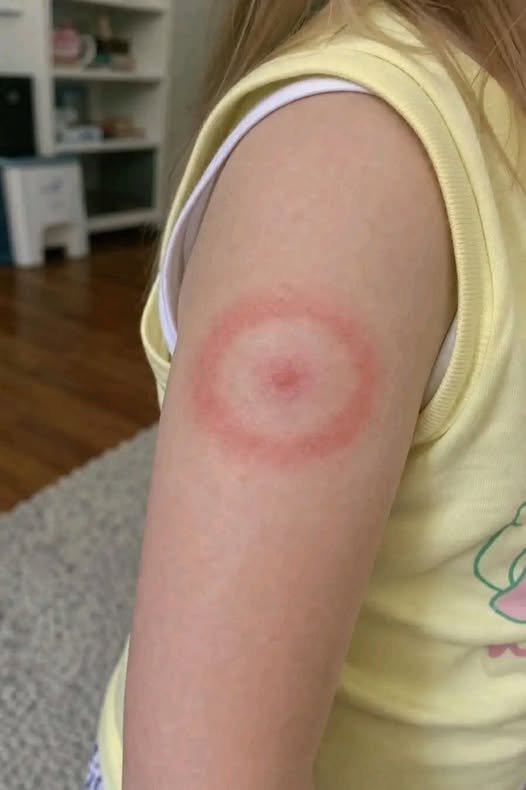
You steady your hands—not because you’re no longer afraid, but because your child needs you to stay calm enough to observe what is happening. Instead of allowing panic to take over, you start paying attention. You take photos. You trace the edge of the redness. You watch carefully for changes.
That simple ink line becomes a small anchor of control in a situation that otherwise feels completely uncertain.
As the hours pass, you begin to understand that courage isn’t about having no fear. It’s about moving carefully despite it.
You listen to your child’s laughter. You feel their warmth. And you try to balance those reassuring signs against every frightening possibility running through your mind.
Eventually, you have to make a decision—whether that means seeking urgent medical attention or breathing a little easier while continuing to monitor the situation.
Whatever the outcome, arriving prepared with photos, observations, and a clear timeline can help you communicate what you’ve noticed to a healthcare professional.
You didn’t look away.
You stayed close. You paid attention. And you chose thoughtful action instead of letting fear make every decision for you.
Sometimes, that is one of the most important things a parent can do when the situation is uncertain.