
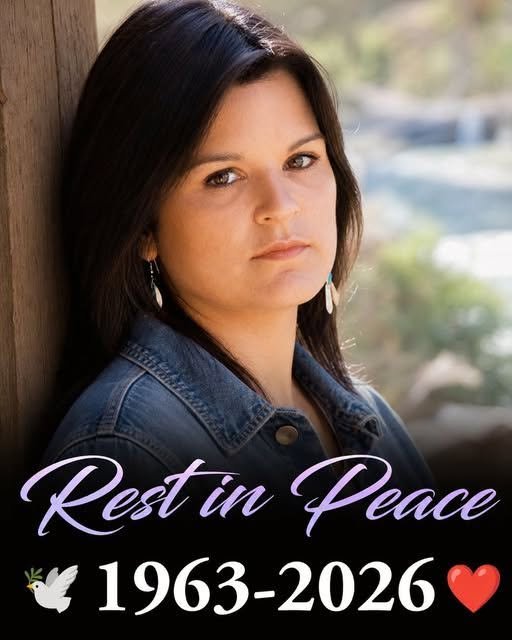
The impact was sudden and devastating. One moment, Georgina Lightning was doing what she had spent much of her life doing — documenting and celebrating the strength, talent, and spirit of Indigenous people. The next, she was gone.
The beloved actor, filmmaker, mother, and passionate advocate for Indigenous stories died at the age of 63 following a tragic incident at a rodeo in Alberta. Her death has left family, friends, fellow artists, and countless people who admired her work mourning an extraordinary woman whose influence reached far beyond the screen.
Lightning’s final hours were spent close to a world she understood deeply: Indigenous culture, community, and storytelling. She had been documenting the powerful Indian Relay races, where riders and horses compete in a fast-paced and demanding display of skill and tradition.
It was a fitting setting for someone whose life had been dedicated to bringing Indigenous voices and experiences into the spotlight.
A Life Dedicated to Indigenous Stories
Georgina Lightning was much more than an actor. Throughout her career, she became an important figure in Indigenous film and television, using her creative work to tell stories that were often overlooked or pushed to the margins.
From her early acting roles to her work behind the camera, Lightning consistently challenged the industry to make more room for Indigenous voices. She understood the importance of representation — not simply seeing Indigenous people appear on screen, but allowing them to tell their own stories in their own way.
Her career became especially significant when she made history as the first North American Indigenous woman to direct a major feature film. That achievement was not just a personal milestone. It represented a breakthrough for generations of Indigenous artists who had struggled to find opportunities within the film industry.
Lightning did not wait for someone else to give her permission to tell the stories she believed deserved to be heard. She created opportunities for herself and, just as importantly, helped create opportunities for those who came after her.
Breaking Barriers and Opening Doors
For many aspiring Indigenous actors and filmmakers, Lightning represented something bigger than a successful career. She was proof that it was possible to challenge established expectations and create a place for Indigenous stories in mainstream entertainment.
She pushed through barriers that had existed for years and demonstrated that Indigenous filmmakers could take control of their own narratives. Her work helped show audiences that Indigenous stories could be powerful, complex, emotional, and universal while still remaining deeply connected to culture and community.
But perhaps one of her greatest contributions was the way she supported other people. Lightning was known not only for what she accomplished herself, but also for the encouragement and mentorship she offered to younger artists.
She kicked doors open — and then made sure others had a chance to walk through them.
A Mother, Mentor, and Friend
Behind the accomplishments and public recognition was a woman whose family and relationships meant everything to her.
Her daughter, Crystle, has shared the pain of losing her mother, offering a deeply personal glimpse into the enormous loss faced by the family. The grief surrounding Lightning’s death has also been reflected in tributes from friends, colleagues, and people who worked alongside her throughout her career.
These tributes paint a picture of someone who was deeply loved not simply because of her achievements, but because of the person she was.
For those closest to her, she was a mother, friend, mentor, colleague, and source of strength. Her influence was felt in everyday relationships just as strongly as it was in her professional work.
A Tragic Ending to an Extraordinary Life
The circumstances surrounding Lightning’s death have made the loss especially difficult to comprehend. She was still actively involved in the work and cultural storytelling that had defined so much of her life when the tragedy occurred.
Her death at a rodeo in Alberta was sudden and heartbreaking. Yet while the tragedy has brought her life to an abrupt end, it does not erase everything she accomplished.
In many ways, Lightning’s life tells a much larger story — one about persistence, representation, cultural pride, and the importance of having the courage to tell stories that matter.
Her Legacy Will Continue
Georgina Lightning may no longer be here to tell those stories herself, but the path she created remains.
Her legacy can be seen in the Indigenous filmmakers she encouraged, the actors who found inspiration in her career, and the young people who were able to imagine themselves working in an industry that once offered them far fewer opportunities.
Every story that is told because someone was inspired by Lightning carries a small part of her legacy forward.
That may ultimately be one of the most meaningful ways to remember her. Not simply by looking back at what she achieved, but by recognizing how many people she helped move forward.
Her work opened conversations. Her determination challenged barriers. Her commitment to Indigenous representation helped create space for voices that deserved to be heard.
Remembering Georgina Lightning
The loss of Georgina Lightning is immeasurable for her family, community, and the many people touched by her work. At 63, she leaves behind a body of work and a legacy that will continue to inspire future generations.
Her story is ultimately bigger than the tragedy that ended her life. It is a story of a woman who refused to be invisible, who believed Indigenous stories deserved to be told, and who spent her career helping make that possible.
As her loved ones grieve and tributes continue to emerge, Georgina Lightning’s voice can still be heard through the stories she helped bring to life.
Her life may have ended suddenly, but the path she carved for others will remain.
Note: All images used in this article are AI-generated and intended for illustrative purposes only.