
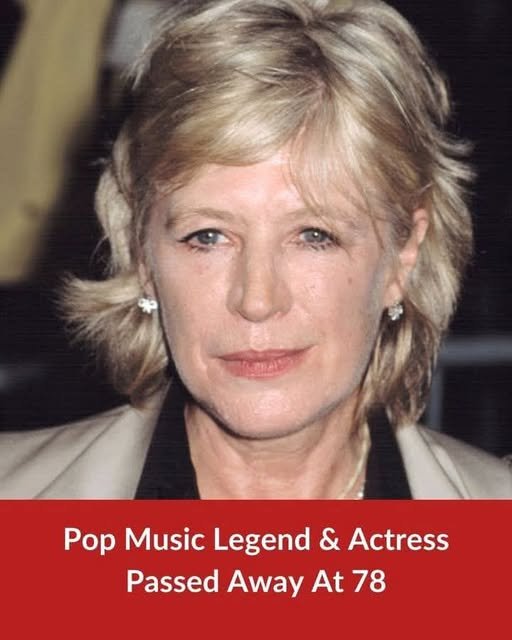
Marianne Faithfull, the iconic singer, songwriter, and actress who became one of the most recognizable voices of the 1960s, has passed away at the age of 78. Her death was confirmed by a spokesperson, with the news reported by the Daily Mail. Tributes have since poured in for the celebrated British artist, whose career stretched across more than six decades.
Faithfull was perhaps best known around the world for her early hit As Tears Go By, a song written by Mick Jagger and Keith Richards of The Rolling Stones. Her distinctive voice, elegant presence, and ability to reinvent herself helped make her a lasting figure in popular music.
Her career, however, went far beyond music. Faithfull also established herself as an actress, appearing in films and theatre productions throughout her life. From the excitement of 1960s London to the more challenging periods of her later years, she continued to create, perform, and leave her mark on the entertainment world.
Marianne Faithfull Dies Peacefully Surrounded By Family
A statement announcing her death described the moment as one of deep sadness and said that Faithfull passed away peacefully in London while surrounded by her loving family.
“It is with deep sadness that we announce the death of the singer, songwriter and actress Marianne Faithfull.”
The statement added that she would be “dearly missed,” a sentiment shared by fans, fellow musicians, actors, and many others who admired her remarkable career.
A Remarkable Six-Decade Career
Marianne Faithfull was born on December 29, 1946, in Hampstead, London. She grew up in a family with an aristocratic background. Her father was a British Army officer, while her mother was a ballerina of Austro-Hungarian descent.
From an early age, Faithfull developed a strong interest in literature, music, and the arts. She attended St Joseph’s Convent School, where those interests continued to grow. Her life took a dramatic turn in 1964 when she was discovered at a party attended by members of The Rolling Stones.
Music manager Andrew Loog Oldham recognized her potential and helped introduce her to the music industry. That same year, Faithfull released As Tears Go By, written by Mick Jagger, Keith Richards, and Oldham. The emotional song quickly became a major success and launched her into the spotlight.
Becoming A Star Of The 1960s
Faithfull soon became a familiar face in the vibrant London music scene of the 1960s. Her soft, distinctive vocals and striking appearance made her stand out from many of her contemporaries.
Her relationship with Rolling Stones frontman Mick Jagger also attracted enormous public attention. As her fame grew, Faithfull became closely associated with the cultural changes and excitement of the decade.
However, life in the spotlight was not always easy. The intense pressures of celebrity life, combined with personal struggles and addiction, eventually affected both her career and her health. During the 1970s, her professional life entered a difficult period, and she faced serious challenges away from the stage.
A Powerful Comeback With Broken English
Despite the hardships she experienced, Faithfull eventually made one of the most remarkable comebacks of her career.
In 1979, she released Broken English, an album that presented a very different side of the artist. The record featured a darker, edgier sound and reflected many of the experiences she had endured.
Her voice had also changed significantly. The soft sound of her early recordings had developed into a deeper, huskier, and more emotional voice. Rather than hiding those changes, Faithfull embraced them, turning her difficult experiences into part of her artistic identity.
Broken English helped redefine her career and earned widespread critical recognition. It demonstrated that Faithfull was not simply a star from the 1960s but an artist capable of evolving and remaining relevant across generations.
Faithfull’s Success In Film And Theatre
Music was only one part of Marianne Faithfull’s creative life. She also enjoyed a successful career as an actress, working in both film and theatre.
One of her notable film appearances came in The Girl on a Motorcycle in 1968. Decades later, she appeared in the 2006 historical film Marie Antoinette, showing her ability to take on very different roles throughout her career.
Faithfull also performed in numerous theatre productions. Her work on stage further demonstrated her versatility and her willingness to explore different forms of artistic expression.
Continuing To Make Music
Faithfull continued recording music long after her early success. Her later albums showed an artist who was still willing to experiment and explore new sounds.
Among her later projects were Before the Poison, released in 2004, and Give My Love to London, released in 2014. These records introduced her distinctive voice and songwriting to newer audiences while maintaining the qualities that had made her famous decades earlier.
Her ability to reinvent herself became one of the most important parts of her legacy. Rather than allowing her early fame to define her completely, Faithfull continued developing as an artist and confronting the realities of her life through her work.
A Life Marked By Strength And Resilience
Throughout her later years, Faithfull faced a number of health challenges. In 2020, she suffered a severe case of COVID-19 and spent time receiving treatment. Even after facing serious health difficulties, she remained connected to the creative world and continued to be admired by her fans.
Her life was filled with extraordinary highs and difficult lows, but her willingness to keep moving forward became an important part of her story. She transformed personal struggles into powerful artistic expression and remained an influential figure in music and culture.
Remembering Marianne Faithfull
Marianne Faithfull leaves behind a legacy that extends far beyond one hit song or one era of popular music. She was a singer, songwriter, actress, and survivor who continually reinvented herself throughout a career lasting more than 60 years.
From her breakthrough with As Tears Go By to the raw power of Broken English and her later work in music, film, and theatre, Faithfull remained an unmistakable presence in the entertainment industry.
Her distinctive voice and extraordinary story touched generations of listeners and viewers. As tributes continue to emerge, Marianne Faithfull will be remembered not only as a celebrated star of the 1960s but also as an artist who faced adversity, rebuilt her career, and continued creating on her own terms.
Her influence on music, film, and popular culture will continue to be remembered for years to come.
Note: All images used in this article are AI-generated and intended for illustrative purposes only.