
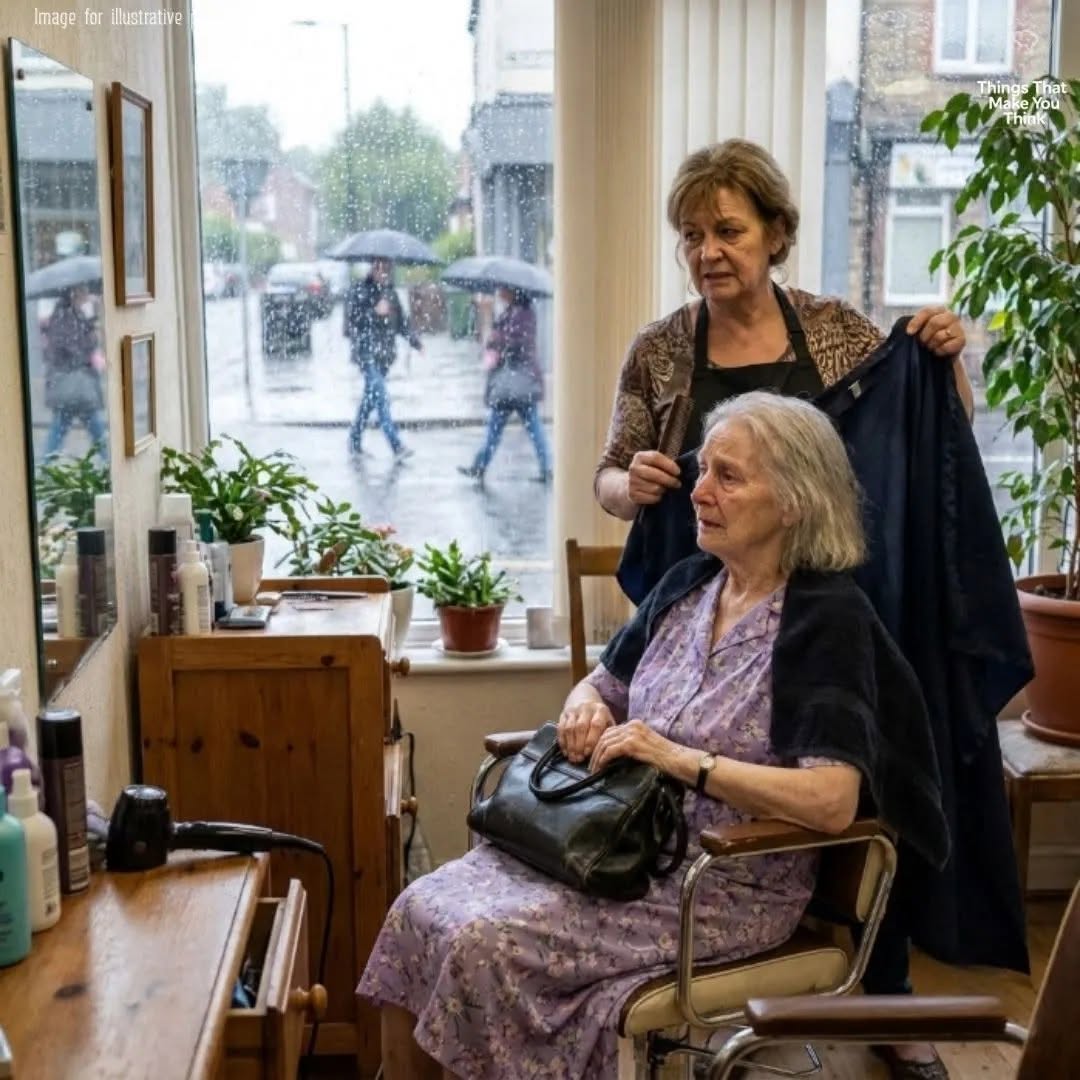
“Please don’t make me look sick.”
Those were the first, fragile words Evelyn Cross spoke when she slowly lowered her tiny frame into Mara Bennett’s salon chair. It was a bleak, rainy Saturday morning, the kind that makes the world feel small and quiet. Mara stood behind her, the protective salon cape still hanging open in her hands, frozen by the weight of the request.
Evelyn was eighty-one years old. She was delicate, pale, and dressed meticulously in a soft lavender dress hidden beneath a worn, tan raincoat. Her silver hair had grown thin around her temples, a silent testament to the battles her body was fighting. Her hands trembled slightly as she rested a small, black clutch purse in her lap.
Mara looked into the mirror, meeting the older woman’s anxious gaze. “I don’t see a sick woman,” Mara said, her voice a gentle, steady anchor. “I see somebody going somewhere important.”
A fragile smile broke across Evelyn’s face, though her eyes immediately welled with tears. “My granddaughter is getting married this afternoon.”
The salon was nearly empty, filled only with the rhythmic tapping of rain against the front glass and the faint, melancholic twang of an old country song playing from the radio near the sinks. Mara gracefully fastened the cape and began running a fine-toothed comb through Evelyn’s delicate hair. “Well,” she said with a warm grin, “then we’d better make the grandmother of the bride look unforgettable.”
That finally drew a small, genuine laugh from Evelyn. For the next few minutes, they found comfort in the ordinary. They talked about the relentless weather, the color of the wedding flowers, and the universal struggle of finding shoes that were both elegant and forgiving on aching feet. But when Mara asked if Evelyn was excited to dance at the reception, the light in Evelyn’s eyes dimmed.
“I probably won’t dance,” Evelyn said, staring at her reflection as if searching for a woman she used to know. “But I want to be there when my granddaughter does.”
The tremor in her voice made Mara pause. Evelyn opened her small black purse and retrieved a worn, creased photograph. It depicted a radiant young woman in a white gown standing proudly beside a handsome young man on a wooden front porch.
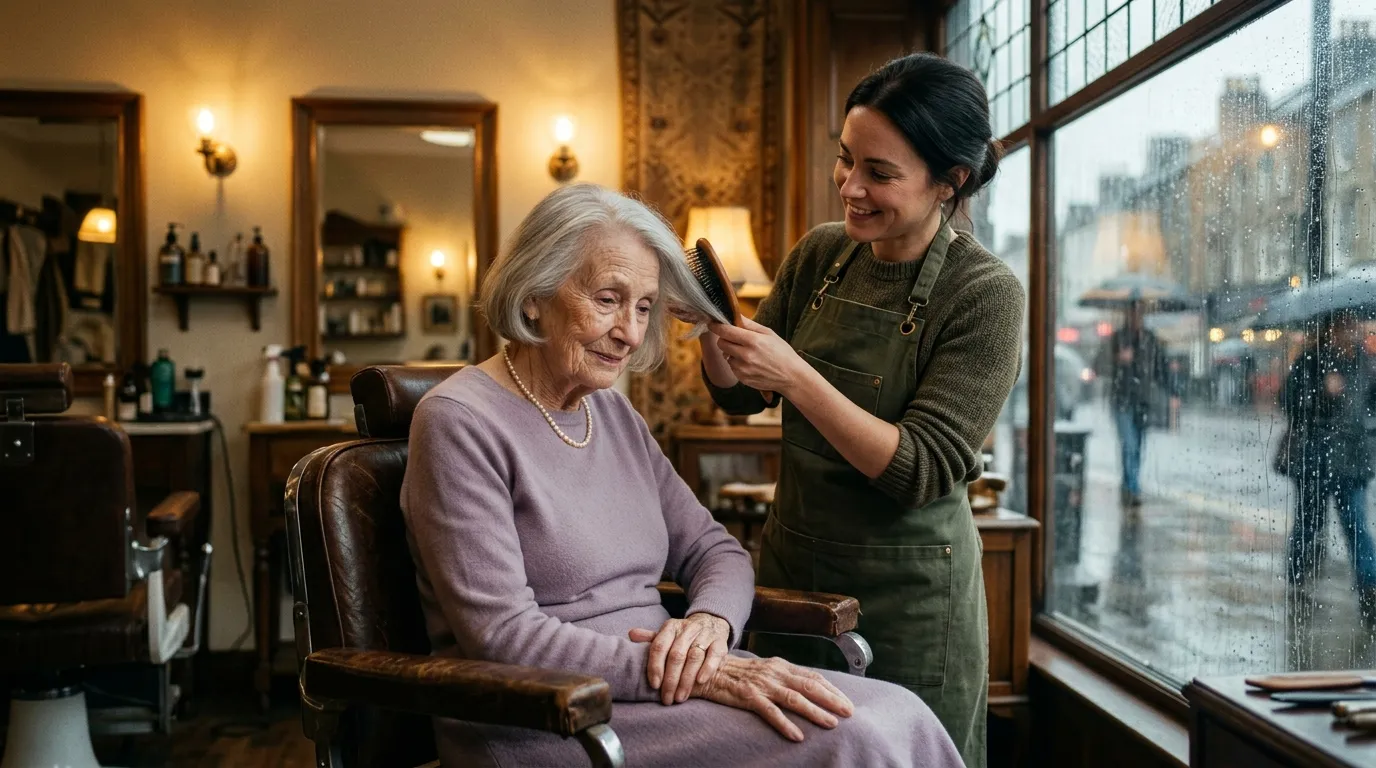
“I don’t see a sick woman. I see somebody going somewhere important.”
“That was me on my wedding day,” she whispered, tracing the edge of the paper. “Fifty-nine years ago. My husband, Walter, thought I looked like a movie star.”
“He was right,” Mara said softly.
“He died six years ago,” Evelyn continued, swallowing the lump in her throat. “Today is the first wedding in our family without him. My doctor told my daughter that I may only have a few days left.”
The salon seemed to exhale, falling into a profound silence. Even the rain outside felt miles away.
“They wanted me to stay home and rest,” Evelyn said, her voice cracking under the weight of her love. “But I helped raise that girl. I packed her lunches when her mother worked nights. I taught her how to sew on a button and how to make peach cobbler without measuring anything. I promised her I would see her walk down the aisle.”
Mara turned the styling chair just enough so they were face-to-face. “And you will.”
“I know what people will see when I arrive,” Evelyn said, wiping a rogue tear. “They’ll see the wheelchair. They’ll see how much weight I’ve lost. They’ll whisper because they’re worried. But just for today, I don’t want my granddaughter to look at me and think about losing me. I want her to look at me and remember her grandma.”
In her eleven years behind the chair, Mara had styled women for job interviews, divorces, first dates, and funerals. But no haircut had ever felt as vital as this one. She walked to the front door, flipped the lock, and turned off her phone. For the next hour, time belonged only to Evelyn.
Mara washed the silver hair with warm water, massaging her scalp with unhurried care. She used soft rollers, a gentle mist of spray, and infinite patience, ignoring the ticking clock.
“You’re going to make yourself late for your next customer,” Evelyn gently chided.
“They can wait.”
Rummaging through a drawer, Mara found a small, unclaimed pearl clip left behind months ago. She fastened it delicately above Evelyn’s right ear.
“My husband used to buy me pearls,” Evelyn whispered.
“Then this belongs right there,” Mara replied.
When the cape was removed and the chair turned toward the mirror, Evelyn stared at the woman looking back at her. Her hair was softly curled, framing her face in a way that echoed the young bride in the photograph. Her shoulders began to shake.
“Oh,” she wept softly. “There I am.”
“You were still there,” Mara said, kneeling beside her. “You just needed someone to remind you.”
When Evelyn pulled three folded twenty-dollar bills from her purse, Mara gently pushed them back. Evelyn was stubborn, insisting she always paid her way. But Mara wrapped Evelyn’s frail fingers around the cash. “Your family needs this memory more than I need payment. It isn’t charity. It’s a wedding gift.”
At that, Evelyn wrapped her arms around Mara’s neck, holding on as if they were lifelong friends. “You made me feel alive again.”
The Last Dance
That afternoon, when Evelyn entered the reception hall in her lavender dress, the room fell into a reverent hush. Her granddaughter, Claire, saw her and burst into tears, rushing across the room. “Grandma, you look beautiful.”
Evelyn simply smiled, the pearl clip catching the chandelier’s light. “That nice girl at the salon found me again.”
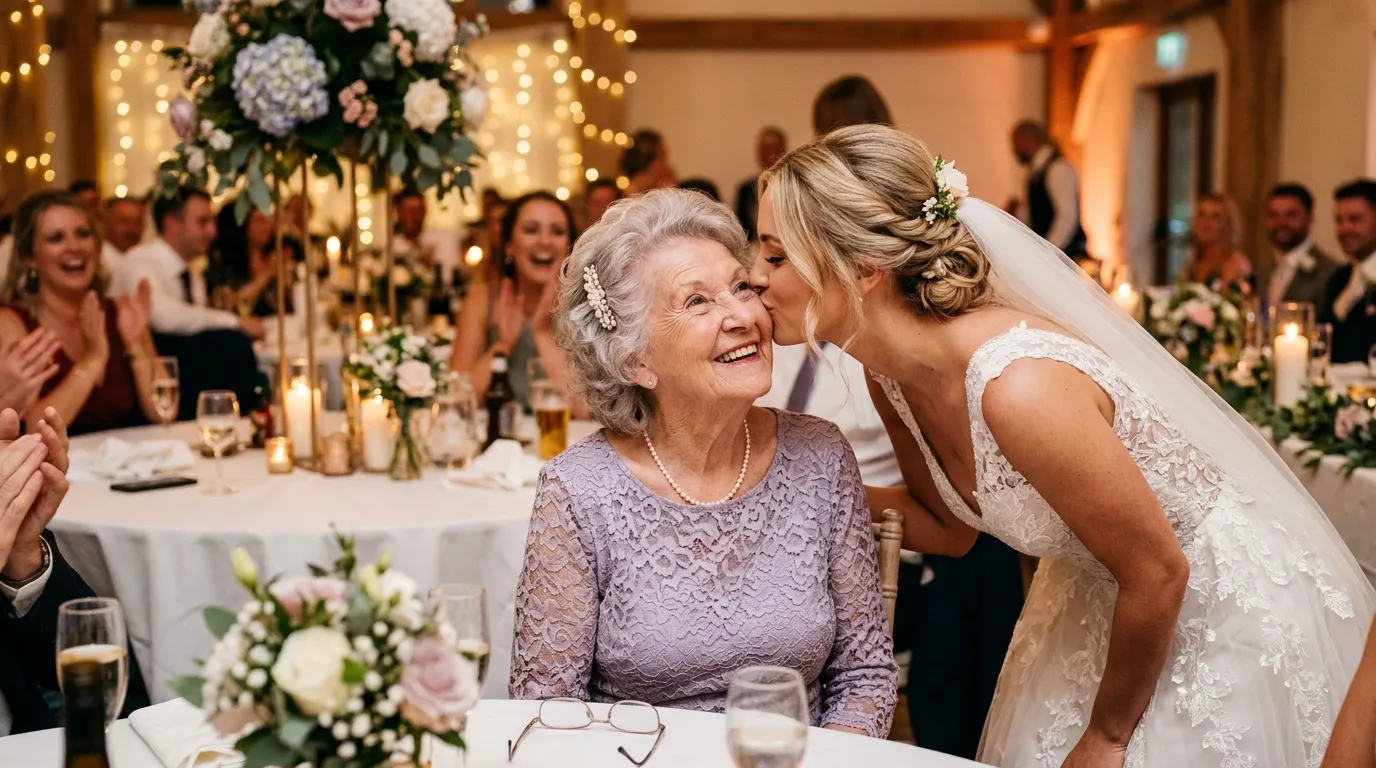
The last gift we give someone may not add days to their life—but it can add life to their final days.
Evelyn sat in the front row, Walter’s photo tucked safely in her purse. She watched the vows, the cake cutting, and even stood for a few fleeting seconds to sway beside Claire during the first dance. She wasn’t weak or polite. She was radiant.
Three days later, Evelyn passed away peacefully in her sleep.
At the funeral, a photograph sat near the entrance. It captured the exact moment Claire bent down to kiss her grandmother’s cheek. In it, Evelyn looked happy, elegant, and entirely herself. Claire later brought a framed copy to Mara’s salon with a note on the back: “You gave my grandmother one last day of dignity. You gave our family the way we will remember her forever.”
The Burden of Going Viral
The photograph that made Mara a local hero nearly destroyed her business.
It started when Claire posted the story and the picture online. She wrote about the sixty dollars Mara refused, ending with a profound statement: “There are still people who understand that dignity matters, even when no one is watching.”
But suddenly, everyone was watching.
By Wednesday, Mara’s phone wouldn’t stop buzzing. Local news anchors wanted interviews. Strangers mailed ten-dollar bills. A hair accessory company offered boxes of pearl clips in exchange for a shoutout. Her practical, sharp-eyed colleague, Jo, watched the chaos unfold with growing concern.
“You’re everywhere,” Jo said, scrolling through thousands of comments.
Mara felt a knot tighten in her stomach. “Claire should have asked me.”
When Claire finally visited the salon, she was bursting with a grand idea. She brought a folder filled with dozens of requests from other families begging for free services for dying relatives. Claire proposed creating a charity called “Evelyn’s Chair”—a program where Mara would provide free styles for people attending final events.
The silence in the salon was deafening before Jo spoke up. “How much do you think a Saturday appointment costs this salon?”
Claire stammered, “The electricity is already on.”
“That is what people always say about small businesses,” Jo fired back, tired of watching Mara skip lunches and barely make payroll. “They see an empty chair and think it costs nothing. The chair has rent. The towels have water bills. The time belongs to someone. And the person using that time has children waiting at home.”
Mara was drowning. Her rent was going up, the water heater was failing, and she was dipping into her personal savings just to pay Jo. She couldn’t afford to be a hero, but the public had already crowned her one.
The Cost of Performative Kindness
Without Mara’s consent, an article hit the local paper announcing the impending launch of “Evelyn’s Chair.” The phone lines jammed. Angry callers accused Mara of playing favorites when she had to turn them away.
The breaking point came when a woman named Helen arrived, brought by her desperate daughter. Helen was sick, her hair a choppy, homegrown mess, and she wanted to look nice for her estranged son’s visit. Despite being fully booked, Mara and Jo moved their schedules, skipped lunch, and took her in.
When Mara finished, Helen reached for her purse to pay. Remembering the internet’s praise, Mara tried to refuse it. But Helen stopped her.
“It is a gift when someone chooses to give it to you,” Helen said firmly. “It becomes something else when people decide you need it.”
Mara accepted the two bills. When the internet found out she had taken money from a sick woman, the backlash was swift and cruel. They accused her of greed, proving that society loves generosity only when they don’t have to foot the bill.
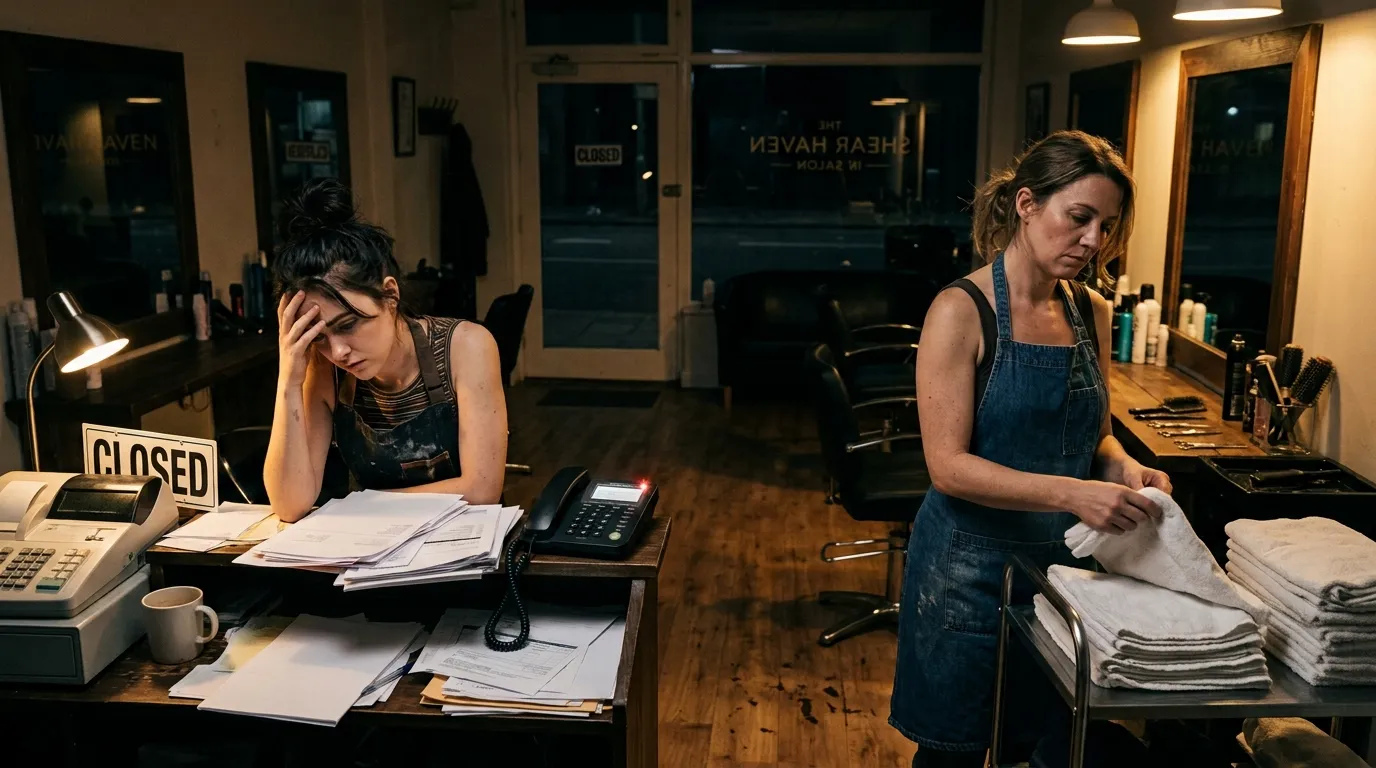
Compassion that depends on the exhaustion of one good person is not a system.
Soon after, a polished executive from the Bright Harbor Community Fund arrived with a lifeline: a $25,000 grant to officially launch the program and save the salon. It was a miracle—until Mara read the fine print.
The fund required the dying clients to be photographed and their tragic stories used for marketing.
“They need to see who they are helping,” the executive argued.
“And that person must let you photograph her?” Mara challenged. She thought of Evelyn’s very first words: Please don’t make me look sick. The fund wanted to exploit the exact vulnerability Evelyn had sought to escape. They were demanding people perform their tragedy to earn their dignity.
Despite the crushing weight of her bills, despite the families waiting outside hoping for free haircuts, Mara put the pen down. “No.”
Building Real Community
The fallout was painful. The fund walked away, and the waiting families were turned away in the rain. Claire wept, realizing she had inadvertently turned her grandmother’s quiet moment of grace into a circus of public expectation.
But from that wreckage, Jo and Mara built something real. They created the Pearl Appointment Fund.
The rules were radically different: The salon got paid its normal rate. Clients could choose to pay nothing, or they could pay whatever they could afford into the fund for the next person. No photographs were allowed. No traumatic medical records were required. If someone lied to get a free haircut, that was on their conscience, but honest people would never be forced to prove their suffering.
It wasn’t funded by a massive corporate check. It was funded by the community. A mechanic bought two haircuts. A retired teacher funded one. Mara was paid. Jo was paid. The emotional labor of women in the service industry was finally given tangible value.
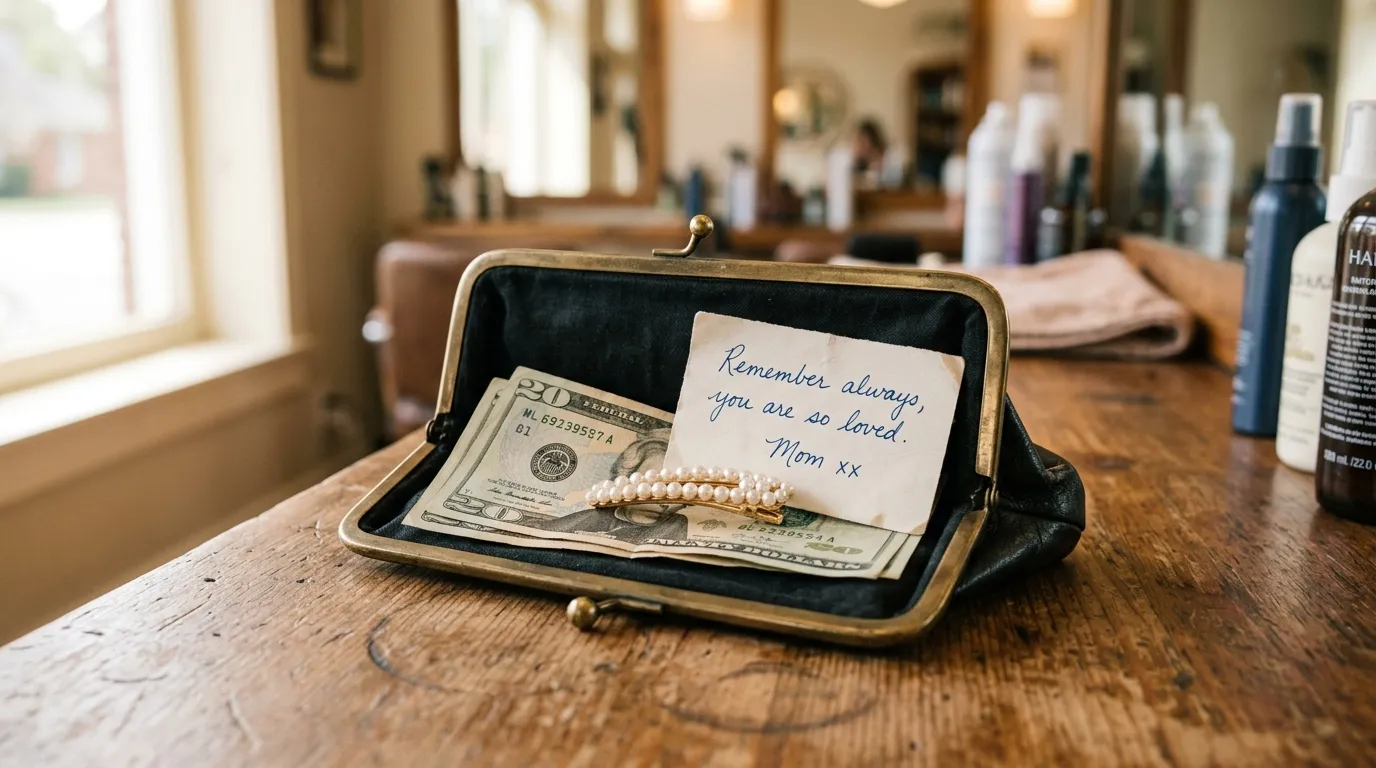
“Use it when someone needs to recognize herself again. But let her give something too…”
Months later, Claire walked into the salon clutching Evelyn’s old black purse. Hidden in a zipped pocket, she had found an envelope addressed to Mara. Inside were the same three folded twenty-dollar bills Evelyn had tried to give her, along with a shaky, handwritten note:
“You called it a wedding gift. So I am giving it back as a beginning. Use it when someone needs to recognize herself again. But let her give something too, even if all she can give is a smile.”
Evelyn had always planned to pay. She didn’t want to be the face of a viral charity movement. She just wanted to go to a wedding, look beautiful, and retain her right to participate in the cycle of giving.
True kindness isn’t about rescuing people or turning them into inspirational symbols. It isn’t a burden that should fall entirely on the shoulders of the working class. Real community begins when the cost is shared. When workers are paid. When privacy is fiercely protected. And when receiving help doesn’t require a person to surrender their dignity.
Because dignity isn’t something we hand to people after deciding they deserve it. It is something they already possess. Our only job is to make sure we don’t take it away.
Note:This work is inspired by real events and people, but it has been fictionalized for creative purposes. Names, characters, and details have been changed to protect privacy and enhance the narrative. Any resemblance to actual persons, living or dead, or actual events is purely coincidental and not intended by the author.
All images used in this article are AI-generated and intended for illustrative purposes only.