
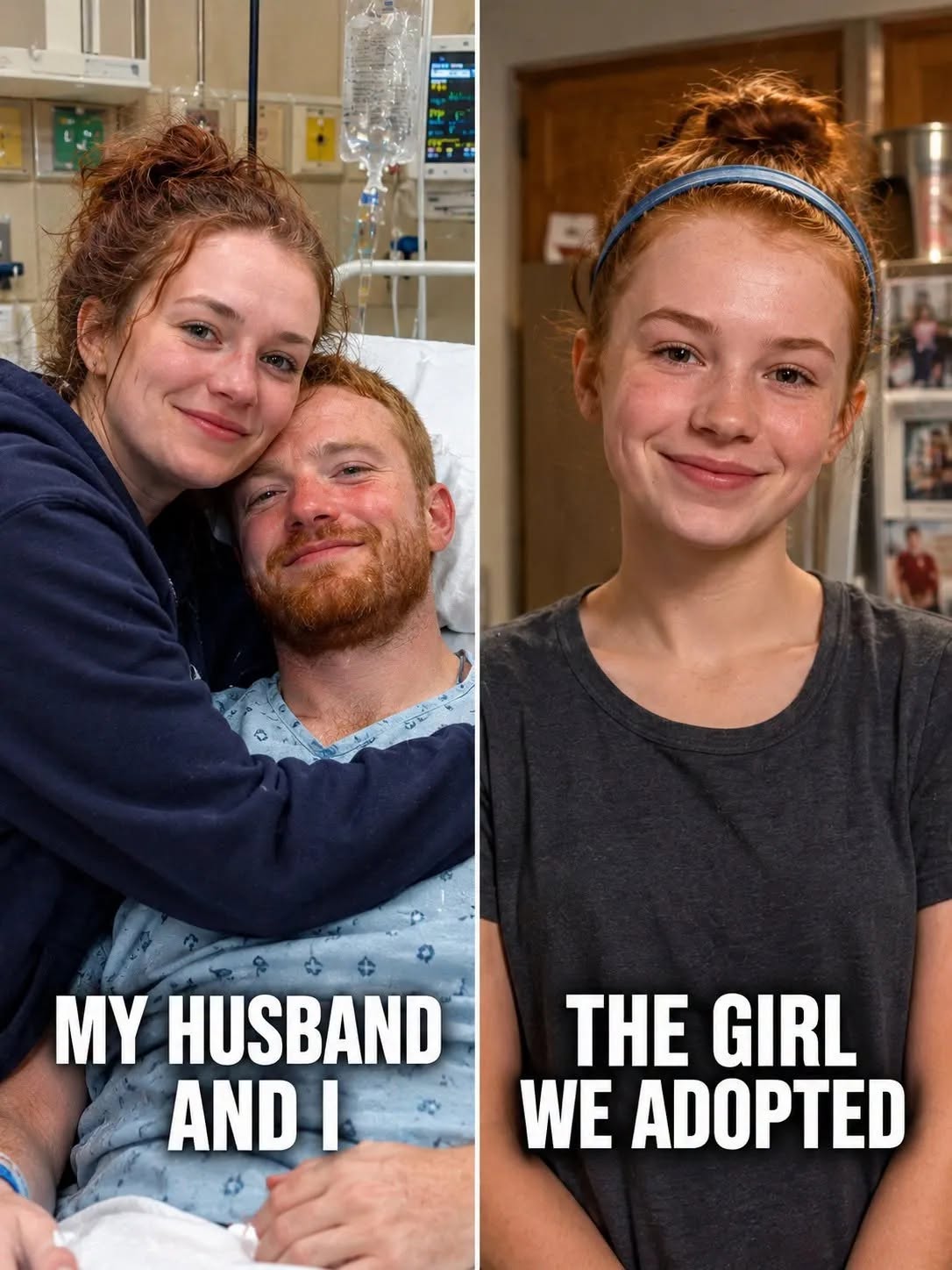
The morning the doctor told us David was dying, our house still looked exactly the way we’d left it that morning. Two cereal bowls sat in the kitchen sink. One of the kids’ sweaters hung over the back of a dining chair. A grocery list clung to the refrigerator under a small red magnet, half the items already crossed off in David’s handwriting.
Everything looked completely ordinary.
Nothing would ever be ordinary again.
“Stage four,” the doctor said gently, and the words just hung there in the air between us, too large for the room. David sat beside me, his fingers wrapped tightly around mine. I could feel how weak his grip had already become, though he was clearly trying to hide it from me.
“There isn’t a treatment that can cure this,” the doctor went on. “Our focus now is going to be keeping him comfortable.” My throat closed up completely. “How much time does he have?” I managed to ask. The doctor hesitated a beat too long before answering. “Several weeks. Perhaps a few months.” David squeezed my hand like he was the one comforting me instead of the other way around. I wanted to scream.
For fifteen years, David and I had built a whole life together. We’d raised two wonderful kids, weathered financial scares, sleepless nights, family arguments, all the ordinary storms that come bundled with any long marriage. I believed, right up until that morning, that I knew him better than anyone alive. I knew how he took his coffee. I knew he hummed under his breath when he got nervous. I knew he always checked the doors twice before bed, every single night, without fail. I knew how his whole face softened the second our kids came running into a room. At least, I thought I knew him.
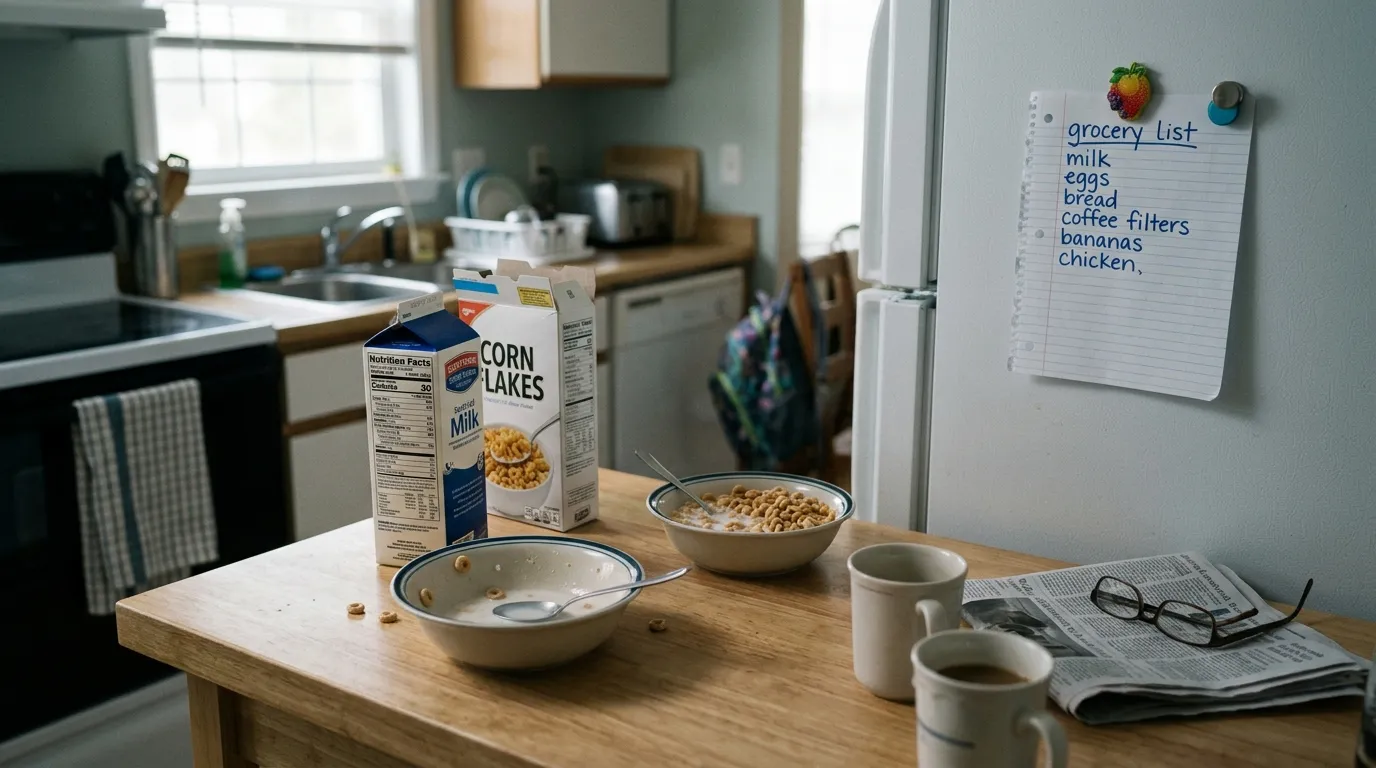
The kitchen looked entirely ordinary that morning, hiding the profound storm about to break our family.
The Photograph
Three weeks later, while receiving hospice care at home, David asked me to sit beside his bed. His hands were shaking as he reached under his pillow and pulled out an old photograph, its edges worn soft from being handled again and again over the years. It showed a teenage girl, maybe sixteen, long dark hair, serious eyes that looked far older than the rest of her face. He held it out toward me. “Her name is Grace.”
I studied the photo, waiting for the explanation that would obviously follow. It didn’t. “Who is she?” I asked. David swallowed hard. “I need you to adopt her.” For a second, I genuinely thought I’d misheard him. “What?” “She’s sixteen. She has nowhere permanent to go. I need you to bring her into our family before I die.” The room went cold around me. “You’re asking me to adopt a girl I’ve never met.” “Yes.” “And you won’t even tell me who she is?” His eyes filled with tears. “Please just trust me.”
Those words hurt more than I expected them to. “Trust you?” I repeated. “David, you’re showing me a photograph of a total stranger and asking me to become her mother. How exactly am I supposed to agree to that without knowing why?” “I’ll explain everything.” “When?” He looked away toward the window. “Soon.” Fear was already curdling into suspicion in my chest. I stared at the girl’s face again, at her dark eyes, at the way David’s fingers trembled around the edges of the photo, and a terrible thought pushed its way into my mind before I could stop it. “Is she your daughter?” David froze completely. The silence that followed felt like an answer all on its own.
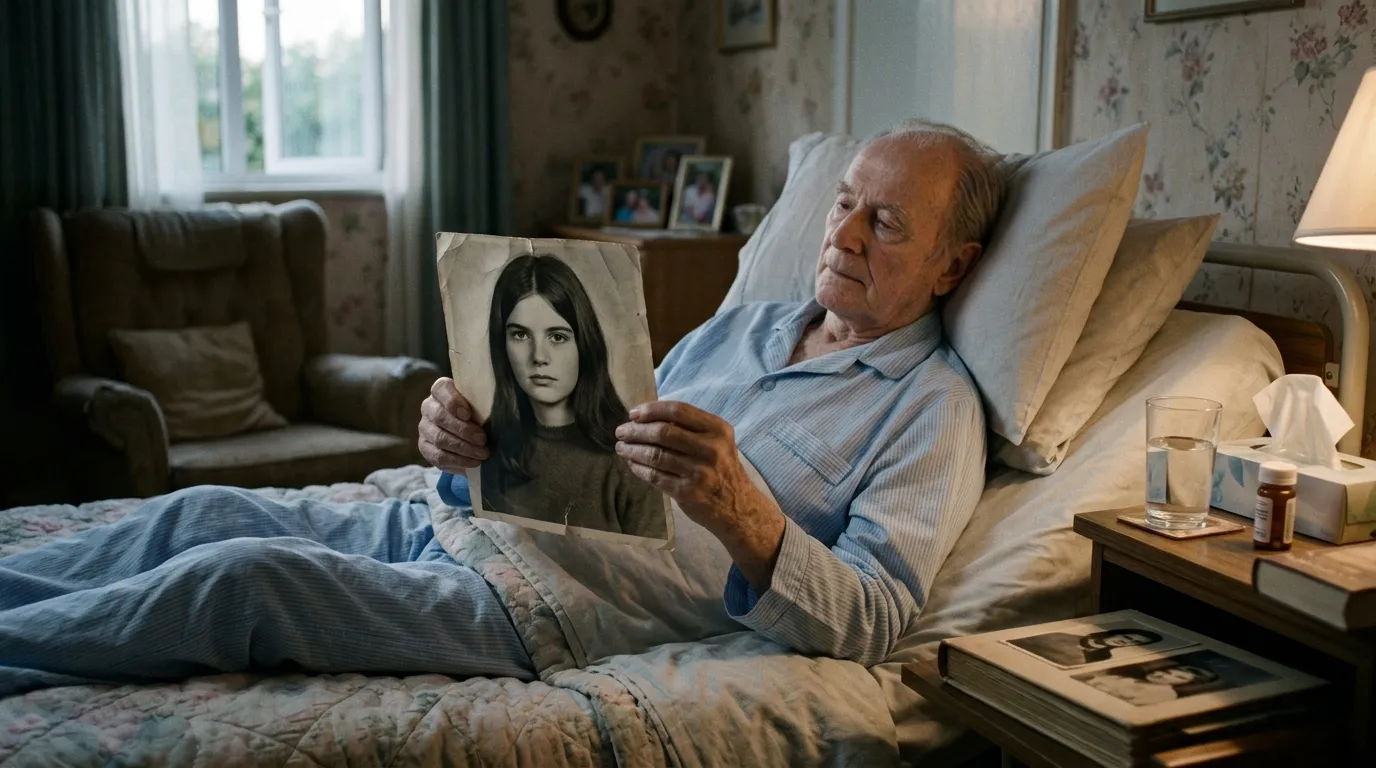
David handed me an old, worn photograph of a teenage girl, changing everything we thought we knew about our lives.
The Girl in the Photograph
Grace arrived on a rainy Tuesday afternoon, standing on our front porch with water dripping off the ends of her hair. Everything she owned fit inside one faded backpack and a plastic grocery bag stuffed with folded clothes. She looked even younger in person than she had in that worn photograph. When I opened the door, she lowered her eyes immediately. “Thank you for letting me stay here, ma’am,” she said, her voice barely louder than the rain behind her. “You can call me Mom,” I told her, though the word felt strange leaving my mouth. “When you’re ready.”
She looked up at me, gratitude and guilt tangled together in her expression. “I’ll try.” Before I could say anything else, our kids appeared behind me, curious about Grace ever since I’d told them she’d be living with us. Within minutes they were asking about her school, dragging her toward the living room, arguing over who got to give the house tour first. Grace’s nervous expression softened, and for the first time since she’d stepped onto that porch, she smiled. Watching them together should have reassured me completely. Instead, I kept quietly wondering why, out of everyone in the world, David had chosen her.
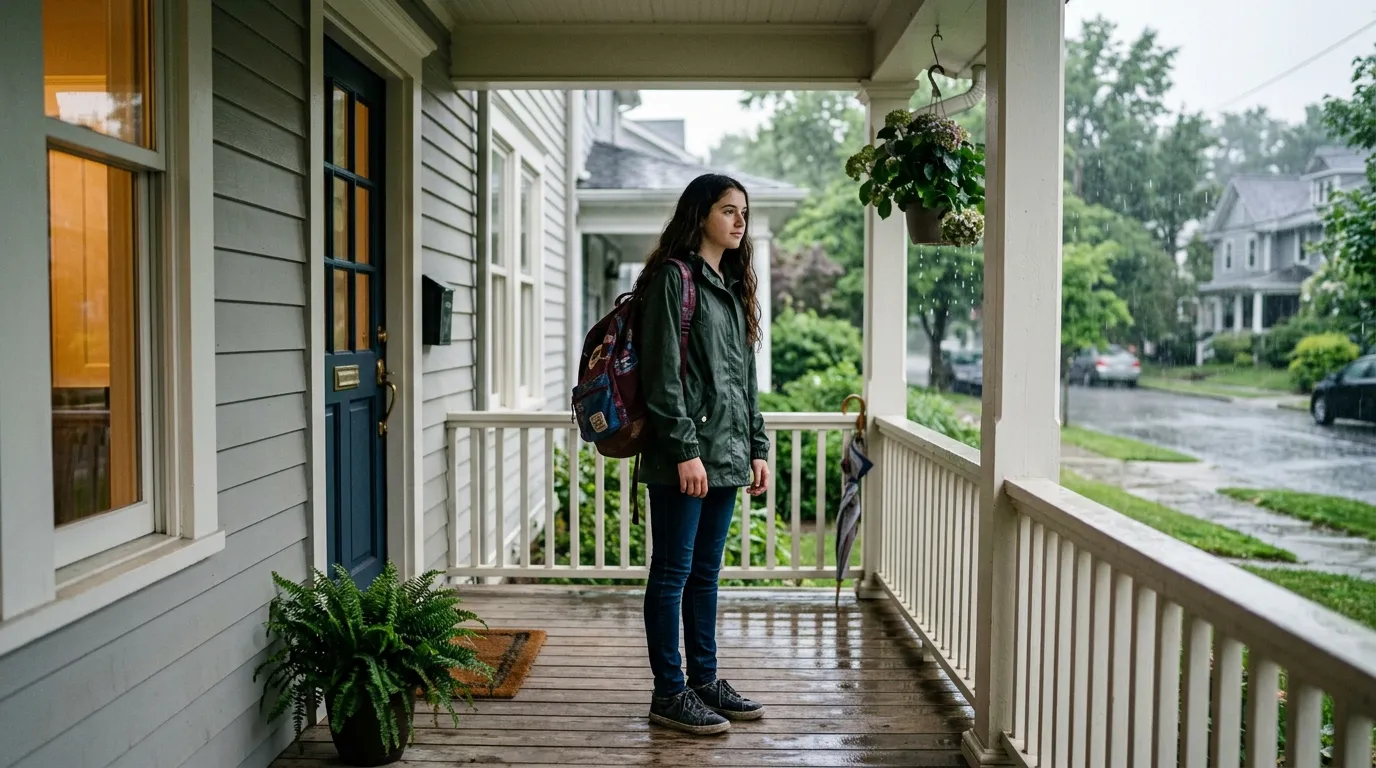
Grace arrived on our porch on a rainy afternoon, carrying her entire life inside a single faded backpack.
The Box He Left Behind
Three days later, David was taken to the hospital. He never came home again. His final hours passed in a blur of machines, whispered prayers, and hands held too tightly to let go of. I told him I loved him. He tried to answer, but his voice didn’t have enough left in it. When he died, I was holding one of his hands. Grace was holding the other. The funeral passed around me like a dream I couldn’t quite wake up from. People brought flowers, casseroles, carefully chosen words meant to comfort me. I remembered almost none of it afterward. Grace stood beside our children through the whole service. When people asked who she was, I told them she was family. I still didn’t understand what kind.
The night after we buried him, I lay alone in our bed. For fifteen years I’d fallen asleep to the sound of David breathing beside me. Now his side of the mattress was just cold. I stared at the ceiling, turning over every question he’d refused to answer, when my bedroom door opened. Grace stood in the hallway, holding a small wooden box against her chest. “I need to speak to you.” I sat up. “It’s almost midnight.” “I know.” Her face was pale, drawn. “David told me to wait until the day after his funeral. Not before. Not later.” I looked at the box in her hands. “What is that?” “He gave it to me shortly after I moved in. He made me promise I’d only open it with you, and only after he was gone.”
Inside were several old letters bound with a faded ribbon, and beneath them, a stack of photographs, their corners curled soft with age. I picked up the first one. It didn’t show David. It showed his father, a man who’d been dead for years but whom I recognized instantly. He was standing beside a young woman I’d never seen before in my life. They stood close together. Too close. I turned the photograph over. A date was written on the back in his father’s handwriting, and below it, two words: *Forgive me.* My heart started pounding hard. “Who is she?” Grace’s voice shook. “My mother.”
Grace folded her hands tight in her lap. “David was not my father.” The room seemed to tilt beneath me. “Then who was he?” “He was my brother. My half-brother,” she added quietly. “We had the same father.” For several seconds I couldn’t manage a single word. All the whispered conversations. The closed doors. The way Grace had held David’s hand at his bedside. The way he had looked at her, that mixture of love, sorrow, and guilt I hadn’t been able to name at the time. I had convinced myself David was hiding a daughter he’d fathered somewhere in his past. But Grace wasn’t the result of his betrayal. She was the result of his father’s.
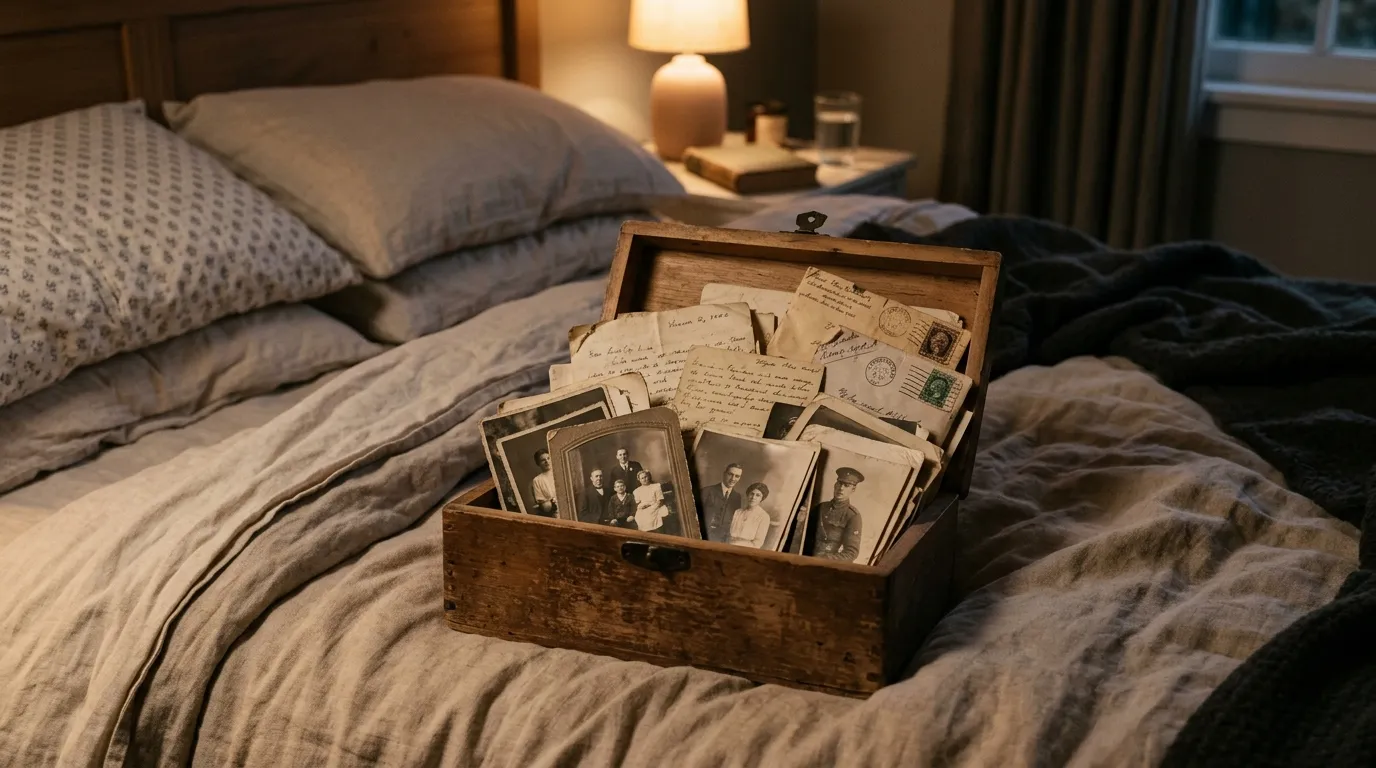
The wooden box left behind by David contained letters and photographs that shattered every illusion we lived by.
A Different Kind of Family
A bedroom door opened behind us. My daughter stepped into the hallway, rubbing her eyes, still half asleep. She looked at Grace’s backpack, then at me. “Is Grace leaving?” Grace went completely still in my arms. I looked at my daughter, then down at the frightened girl beside me. “No,” I answered. My daughter’s shoulders relaxed. “She’s staying?” “Yes.” “Why?”
I looked down at Grace. Because she had nowhere else to go. Because David had loved her. Because she was his sister. Because she wasn’t responsible for the choices made by the adults around her, none of whom had ever asked her opinion on any of it. Because sometimes family starts with blood, and sometimes it starts with the simple decision not to walk away when you have every reason to. “She’s staying because she’s family,” I said.
Grace let out a trembling breath, like she’d been holding it in for years without realizing it. My daughter nodded sleepily, apparently satisfied with that answer, and padded back to her room. Grace and I stayed on the staircase a while longer. Nothing was suddenly fixed. David was still gone. His secrets still hurt, sharp and fresh. I still felt betrayed by the man I had trusted more than anyone else alive. There would be hard conversations ahead of us, explaining things carefully to our kids, meeting with lawyers, reviewing adoption paperwork, learning the rest of Grace’s story piece by piece. She would need time before she truly believed she was safe here. I would need time to untangle my anger at David from whatever I felt toward her.
Forgiveness wasn’t going to arrive just because he was dead. Grief doesn’t erase betrayal. Love doesn’t excuse dishonesty. But anger didn’t have to be the thing that decided what came next. David had left us both holding a broken truth. It was up to us now to decide what we built out of the pieces.
I picked up Grace’s backpack and carried it back into her bedroom. She followed. At the door, she hesitated. “Are you sure?” “No,” I admitted honestly. “I’m not sure about anything anymore. But I am sure that you shouldn’t lose another home over a secret you didn’t create.” She nodded, tears shining in her eyes. “Thank you.” I set the backpack down beside her bed. “You don’t have to thank me tonight.”
She reached for the small framed photograph still sitting facedown on her vanity, the one she’d turned over the very first day she arrived. This time, she flipped it right side up. It showed Grace as a little girl standing beside her mother, one of her mother’s hands resting on her shoulder, the other pressed over her own heart. “She looks kind,” I said. “She was.” Grace ran her thumb along the edge of the frame. “She always told me that being hidden didn’t mean I was unworthy of being loved.” My throat tightened. “She was right about that.”
Grace looked at me. “So what happens now?” I thought about David. About the life we’d built together, and about the secret that had just cracked its foundation wide open. And about the girl standing in front of me, waiting to find out whether all these broken pieces would end up becoming a wall between us, or a bridge. “Now we tell the truth,” I said. “Even when it hurts.” Grace nodded. “And then?” “Then we learn how to be a family.”
Not the family David had pictured in his head while he kept his secret for fifteen years. Not the family I thought I’d already had. Something more complicated than either of those. Something bruised, and unfinished, and, for the first time in a long while, completely honest. The hardest part was only just beginning. But Grace was no longer a secret. And she was no longer alone.
Note:This work is inspired by real events and people, but it has been fictionalized for creative purposes. Names, characters, and details have been changed to protect privacy and enhance the narrative. Any resemblance to actual persons, living or dead, or actual events is purely coincidental and not intended by the author.
All images used in this article are AI-generated and intended for illustrative purposes only.