
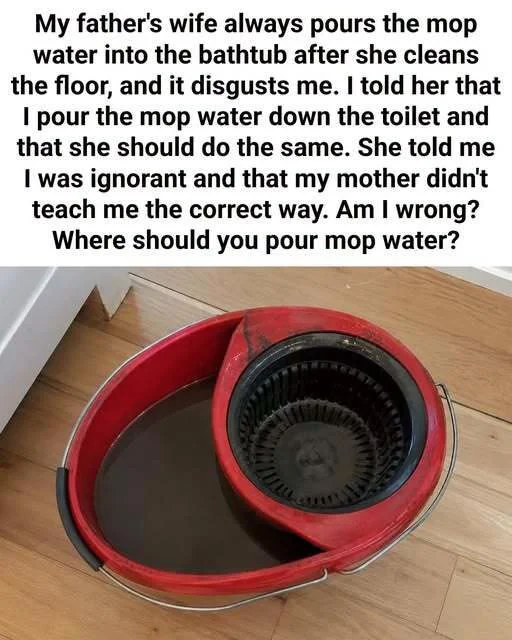
Dirty mop water is far more than slightly used water. It contains dirt, dust, hair, cleaning chemicals, bacteria, and other debris collected from floors throughout the home. Because of everything it carries, it should be disposed of in a way that minimizes the risk of clogs, contamination, and unnecessary mess.
For most households, the toilet is the safest everyday place to pour dirty mop water. Toilets are specifically designed to handle waste and suspended particles, sending them directly into the sanitary sewer or septic system. This makes them better suited for disposing of dirty cleaning water than most other household drains.
A bathtub drain is generally a poorer choice. Its smaller drain can clog more easily with hair and debris, and the tub is where people bathe, children may play, and pets are often washed. After pouring mop water into a bathtub, it should be thoroughly cleaned and disinfected before anyone uses it again.
If your home has a utility or laundry sink, that is usually the best option. These sinks are intended for cleaning tasks and handling dirty water, making disposal more convenient while reducing the chance of contaminating areas used for personal hygiene.