
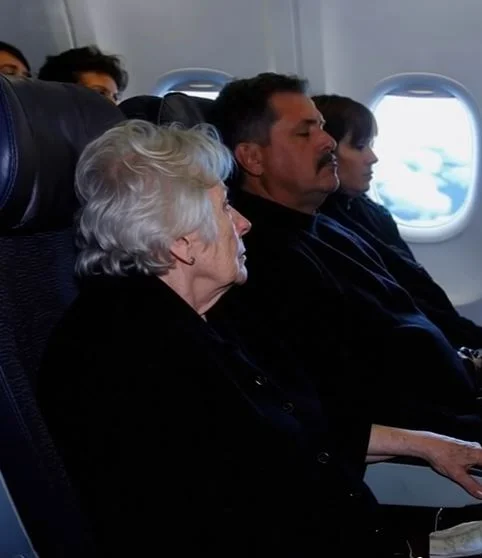
Four decades after Margaret taught in a struggling Detroit school, she found herself on a flight to her son’s funeral, engulfed in grief. When the pilot’s voice came over the intercom, she recognized it immediately—it belonged to Eli, a former student she hadn’t seen since he was a teenager. Their unexpected reunion at 30,000 feet became a powerful testament to the enduring impact teachers can have.
Eli had been one of those quiet students who carried more weight than any child should. Margaret had provided what support she could—academic help, certainly, but also the kind of personal attention that signals to a struggling student that they matter. She gave him rides home, tucked snacks into his backpack, and even advocated for him when he faced challenges outside the classroom.
What Margaret couldn’t have known was that these acts of kindness had taken root in Eli’s heart. After becoming a pilot, he founded Hope Air, a nonprofit organization that provides air transportation for children in rural areas who need medical care. He explained to Margaret, “You once said I was meant to fix things. This is how I learned to do it.”
Their story illustrates how educators plant seeds they may never see grow. The photograph Eli had kept for forty years, inscribed with “For the teacher who believed I could fly,” symbolizes the lasting impression teachers leave on their students. Margaret’s investment in a troubled teenager had ultimately benefited countless families through Eli’s work, proving that a teacher’s influence extends far beyond classroom walls and academic years.