
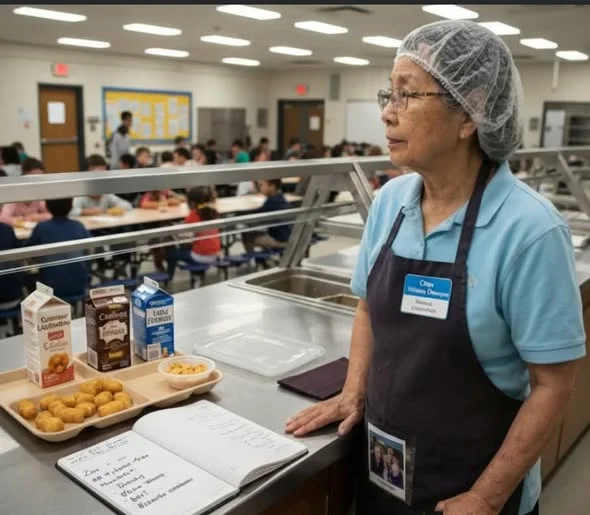
Amid the cacophony of a school cafeteria, Mrs. Chen worked with a quiet grace that masked her profound impact. For 22 years, she was the lunch lady, a title that barely hints at her true role as the school’s guardian angel. While teachers focused on curriculum, Mrs. Chen focused on context. She read the lunchroom like a text, deciphering the stories told in food choices and social habits. She knew which students were hungry, which were ashamed, and which were quietly drowning. Her genius lay in her response: a series of tiny, imperceptible acts of salvation woven into the routine of the school day.
Her methods were ingenious in their discretion. She created a system of silent support tailored to each child’s unspoken need. For the food-insecure child, an extra scoop that appeared to be a mistake. For the child embarrassed by a lovingly prepared ethnic meal, a discreet repackaging. For the student grappling with an eating disorder, a gentle, reassuring fib about nutritional content. For the lactose-intolerant child who just wanted to be normal, a specially purchased carton of milk. Mrs. Chen didn’t just feed bodies; she nourished spirits and protected fragile self-esteem, all while maintaining the strictest confidentiality.
This unseen labor of love was conducted for a modest hourly wage, a fact that underscores how society often misjudges value. Mrs. Chen’s compensation never reflected her contribution as a frontline mental health supporter and crisis preventer. She was the school’s early warning system, spotting signs of trouble long before they escalated into formal problems. Her presence created a safe harbor, a check-in point where a child could feel recognized without having to explain themselves, a rare and powerful form of acceptance.
When Mrs. Chen retired after a health crisis, the institution learned the hard way what it had lost. A new employee kept the food line moving efficiently, but the line of distressed students outside the guidance office began to grow. The school had lost its observer, its quiet anchor. The connection was made by a student’s poignant observation: the life preservers were gone. It was a stark lesson in how essential one person’s compassionate watchfulness had been to the community’s well-being.
In a beautiful acknowledgment, the school invited Mrs. Chen to return in a new capacity, honoring her unique skill set. As the Student Wellness Observer, she resumed her post, her cane a new accessory, but her vision as sharp as ever. Her legacy was cemented when a graduating senior thanked her from the podium, telling the assembled crowd that Mrs. Chen’s greatest lesson was that visibility is a form of survival. Her story is a powerful call to recognize the unsung heroes in our midst—those whose work is measured not in data, but in the silent sighs of relief from children who finally feel seen.