
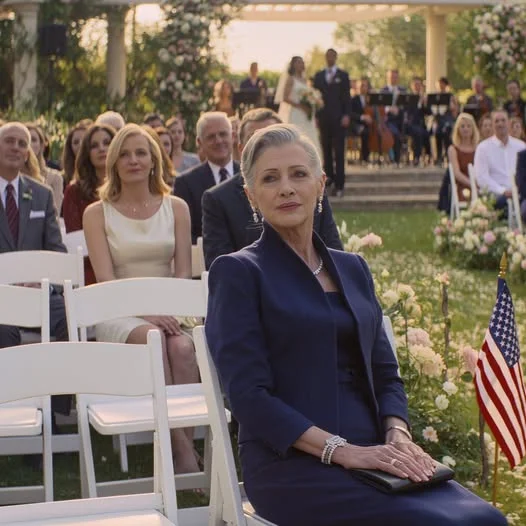
The distance from the back row to the altar felt like a mile. I made the long walk alone, past rows of Denver’s social elite who assessed my simple dress with dismissive glances. The wedding coordinator, with a plastic smile, had delivered me to seat fifteen, row twelve—the very last seat in the entire venue. I was the mother of the groom, yet I was seated behind the photographers and the bustling catering staff. The message was clear: I was an embarrassment to be managed, a relic from my son’s humble past that didn’t fit the glossy narrative of his new life with the Ashworth family. I sat on the cold metal chair, watching my son Brandon prepare to marry a woman who had told me point-blank that morning that my presence was a liability.
I thought I had known heartache, but this was a unique kind of pain. It was the agony of being erased by the very person you had built your world around. I remembered the extra tutoring sessions I took to pay for his college applications, the lonely nights after his father died, the fierce pride I always felt in his achievements. Now, as a successful lawyer, he saw me as a symbol of a life he had outgrown. The string quartet began to play, and I tried to lose myself in the music, to be happy for him, but the sting of rejection was too fresh. I was drowning in a sea of my own irrelevance when a lifeline appeared in the most unexpected form.
A man elegantly dressed in a charcoal suit sat down beside me. He didn’t ask if the seat was taken; he simply took my hand in his and said, “Act like you’re with me.” His confidence was a shield, and he held it over both of us. Suddenly, the whispers around us changed tone. Who was this distinguished man with the mother they had all pitied? The dynamic of the entire row shifted. When my son looked back and saw us together, his expression was one of pure, unadulterated confusion. For the first time all day, I didn’t feel like a problem. I felt like a person of consequence.
Later, in the garden, he told me his name was Theo. He was the love of my youth, the one who got away—or so I had thought for fifty years. He unraveled the mystery of our past, explaining how my mother had hidden his letters to push me toward a more financially secure future with Brandon’s father. He had spent a lifetime wondering about me, searching for me in a way that felt more like a fairy tale than real life. He had come to the wedding after seeing the announcement in the paper, intending only to watch from afar, but the sight of my humiliation had compelled him to act. His seven words were not just a line; they were a rescue.
Leaving the reception on Theo’s arm was the most empowering decision I have ever made. It wasn’t about revenge against my son or his new wife; it was about reclaiming my own narrative. It was a declaration that I would no longer accept a role as a secondary character in my own life. The journey home from that wedding was the beginning of a completely new chapter, one written not with loneliness and regret, but with the thrilling promise of a love story interrupted for five decades, finally getting its chance to be told.