
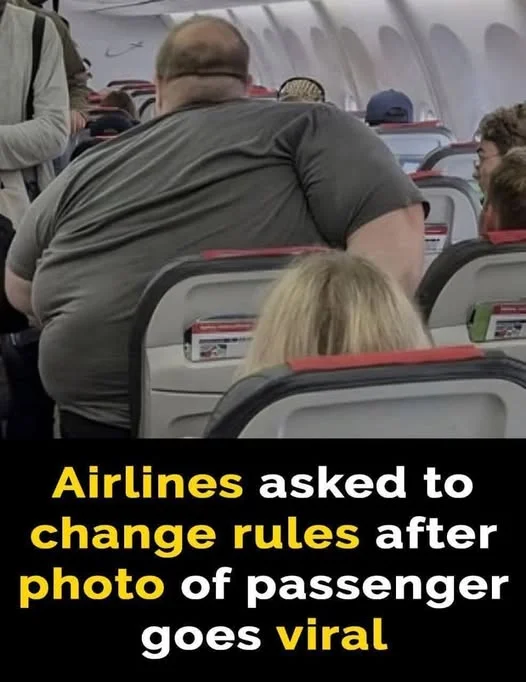
The challenges of air travel are no secret, from delayed flights to lost luggage. But a recent viral photo has zeroed in on one of the most personally sensitive and logistically tricky issues: seating accommodations for plus-sized passengers. The compelling image, showing a passenger overflowing into the next seat, has sparked a heated national conversation about comfort, policy, and compassion at 30,000 feet.
After the photo spread online, influential voices in the music industry shared it with a direct challenge to airlines. They stated unequivocally that carriers must develop and implement formal accommodations for larger passengers, arguing that the status quo fails everyone. Their post acknowledged the complexity of finding a workable solution but insisted that the industry has a responsibility to try.
The reaction from the online public was immediate and polarized, revealing a deep societal split on the issue. One prominent thread of comments advocated for a strict user-pays model, insisting that the purchase of a second seat should be mandatory if a passenger cannot fit within one. This argument often extends to a belief that airlines should enforce this more rigorously, with some suggesting practical methods to do so at the gate.
Conversely, many defenders shift the blame squarely onto the airlines themselves. They contend that ever-shrinking seat dimensions have created an environment where even average-sized adults feel cramped. This side of the debate sees the viral photo as a catalyst to address a universal problem of diminished legroom and narrow seats, advocating for regulations that mandate more humane minimum space standards for all.
This viral moment has transformed a private moment of discomfort into a very public referendum on airline practices. The discussion is no longer just about a single passenger or flight; it’s about what fairness looks like in a shared, confined space. As the debate rages on social media and beyond, airlines are now under a bright spotlight, pressured to move beyond silence and toward tangible changes that address this emotional and practical dilemma.