
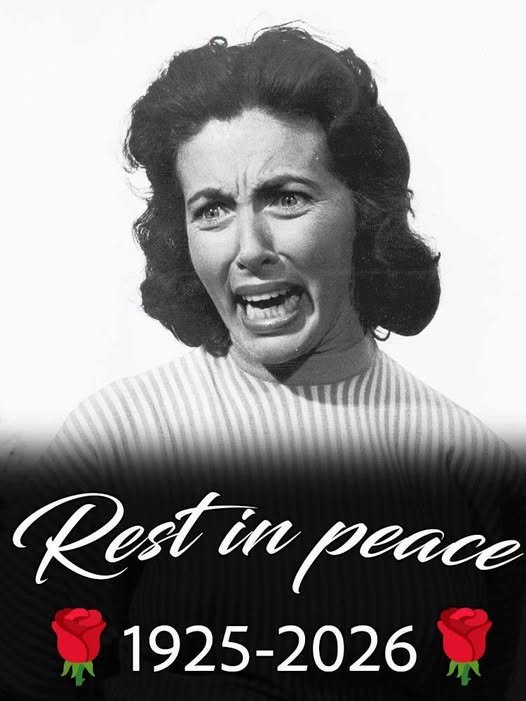
Peggy Webber, a longtime radio actress whose remarkable career stretched across generations of American entertainment, has died at the age of 100. Known for her incredible vocal range, memorable performances, and lifelong dedication to radio drama, Webber leaves behind a legacy that helped connect the golden age of broadcasting with later generations of performers and listeners.
Her career was remarkable not only because of its length, but also because of the many different forms of entertainment she experienced. From early radio broadcasts to television and film, Webber continued finding ways to bring characters to life through her voice and acting.
Peggy Webber Dies at 100
Webber died on August 15 at an independent living facility in Napa, California, according to her son, Rob Sinskey. Her death was attributed to natural causes.
Although she may not have achieved the household-name status of some of the stars she worked alongside, Webber made an important contribution to American entertainment. Her career included radio, television, and film, while radio remained the medium most closely associated with her life’s work.
Her passing marks the end of an extraordinary chapter in broadcasting history.
A Passion for Performing Began Early
Peggy Webber was born on September 15, 1925, in Laredo, Texas. From an early age, she showed a strong interest in performing and storytelling.
Her family eventually moved to Arizona, where she attended Tucson High School. Even before reaching her teenage years, Webber was already looking for opportunities to perform on radio.
That early interest would soon become the foundation of a career that lasted for decades.
Webber made her radio debut when she was just 12 years old. At a time when radio was one of America’s most important forms of entertainment, her young voice quickly became part of a rapidly growing industry.
By the 1940s, she had developed into an experienced radio performer, taking on an impressive variety of characters.

A Versatile Voice During Radio’s Golden Age
Radio acting required a special kind of talent. Without costumes, sets, or visible facial expressions, performers had to create entire characters through their voices and performances.
Webber excelled at that challenge.
Her ability to change her voice, personality, and delivery allowed her to portray many different types of characters. She became a valuable performer during the golden age of radio, appearing in numerous broadcasts and working alongside some of the era’s best-known actors.
A 1946 profile in Time highlighted the extraordinary amount of work she had already completed, noting the many characters she had performed across thousands of broadcasts.
Among her notable credits was The Adventures of Sherlock Holmes, where she performed alongside Basil Rathbone and Nigel Bruce.
For Webber, radio was more than simply a job. It became the artistic foundation that shaped much of her life.
Bringing Ilsa to Life in Casablanca
One of Webber’s most memorable radio performances came in 1944, when she portrayed Ilsa in a radio adaptation of Casablanca.
The character was famously portrayed by Ingrid Bergman in the classic 1942 film. Taking on such a recognizable role gave Webber an opportunity to interpret the character through the unique style of radio drama.
Instead of relying on visual performance, Webber had to communicate emotion, personality, and drama through her voice alone.
It was exactly the kind of challenge at which she had become skilled.

From Radio to Film and Television
While radio remained at the heart of Webber’s career, her talents eventually took her into other areas of entertainment.
Her work brought her into contact with several highly respected names in Hollywood.
In 1948, Orson Welles cast Webber as Lady Macduff in his adaptation of Macbeth. The opportunity allowed her to work with one of the most influential figures in American theater, radio, and film.
Webber later appeared in Alfred Hitchcock’s 1956 film The Wrong Man. She also stepped into the horror genre with a role in the 1958 film The Screaming Skull.
These appearances demonstrated that her abilities extended beyond radio. Still, no matter how much her career expanded, she remained deeply connected to the medium where she had started.
Helping Keep Radio Drama Alive
Perhaps one of the most important parts of Webber’s legacy came much later in her career.
In 1984, she founded California Artists Radio Theatre, an organization devoted to producing and preserving radio-style dramatic performances.
The organization reflected Webber’s deep belief in the power of audio storytelling. At a time when television and film had become dominant forms of entertainment, she continued to champion the unique magic of radio drama.
Radio allows listeners to create their own images and worlds in their imagination. A talented actor’s voice can become a character, a location, or an entire emotional experience.
Webber understood that power better than most.
Through her work with California Artists Radio Theatre, she helped introduce radio-style performances to new audiences while also preserving an important part of broadcasting history.
Still Performing Well Into Her Later Years
Webber’s dedication to acting never seemed to disappear.
Even after reaching an age when many people had long since retired, she continued participating in radio projects and sharing her knowledge with other performers.
In her 90s, she remained involved with the art form that had shaped her life.
A 2015 interview offered insight into the attitude she carried throughout her career. Webber spoke about the responsibility she felt toward the opportunities she had received, reflecting the gratitude and dedication that had remained with her for decades.
Her continued involvement was a testament to just how deeply radio drama was connected to her identity as an artist.
A Career That Spanned Nearly Seven Decades
Webber’s career lasted for nearly seven decades, giving her a unique view of the transformation of American entertainment.
She began working when radio was at the center of popular culture. She witnessed the rise of television, the changing role of film, and the emergence of new forms of media.
Yet through all those changes, she continued to value the art of performance.
Her journey is particularly remarkable because she did not simply survive changes in the entertainment industry. She continued contributing to the craft and helping others appreciate the storytelling traditions that had influenced her.

More Than Just a Long List of Credits
Peggy Webber’s legacy cannot be measured simply by the number of programs, characters, films, or performances attached to her name.
Her greater contribution was helping preserve a style of storytelling built around voice, imagination, and human performance.
Classic radio required audiences to listen closely. There were no elaborate visual effects to create a world for them. Actors had to make listeners believe in characters and situations through sound and emotion.
Webber was part of a generation that mastered that art.
Her work also helped demonstrate that radio drama was not merely a piece of entertainment from the past. It could continue to connect with audiences long after the golden age of broadcasting had ended.
A Lasting Legacy for Future Generations
For people who grew up listening to classic radio, Peggy Webber represented an important part of American entertainment history.
For younger audiences, her career offers a fascinating reminder of how powerful storytelling can be without relying on elaborate technology.
A microphone, a script, a talented performer, and the imagination of the listener could be enough to create an unforgettable story.
Webber dedicated much of her life to that simple but powerful idea.
Her work also helped create a bridge between generations. She experienced the early days of radio firsthand and later helped ensure that radio-style drama could remain available to new performers and audiences.
Remembering Peggy Webber
Peggy Webber’s journey from a young radio performer in the 1930s to a respected veteran of American entertainment was truly extraordinary.
She worked with legendary names, appeared in radio classics, television and film productions, and spent decades supporting the art form that first gave her a voice.
Most importantly, she never stopped believing in the value of storytelling.
Her death at 100 marks the passing of a remarkable performer who witnessed almost an entire century of entertainment history. Yet her legacy will live on through the recordings she made, the performers she influenced, and the radio tradition she worked so hard to preserve.
Peggy Webber’s voice may no longer be heard in new performances, but the stories she helped bring to life will continue to remind audiences of the extraordinary power of the human voice and imagination.
Her career may have come to an end, but the tradition she helped protect continues to speak to generations of listeners.
Note: All images used in this article are AI-generated and intended for illustrative purposes only.