
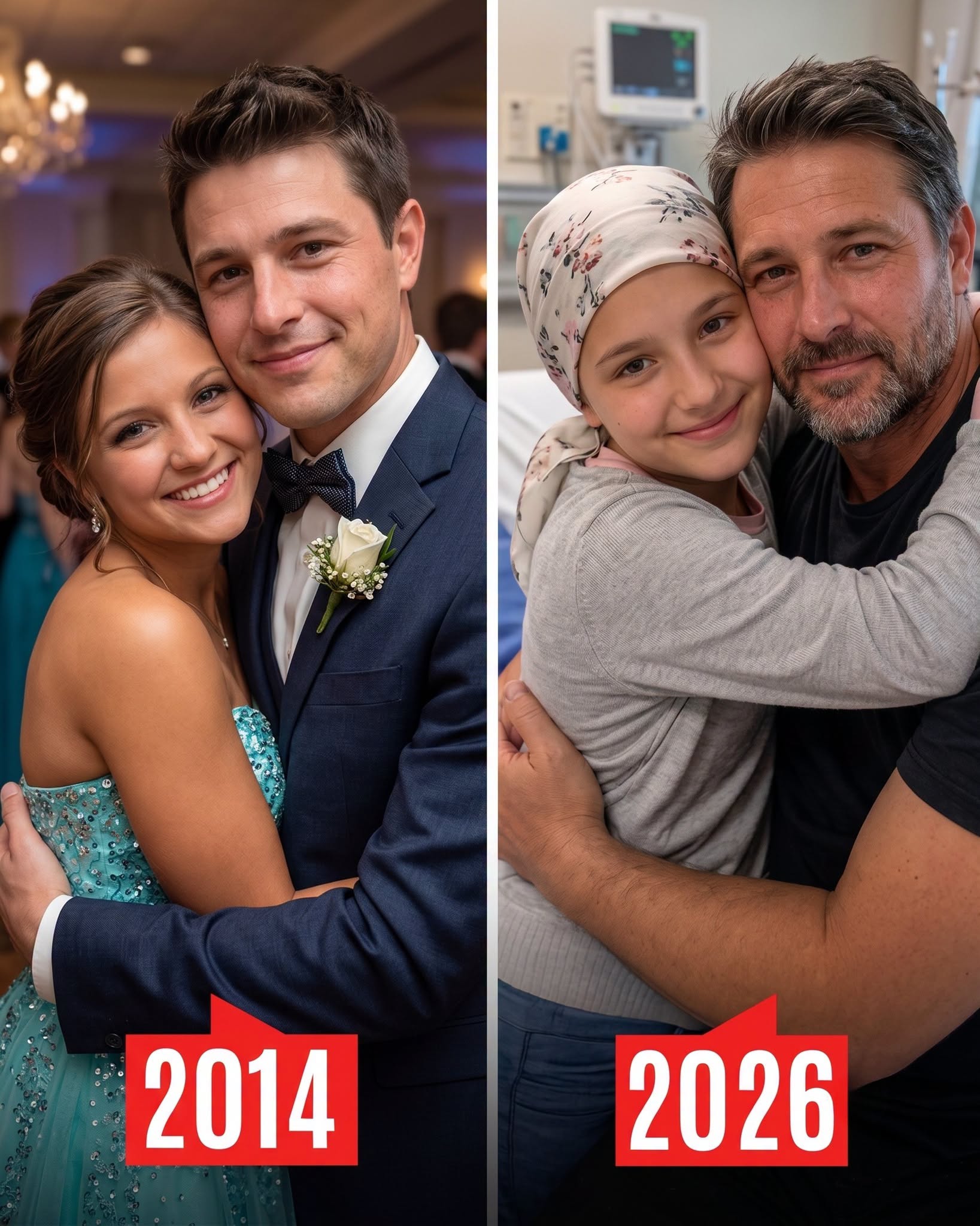
Part 1 — The Name I Never Expected to See Again
For years, I had helped grant wishes for seriously ill children.
I had arranged trips to theme parks, surprise meetings with athletes, bedroom makeovers, private movie screenings, and more midnight ice cream deliveries than I could count. Every child was different, and every wish reminded me how precious ordinary happiness could become when time was uncertain.
But one Tuesday afternoon, I opened an application that made me forget how to breathe.
I was sitting at my desk with a half-finished cup of coffee beside me, working through the day’s requests, when I saw the mother’s name printed beneath the child’s information.
Rebecca.
I stared at it for several seconds.
There were plenty of women named Rebecca.
It couldn’t be her.
Then I read the address.
My hand slowly moved away from the coffee cup.
It was her.
Rebecca—the girl I had loved before I knew how complicated love could become.
The girl I had once believed I would marry.
The girl who had disappeared from my life twelve years earlier without an explanation, a goodbye, or even a note.
For years, I had wondered what I had done wrong.
Eventually, I had stopped asking.
Or at least, I had convinced myself that I had.
Then I looked at the next line.
Child: Sophie.
Age: 12.
I leaned back in my chair.
Twelve.
Rebecca had vanished twelve years ago.
For one terrible moment, my mind rushed toward a possibility I had never considered.
Could Sophie be mine?
I read the application twice, then a third time.
Sophie’s condition was serious. Her family had submitted a request to our foundation, though the section asking what she wanted most had been left surprisingly vague.
Normally, I wasn’t the person who visited families.
I coordinated wishes. I made phone calls. I found donors. I solved impossible scheduling problems and turned children’s ideas into real experiences.
That afternoon, I broke my own routine.
I drove to Rebecca’s house myself.
The entire way there, my hands stayed tight around the steering wheel.
I told myself I was going because Sophie needed help.
That was true.
But it wasn’t the whole truth.
I needed to see Rebecca.
And I needed to see the little girl.
When the front door finally opened, twelve years disappeared in an instant.
Rebecca stood there looking older, thinner, and more exhausted than the eighteen-year-old girl who still existed somewhere in my memory.
Her eyes widened.
Every bit of color drained from her face.
“Daniel?”
Hearing my name in her voice after all those years hurt more than I expected.
“What are you doing here?”
“I came because of Sophie.”
Her expression changed immediately.
“No.”
I blinked. “Rebecca—”
“No, Daniel. Absolutely not.”
“You haven’t even heard what I came to say.”
“I know what your foundation does.”
She folded her arms as if putting something solid between us.
“We don’t need thousands of dollars spent on us. We’re managing.”
I almost laughed, but there was nothing funny about the exhaustion written across her face.
She looked like someone who had forgotten what a full night’s sleep felt like.
“You don’t look like you’re managing.”
Her jaw tightened.
“That isn’t your concern.”
Maybe twelve years earlier I would have backed away.
But then a small voice came from somewhere behind her.
“Mom?”
Rebecca froze.
A girl appeared in the hallway.
She was small for twelve, pale and noticeably thin, but the smile she gave me was so warm that for a second I forgot every question I had brought with me.
I searched her face automatically.
Her eyes.
Her nose.
Her smile.
Anything that looked like me.
There was nothing.
And somehow, I knew immediately.
Sophie wasn’t my daughter.
The realization brought relief.
And, strangely, disappointment.
I pushed both feelings aside and crouched so we were closer to eye level.
“You must be Sophie.”
Her expression brightened.
“Are you the wish man?”
I laughed.
“I’ve never been called that before, but yes. I suppose I am.”
Her eyes widened with excitement.
“So you grant wishes?”
“That’s the idea.”
I smiled at her.
“And I’m told you have one.”
She became very serious.
Then she asked, “Can I have pancakes at midnight?”
I stared at her.
Rebecca closed her eyes as though she had already heard this request several times.
“Pancakes?”
Sophie nodded.
“At midnight.”
“You know you can ask for something much bigger, right? A vacation. Disney World. Meeting somebody famous. Almost anything.”
“I know.”
She thought about it, then shrugged.
“But I’ve never eaten pancakes at midnight.”
Something about the simplicity of that answer caught me off guard.
I looked at Rebecca.
For the first time since opening the door, she didn’t argue.
So that night, at exactly 12:01 a.m., the three of us sat on Rebecca’s kitchen floor with plates of strawberry pancakes balanced on our knees.
I had offered to use the table.
Sophie refused.
“They taste better on the floor.”
“Is that scientifically proven?”
“Yes.”
“By whom?”
“Me.”
I couldn’t argue with that.
She hummed happily between bites, occasionally closing her eyes as though she were eating in the finest restaurant in the world.
Rebecca sat across from us, watching her daughter.
For a moment, the fear and exhaustion disappeared from her face.
There was only love.
Then she looked at me.
“Thank you.”
“It was pancakes.”
“You know that’s not what I’m thanking you for.”
I did.
But neither of us said more.
Eventually, Sophie’s head drifted against my arm.
She yawned.
“Can Daniel come back?”
Rebecca’s expression tightened.
I saw something pass through her eyes—something caught between fear and longing.
“We’ll see.”
Sophie leaned toward me and whispered loudly enough for her mother to hear.
“That means yes.”
I smiled.
At the time, I thought pancakes were Sophie’s wish.
I had no idea they were only the beginning.

Part 2 — The Wishes That Cost Almost Nothing
A few days later, I returned with a red convertible.
The moment Sophie saw it parked outside, her mouth fell open.
“You found one!”
“You asked for a ride in a red convertible.”
“I didn’t think you’d actually do it.”
“That would make me a pretty bad wish granter.”
For the next hour, we drove around the neighborhood again and again with the top down.
Sophie lifted both arms into the air and laughed every time the wind tangled her hair.
Rebecca watched from the driveway at first.
Eventually, even she smiled.
After that, I stopped pretending I was visiting only because of the foundation.
Sophie started texting me.
Are you busy?
Somehow, I never was.
We fed ducks at the pond.
We built a blanket fort that occupied nearly the entire living room.
We watched terrible movies and argued over which one deserved the title of “worst movie ever made.”
Sometimes we did nothing extraordinary at all.
And those days began meaning more to me than any elaborate wish I had ever arranged.
Rebecca was almost always nearby.
Sometimes she joined us.
Sometimes she stood quietly in a doorway, watching.
Whenever I caught her looking at me and Sophie together, she would quickly glance away.
At first, I assumed she was worried Sophie might become too attached to me.
Later, I realized I had misunderstood everything.
Sophie wasn’t the person Rebecca was trying to protect.
One evening, Sophie asked me to come upstairs.
“Alone,” she added.
I found her sitting against several pillows, holding an old photograph against her chest.
She looked unusually serious.
I pulled a chair closer to the bed.
“What’s going on?”
She took a breath.
“I figured out my real wish.”
I smiled.
“Finally. Tell me.”
Her eyes filled instead of brightening.
My smile disappeared.
“Sophie?”
“If I tell you, you might get angry at Mom.”
I felt something tighten in my chest.
“Why would I be angry?”
“She cries sometimes when she thinks I’m asleep.”
I didn’t know what to say.
“She says she did something terrible to you a long time ago.”
The room suddenly felt smaller.
I looked toward the closed bedroom door.
Whatever happened between Rebecca and me had belonged to another lifetime.
Yet apparently it still lived inside her.
“Sophie, whatever happened between your mom and me has nothing to do with you.”
“But my wish is about her.”
I leaned forward.
“What do you mean?”
She hesitated.
“You have to promise you won’t say no.”
“Sophie—”
“Please.”
There was something in her expression I couldn’t refuse.
“I promise I’ll listen.”
“No. Promise you won’t refuse.”
I should have been more careful.
Instead, I said, “Okay. I promise.”
She released a shaky breath.
Then she whispered, “I want you to be Mom’s wish granter too.”
I stared at her.
“You want me to get her something?”
“No.”
She shook her head quickly.
“Everybody asks me what I want. The doctors ask. The nurses ask. You ask. Everyone worries about me.”
Her voice became softer.
“But nobody asks Mom what she wants anymore.”
My chest tightened.
“She sleeps in the chair beside my bed. She eats when I eat. She stopped seeing her friends. And she sold her guitar.”
“Her guitar?”
Sophie nodded.
“She used to play every morning.”
She paused to catch her breath.
I picked up the glass of water beside the bed and handed it to her.
After taking two careful sips, she continued.
“She said we needed the money.”
Sophie looked down.
“But I think she sold it because she stopped doing things that made her happy.”
Then she reached beneath her pillow.
“I made something.”
She handed me a folded sheet of paper.
The handwriting was small, uneven, and carefully written.
At the top, Sophie had written:
Things Mom Used to Love
Underneath were six items.
Dancing in the kitchen.
Wearing lipstick.
Drinking coffee with a friend.
Laughing so hard she snorts.
Being in a picture instead of taking it.
Playing music again.
I read the list twice.
None of the wishes required a private jet.
None required celebrity phone calls or expensive tickets.
Most of them didn’t cost anything at all.
“These are such little things,” I murmured.
Sophie looked straight at me.
“They aren’t little to Mom.”
That sentence stayed with me.
Then she said something I will never forget.
“Everyone is waiting for me to get better. I want to get better too.”
Her fingers tightened around the blanket.
“But if I don’t…”
“Don’t say that.”
She gave me a faint, understanding smile.
“If I don’t, Mom won’t know what to do with herself. She forgot how to be anybody except my mom.”
I looked down at that handwritten list.
I had spent years believing wishes were about giving children unforgettable experiences.
But Sophie wasn’t asking for an experience.
She was asking me to give her mother back pieces of herself.
I folded the paper carefully.
“Okay.”
Her eyes searched mine.
“Okay what?”
“I’ll do it.”
“You promise?”
I slipped the list into the inside pocket of my jacket.
“I promise.”
Sophie smiled.
Then she pointed at me sternly.
“But don’t tell her this was my idea.”
I laughed softly.
“Sophie, she’s going to figure it out.”
“Maybe.”
“She definitely will.”
“She might think you’re just really weird.”
“That is somehow worse.”
For the first time that evening, she laughed.
I carried the sound with me all the way home.
Part 3 — One Song in the Kitchen
The next morning, I showed up carrying two coffees and a paper bag.
Rebecca opened the door and immediately narrowed her eyes.
“What are you doing?”
“Good morning to you too.”
She looked at the cups.
“Why are there two coffees?”
“Because drinking alone is depressing.”
“I drink coffee alone every morning.”
“Exactly.”
She nearly smiled.
Nearly.
I followed her into the kitchen.
Then I pulled out my phone.
“What are you doing now?”
“Playing music.”
Rebecca stared at me suspiciously.
I tapped the screen.
An old song filled the kitchen.
Her face changed immediately.
She knew it.
Of course she did.
Sophie had been very specific.
I extended my hand.
“Dance with me.”
Rebecca went completely still.
“No.”
“Come on.”
“No, Daniel.”
“One song.”
Then realization flashed across her face.
Her eyes narrowed.
“Sophie.”
I said nothing.
“That list.”
Still nothing.
“Oh my God.”
She stepped away from me.
“That is what the paper under her pillow was about.”
“Rebecca—”
“No.”
The word came out sharper this time.
“I don’t need this.”
“Need what?”
“Your charity.”
“This isn’t charity.”
“Then what is it?”
Her voice cracked.
“Am I another project now? Another sad person you’re supposed to fix? Another wish?”
The question hit harder than she intended.
Maybe because some part of me had wondered the same thing.
I put the coffee down.
“Sophie told me everyone asks what she needs.”
Rebecca’s eyes shifted away.
“She said nobody asks what you need.”
“She’s twelve.”
“She’s observant.”
“She shouldn’t be worrying about me.”
“But she is.”
Rebecca pressed her lips together.
“She thinks you’ve given up every part of yourself since she got sick.”
That was when Rebecca turned away completely.
Her hand rose to her mouth.
I softened my voice.
“I didn’t come here because I think you’re broken.”
She didn’t answer.
“And I’m not trying to repair you.”
“Then why are you here?”
“Because maybe you deserve to remember who you were before every hour of every day became about hospitals, medicine, appointments, and whether Sophie was having a good day or a bad one.”
She slowly looked back at me.
There were tears in her eyes.
“That isn’t fair.”
“I know.”
“You can’t disappear from my life for twelve years and then suddenly show up and make me remember things I worked very hard to forget.”
I stared at her.
“I disappeared?”
She flinched.
I could have demanded an explanation then.
Every unanswered question from the past rose between us.
But something in Rebecca’s expression stopped me.
This wasn’t the time.
So I held out my hand again.
“One song.”
She looked at it.
Then at me.
Then toward the stairs.
“One song,” she whispered.
She stepped closer.
We danced terribly.
There was no graceful reunion.
No magical movie moment.
I stepped on her foot.
She elbowed me accidentally.
And halfway through the song, I tried to spin her and nearly knocked over a chair.
Rebecca stared at me.
Then something escaped her.
A laugh.
A real one.
She covered her mouth immediately, but it was too late.
I had heard it.
For the first time since I had walked back into her life, Rebecca sounded like the girl I remembered.
And for a few seconds, she looked like her too.

Part 4 — The Photograph
The strangest item on Sophie’s list was the one about photographs.
A picture Mom doesn’t take.
At first, I didn’t understand.
Then one evening, I really looked around their house.
There were pictures everywhere.
Sophie at six.
Sophie on a playground.
Sophie holding a birthday cake.
Sophie at school.
Sophie wearing oversized sunglasses.
Sophie hugging friends.
Sophie laughing.
Sophie sleeping.
But Rebecca was barely visible in any of them.
She had documented her daughter’s entire childhood while slowly removing herself from the frame.
“You’re always behind the camera,” I said.
Rebecca glanced at the wall.
“Somebody has to take the pictures.”
“Not tonight.”
She immediately shook her head.
“No.”
“That’s becoming your favorite word.”
“Daniel, look at me.”
“I am.”
“I haven’t slept properly in months. My hair is a disaster. I look exhausted.”
I nodded.
“You do.”
Her mouth fell open.
“That wasn’t the answer you were supposed to give.”
I laughed.
“You also look like Sophie’s mother.”
Her expression softened.
“And someday, that’s exactly what she’s going to want to remember.”
That ended the argument.
Mostly.
I set up the camera while Rebecca continued complaining.
Sophie sat on the couch, watching us with a delighted smile.
She looked thinner than when I had first met her.
Her good days were still good.
But they didn’t last as long anymore.
None of us talked about it.
We didn’t need to.
“Ready?” I asked.
Rebecca sat beside Sophie.
I lifted the camera.
Before I could take the photograph, Sophie reached toward me.
“Wait.”
“What?”
“You too.”
I lowered the camera.
“This picture is for you and your mom.”
“You’re part of the good days.”
The words landed quietly.
I looked at Rebecca.
She had gone still.
“Sophie…”
“He should be in it.”
“Honey, Daniel doesn’t need—”
“Yes, he does.”
Sophie gave her mother a look far too wise for a twelve-year-old.
“You smile differently when he’s here.”
Rebecca closed her eyes.
“Sophie.”
“I’m sick, Mom. I’m not blind.”
I nearly laughed.
Rebecca looked as if she wanted the floor to swallow her.
Finally she sighed.
“One picture.”
I set the camera timer and hurried toward the couch.
Sophie sat between us.
The camera flashed.
When I picked it up and looked at the screen, my chest tightened.
Rebecca was smiling.
Sophie was leaning toward me.
My arm was resting behind both of them.
We looked comfortable.
Familiar.
Almost natural.
We looked like a family.
I wasn’t the only one who noticed.
Rebecca stared at the photograph longer than necessary.
Something in her face changed.
The wall between us had not disappeared.
But there was a crack in it now.
And both of us could see through.
That evening, Sophie became tired earlier than usual.
By eight o’clock, Rebecca had helped her upstairs.
The smile she had worn during the photograph vanished the moment Sophie turned away.
I watched Rebecca adjust the blanket around her daughter.
She kissed Sophie’s forehead and waited until her breathing became slow and steady.
Then we went downstairs.
For a while, neither of us spoke.
Rebecca sat heavily on the couch.
I remained standing.
Twelve years of unanswered questions felt suddenly impossible to carry any longer.
“Why did you leave?”
Rebecca went completely still.
I sat opposite her.
“I’m not asking to punish you. I just need to know.”
She looked down.
“Daniel…”
“No message. No phone call. Nothing.”
My voice was calmer than I felt.
“One day we were planning a future together. Then you were gone.”
Her eyes filled.
“I didn’t deserve that future.”
“That isn’t an answer.”
She closed her eyes.
And then, finally, after twelve years, Rebecca told me the truth.
“I cheated on you.”
The room became silent.
“Once,” she whispered. “Right before graduation.”
I felt as though something inside me had stopped moving.
“With someone from school.”
I already knew what came next.
Maybe some part of me had known since the day I saw Sophie’s age on the application.
Rebecca looked toward the stairs.
“He was Sophie’s father.”
There it was.
The answer I had spent twelve years wanting.
And suddenly, having it didn’t feel like victory.
Rebecca wiped her face.
“I found out I was pregnant after I left.”
“Why didn’t you tell me?”
“Because I was ashamed.”
“You could have at least said goodbye.”
“I know.”
Her voice broke.
“I was eighteen and terrified. I thought if I stood in front of you and told you what I had done, I would have to watch you realize that every future we’d planned was gone.”
“So you decided for both of us.”
“Yes.”
She didn’t defend herself.
That made it harder to stay angry.
“I thought leaving would hurt you less than the truth.”
“It didn’t.”
“I know that now.”
Tears rolled silently down her cheeks.
“I have known it for twelve years.”
I leaned back.
There were a hundred things I could have said.
Angry things.
Fair things.
Things I had earned the right to say long ago.
But upstairs was a little girl who had somehow brought us back into the same room.
A girl whose greatest wish had not been for herself.
And suddenly I didn’t want an eighteen-year-old mistake deciding everything that came next.
Rebecca stared at her hands.
“I should have told you weeks ago.”
“Why didn’t you?”
“Because every day Sophie got happier when you walked through the door.”
She swallowed.
“And every day I became more afraid that once you knew, you’d stop coming.”
“You thought I’d punish her for something you did?”
“No.”
Rebecca finally looked at me.
“I thought you’d leave because you would remember how much I hurt you.”
The truth was, I did remember.
But I also remembered her dancing badly in the kitchen.
I remembered her laughing.
I remembered the photograph upstairs.
And I remembered Sophie’s handwritten list folded in my wallet.
Rebecca looked away.
“It doesn’t really matter now.”
“What doesn’t?”
“You knowing.”
She gave a tired shrug.
“You aren’t going to stay.”
I don’t know why that sentence hurt more than the confession.
Maybe because she said it as though my leaving was already certain.
As though twelve years ago had taught her that some endings could never be rewritten.
“What if I want to?”
Rebecca’s head lifted.
For several seconds, she simply stared at me.
I wasn’t promising her a perfect future.
I wasn’t pretending the past had disappeared.
I wasn’t saying one conversation could erase betrayal, resentment, grief, or twelve years of silence.
I was only saying I didn’t want to run.
Not yet.
Her eyes filled again.
“Then,” she whispered, “I suppose we have a lot to talk about.”
I nodded.
“Yeah.”
We did.

Part 5 — The Wish Behind All the Others
The next weeks were different.
Rebecca and I talked.
Really talked.
Sometimes the conversations were painful.
Sometimes we sat quietly because neither of us knew what came next.
We did not try to pretend we were eighteen again.
We weren’t.
Too much had happened.
She was no longer the girl who had disappeared.
I was no longer the boy waiting for her to come back.
And maybe that was why we finally had a chance to know each other honestly.
But Sophie remained at the center of everything.
We finished her list.
Coffee with a friend happened one rainy afternoon when one of Rebecca’s old friends came over and stayed for three hours.
Lipstick appeared when Sophie insisted her mother wear a bright shade to dinner at home.
Rebecca complained.
Sophie declared her “dramatic.”
I stayed out of it.
Mostly.
The laughing-so-hard-she-snorts wish completed itself during one of our terrible movie nights.
Rebecca laughed unexpectedly, tried to stop, made the exact sound Sophie had described, and immediately buried her face in a pillow.
Sophie celebrated like we had won the lottery.
“That’s it! That’s the snort!”
“I do not snort.”
“You absolutely snort.”
“Daniel?”
I raised both hands.
“I heard nothing.”
“Coward,” Sophie said.
The guitar was the last one.
I found a replacement—not expensive, not fancy, just similar to the one Rebecca used to own.
When I brought it over, she stood in the doorway staring at the case.
“No.”
“Oh, come on.”
“I said I don’t want charity.”
“And I told you this isn’t charity.”
She looked at me.
“Then what is it?”
I thought about Sophie’s list.
About pancakes at midnight.
About a red convertible.
About kitchen dancing.
About photographs.
“Maybe it’s just someone reminding you that you’re allowed to have something for yourself.”
Rebecca’s eyes moved toward the stairs.
She understood.
She always did.
This time, she accepted the guitar.
That evening, she played for the first time in years.
Sophie listened from the couch with her eyes closed.
And I understood what her real wish had been all along.
She had never been trying to get her mother a guitar.
Or lipstick.
Or coffee.
She wasn’t trying to recreate some perfect version of Rebecca from before illness changed their lives.
She simply wanted proof that her mother could still laugh.
Still dance.
Still make music.
Still exist beyond fear.
Sophie wanted to know that whatever happened, Rebecca would keep living.
And somehow she had trusted me to help make that possible.
Part 6 — Six Months Later
Six months after I first saw Rebecca’s name on that application, nothing about our lives was magically perfect.
Rebecca and I were taking things slowly.
Very slowly.
There was too much history between us for anything else.
We talked about the past when we needed to.
We left it alone when we didn’t.
We learned who the other person had become.
And Sophie was doing better.
Her doctors remained careful.
They reminded us not to assume too much too soon.
But the treatment was working.
For the first time in months, hope didn’t feel like something dangerous to say out loud.
One Saturday afternoon, I walked into the house and heard music coming from the kitchen.
I stopped in the hallway.
Rebecca was playing guitar.
Not for Sophie.
Not because anyone had asked her to.
Just because she wanted to.
Sophie was stretched across the couch, listening.
She looked over at me and smiled.
“She’s happy.”
I leaned against the doorway.
Rebecca didn’t notice us watching.
For a moment, she seemed completely absorbed in the music.
I looked back at Sophie.
“You did that.”
She shook her head.
“You did.”
“No. You made the list.”
“You actually followed it.”
“That’s my job.”
Sophie grinned.
“You know, you’re pretty good at this wish thing.”
I laughed.
Then I looked toward Rebecca.
She glanced up, finally noticing me.
And she smiled.
Not the tired smile she gave people when she wanted them to believe she was okay.
A real one.
The kind Sophie had been fighting to bring back.
I looked at the little girl on the couch, the girl whose first wish had been pancakes at midnight and whose biggest wish had never truly been about herself.
And for the first time, I understood something.
For years, I had believed I was the person granting wishes.
But Sophie had given me something I hadn’t known I was missing.
A second chance.
Not to erase the past.
Not to pretend nothing painful had happened.
But to stop letting an old heartbreak decide the rest of my life.
I smiled at Sophie.
“I think you’re wrong.”
“About what?”
“About me being the wish granter.”
She raised an eyebrow.
I looked once more toward Rebecca, standing in the kitchen with a guitar in her hands and music filling a home that had been quiet for far too long.
Then I said,
“I think I’m the one whose wish came true.”
And this time, when Sophie smiled, there were no tears in my eyes that I bothered trying to hide.
Disclaimer: This fictional story is inspired by situations from everyday life. Names, characters, businesses, and locations are created for storytelling purposes, and any resemblance to actual people or events is coincidental.