
The Shocking Truth About Your Monthly Energy Bill
If your monthly electricity bill seems to climb higher and higher no matter how careful you are, take a deep breath—you are definitely not alone. Meet Sarah. Like many of us, Sarah spends the last week of every month playing a frustrating guessing game: Why is my power bill so high? She goes through her house turning off lights, unplugs the coffee maker, and scolds her kids for leaving the television running all day.
Many households assume rising costs come from these everyday culprits like computers, smart TVs, or kitchen appliances. But in countless homes across the country, the real source of the problem sits quietly in the laundry room, used completely without a second thought.
The electric clothes dryer is one of the most energy-hungry appliances in a modern home. It doesn’t run constantly, which is exactly why it often escapes our attention. Yet, when it does turn on, it draws an enormous amount of power in a very short time. For families doing frequent laundry, this single appliance can dramatically inflate the electricity bill month after month.

Like many homeowners, Sarah was looking everywhere but the laundry room for the cause of her high bills.
Why the Electric Dryer Uses So Much Electricity
Understanding how and why this happens is the first step toward taking control of your energy costs without sacrificing your comfort or convenience. The main reason electric dryers consume so much power comes down to one simple word: heat.
Unlike many household appliances that rely on efficient little motors or smart electronics, an electric dryer must generate intense heat very quickly—and maintain that heat long enough to evaporate moisture from heavy, wet clothing. That heating element requires a tremendous amount of electricity to operate, far more than most people ever realize.
On average, an electric dryer uses between 2,000 and 5,000 watts per hour. To put that massive number into perspective, let’s consider how much power other common household items use:
- A refrigerator: typically uses around 150 to 300 watts.
- A laptop computer: may use a mere 50 to 100 watts.
- A modern LED television: often uses less than 150 watts.
Even a washing machine that does not heat water uses significantly less electricity than a dryer. This means that just ten minutes of dryer use can consume as much electricity as several hours of operation from smaller devices combined. Over time, those short bursts of heavy, heat-generating usage add up incredibly fast.
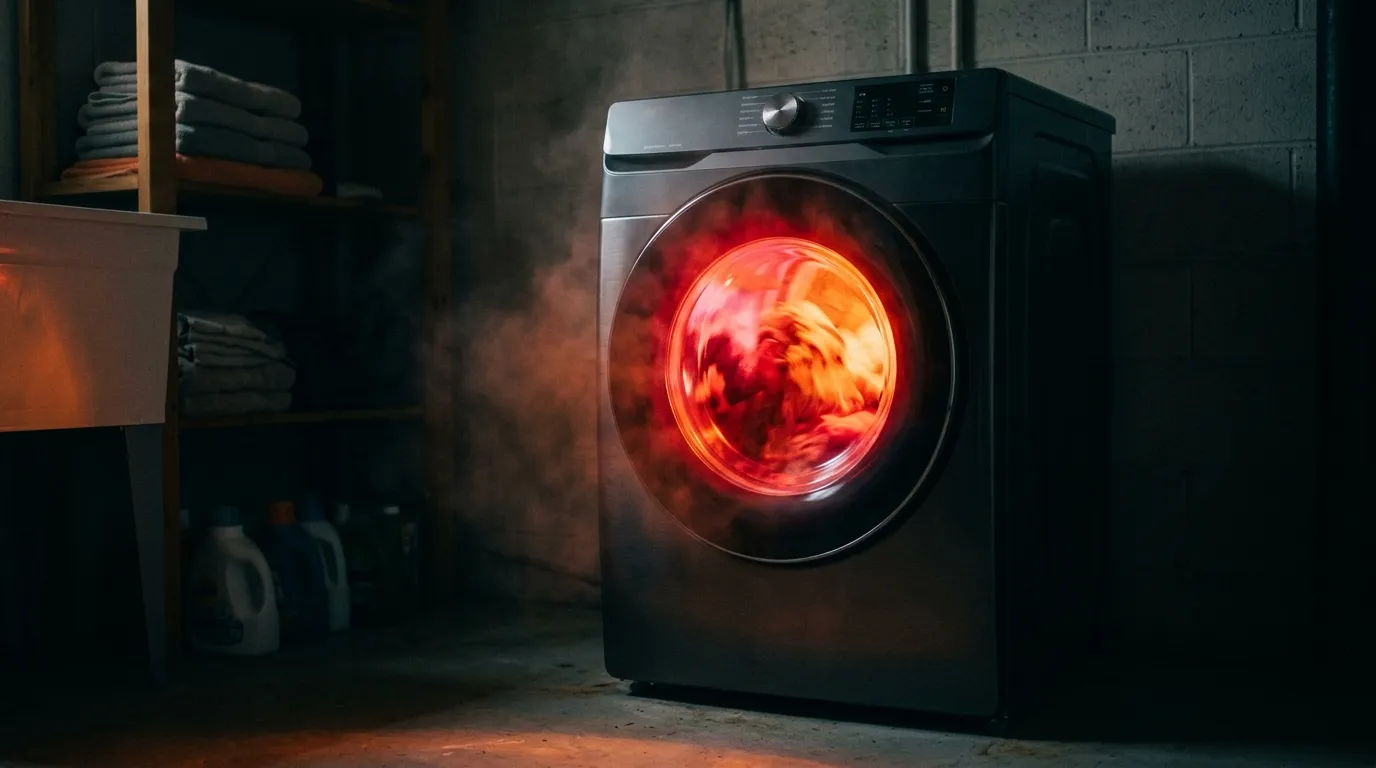
Generating the intense heat required to dry wet clothes requires massive amounts of electrical power.
How Everyday Laundry Habits Add Up Fast
Most of us don’t think twice about how often we use our dryers. One load here, a quick tumble to remove wrinkles there—it doesn’t feel excessive. But when you step back and look at the actual numbers, the financial impact becomes crystal clear.
Consider Sarah’s household, which runs about five loads of laundry per week. That is roughly twenty loads per month. If each load takes forty-five minutes to an hour to dry, Sarah’s dryer may be running for fifteen to twenty hours every single month. Each of those hours draws a high level of electricity, often during peak billing times when utility companies charge premium rates.
Homes with larger families or more frequent washing routines may run the dryer daily. Drying heavy items like plush towels, thick bedding, denim jeans, and heavier fabrics requires even more energy. These items hold moisture much longer and force the dryer to work twice as hard to get them ready to wear.
Hidden Factors That Make Dryer Costs Even Higher
Beyond simply how often the dryer runs, several common habits and physical conditions can quietly increase your energy usage even further.
Overloading the drum is one of the most frequent mistakes we make. When we are in a rush, we tend to cram as much into the machine as possible. But when the drum is packed too tightly, air cannot circulate properly. Clothes take much longer to dry, and the machine must run additional cycles just to finish the job.
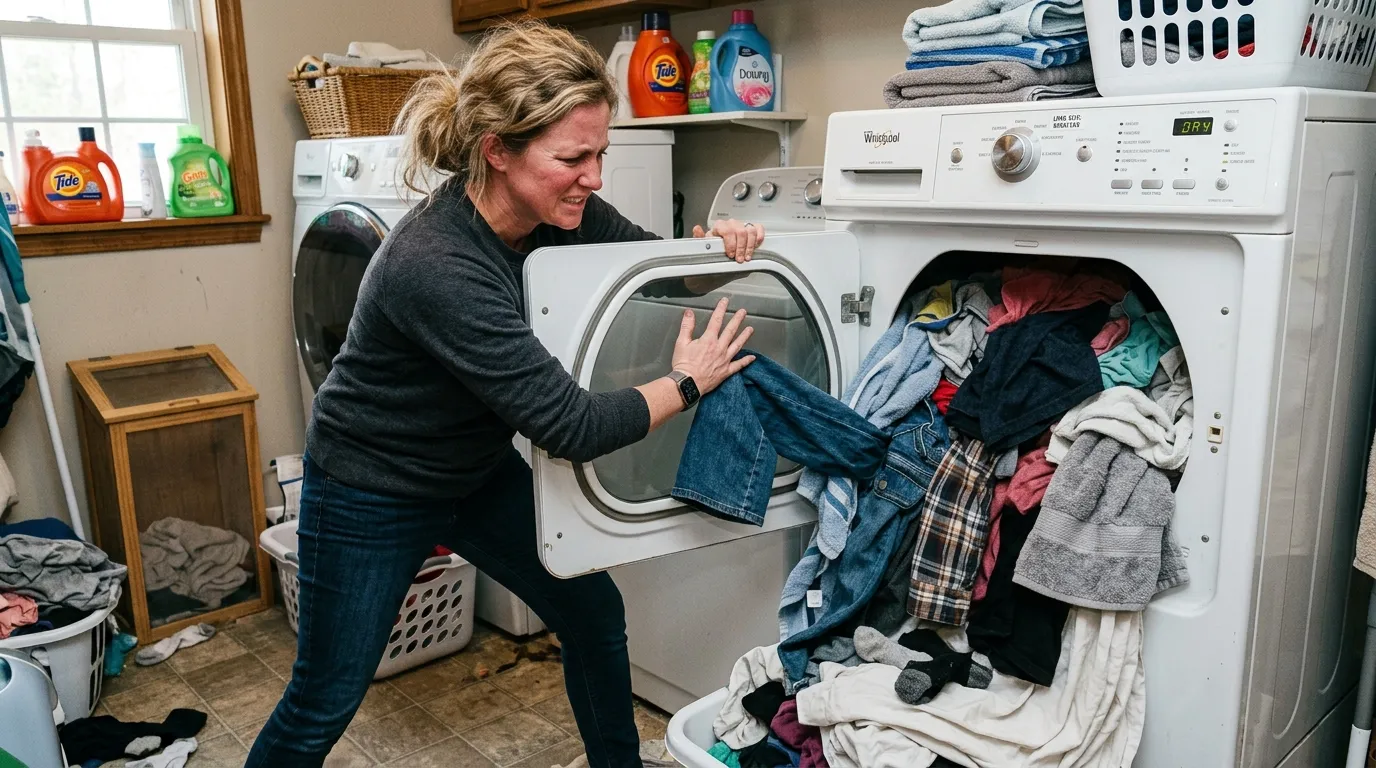
Overloading the dryer restricts airflow, forcing the machine to run longer and consume far more electricity.
Neglecting the lint filter is another major issue. A clogged filter creates a physical barrier that restricts airflow, forcing the dryer to use more energy while delivering significantly poorer results.
Older dryer models also tend to consume significantly more electricity than newer ones. As internal components wear down over the years, the machine becomes less efficient and requires longer run times to achieve the same warm, fluffy results.
High heat settings may feel like the fastest route to dry clothes, but they come at a heavy cost. Many modern fabrics do not need extreme heat to dry effectively. Using high temperatures when they are entirely unnecessary increases energy use without providing much real benefit to your laundry.
Finally, long or poorly designed vent ducts can trap heat and moisture, drastically extending drying time. The longer it takes for warm, damp air to exit the system and leave your home, the harder your dryer must work.
Electric Dryers Compared to Gas Models
It is worth noting that not all dryers impact your energy bills in the exact same way. Electric dryers are generally much more expensive to operate than their gas-powered counterparts, particularly in regions where electricity rates are soaring.
While gas dryers still use a small amount of electricity to power the drum motor and the digital controls, the actual heat itself comes from natural gas. Natural gas is often much cheaper per unit than electricity. As a result, households with electric-only dryers often see noticeably higher utility bills, especially during colder months when thick winter laundry loads increase.
Practical Ways to Reduce Your Energy Costs
The good news for Sarah—and for you—is that lowering dryer-related electricity costs does not require major lifestyle changes or sacrificing clean clothes. A few simple, thoughtful adjustments can lead to noticeable monthly savings.
- Embrace Air-Drying: Air-drying clothes whenever possible is one of the most effective strategies. Hanging clothes indoors on a rack or outdoors on a line just once or twice a week can dramatically reduce dryer usage. Even partial air-drying before finishing items in the dryer helps cut down on run time.
- Clean the Lint Filter Every Time: Cleaning the lint trap after every single load is absolutely essential. This tiny habit can improve your dryer’s efficiency by as much as thirty percent and helps the machine operate safely.
- Turn Down the Heat: Using lower heat settings is an incredibly easy change. Many modern fabrics dry just as well on medium or low heat, especially when loads are properly sorted.
- Sort Like a Pro: Drying similar fabrics together makes a massive difference. Mixing heavy bath towels with lightweight t-shirts forces the dryer to run longer than necessary to get the towels dry, over-baking the shirts in the process. Grouping items with similar thickness allows for shorter, highly efficient cycles.
- Consider an Upgrade: Upgrading to a more energy-efficient dryer can provide long-term financial relief. Heat pump dryers, for example, recycle air and use significantly less electricity than traditional electric models.

Emptying the lint trap before every load and utilizing a drying rack can slash your laundry costs by up to 30%.
The Bigger Picture of Household Energy Use
While it is always important to be mindful of all your home’s energy usage, focusing your attention on one high-impact appliance often delivers the fastest, most satisfying results. The electric dryer stands out from the pack because of how much raw power it consumes relative to how casually we tend to use it.
By becoming more aware of your personal laundry habits and making a few easy changes—just like Sarah did—many households can see a meaningful, exciting reduction in their electricity bills.
Sometimes the real key to saving money isn’t ruthlessly cutting back everywhere in your life. It is simply learning to use one incredibly powerful appliance a little more wisely. Taking a closer look at your laundry routine may reveal that the biggest opportunity for household savings has been hiding in plain sight all along.
If you found this article interesting, please SHARE it with your friends and family!
Note: All images used in this article are AI-generated and intended for illustrative purposes only.