
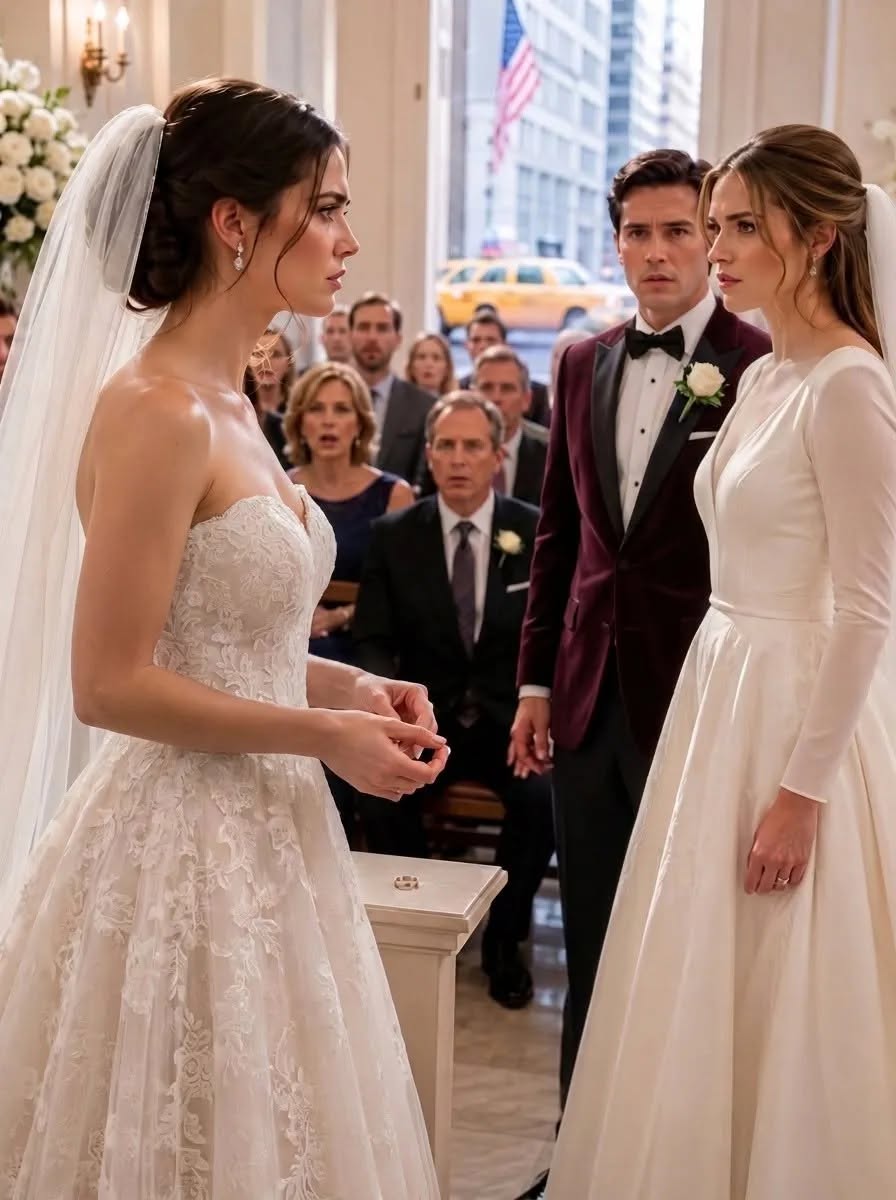
Three years of vacations, birthdays, and Sunday grocery runs. Three years of minor arguments over thermostat settings, laughing over late-night takeout, and hushed, hopeful conversations about the children we had not yet had.
I had given Ryan all of that. And the best sentence he could offer me, standing at the altar of our wedding, was two measly words.
“I’m sorry.”
My younger sister, Danielle, stepped closer. Both of her hands were resting dramatically over her stomach, a theatrical pose meant to draw every eye in the room.
“Ryan didn’t know how to tell you,” she said, her voice carrying through the cavernous church.
That was the very first lie I recognized. Later, when the dust settled, I would discover there had been dozens more.
“He loves me,” she continued, her chin lifting defiantly. “He has for a long time.”
Behind me, someone in the third pew whispered, “Oh my God.” My mother physically covered her mouth in horror. My father stared straight forward, paralyzed. Even the organist, who had been softly playing background music, quietly lifted her trembling hands from the keys. The silence that followed was deafening.
Danielle kept walking toward the altar, soaking in the tension.
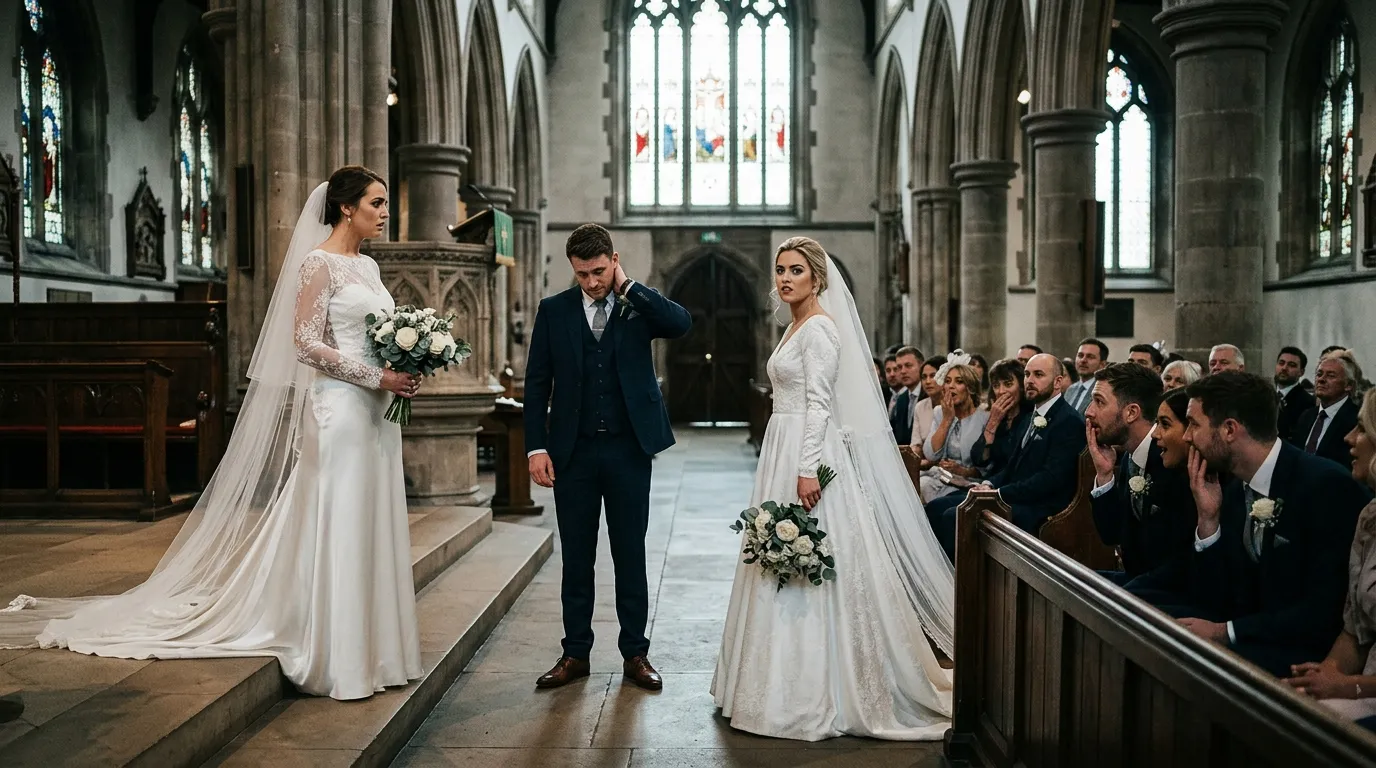
The moment everything I thought I knew about my family and my future completely shattered.
The Audience and the Illusion
My sister had always changed when people were watching. At quiet family dinners, she could be careless, petty, and childish. But the moment you put an audience around her, suddenly every pause felt meticulously timed, every facial expression entirely deliberate.
Today, she had nearly two hundred people watching her. She looked absolutely energized by it.
“This isn’t how I wanted you to find out,” she said, feigning sympathy.
I didn’t look at her face. I stared at the gown she was wearing. The intricate lace bodice. The sweeping train. It was almost an exact, deliberate copy of mine.
“Really?” I asked, my voice dangerously calm.
For the first time that morning, a flicker of uncertainty crossed her face. I gestured toward her dress.
“Because your outfit suggests otherwise.”
Several guests shifted uncomfortably in the wooden pews. Someone in the back made a sound that was suspiciously close to a laugh. Danielle’s mouth tightened into a thin, angry line.
“Don’t make this ugly, Vicki.”
That almost made me smile. It was genuinely absurd. She had entered my wedding wearing a carbon copy of my bridal gown, proudly announced an affair with my fiancé in front of our entire social circle, and somehow, I was being warned not to make things ugly.
Then, three distinct memories hit me all at once, like physical blows.
Three weeks earlier, Danielle had casually asked for the name of my bridal boutique on Madison Avenue, claiming she wanted “inspiration” for whenever her own wedding day came.
Two weeks earlier, Ryan had canceled dinner twice and completely missed a Saturday morning appointment with our mortgage broker.
One week earlier, Danielle had hugged me tightly in our mother’s warm kitchen, promising me that nobody could possibly outshine me on my wedding day.
I had believed her. Not because she had been an especially convincing liar, but because she was my sister. I trusted her implicitly.
“How long?” I asked.
Danielle blinked. Ryan finally looked up at me.
“How long has this been going on?” I repeated, louder this time.
“Victoria,” Ryan began, taking a half-step forward.
I raised one hand, palm out, stopping him dead in his tracks. “Not you.”
He stopped. That surprised him. Truthfully, it surprised me too. For most of our four-year relationship, Ryan had been the person who expertly softened our uncomfortable conversations. Maybe later. Maybe you misunderstood. Maybe this isn’t the right time. Somehow, delaying things always benefited him. Not anymore.
I looked directly into Danielle’s eyes. “How long?”
Her theatrical confidence faltered. “Does that really matter now?”
“Yes.”
The silence stretched agonizingly across the church.
“Eight months,” she finally said.
The Anatomy of Eight Months
My mother made a small, wounded sound from the front row. Eight months.
My mind raced backward. I thought about Thanksgiving. Christmas. New Year’s Eve. My birthday. Our expensive engagement party. I remembered the weekend Danielle had stayed at our apartment because her building’s boiler had supposedly broken. I remembered the romantic Hudson Valley trip Ryan had abruptly abandoned for a mysterious “client emergency.” The brunch Danielle skipped because she claimed she had food poisoning.
Eight months meant my sister had happily helped me choose table linens and flower arrangements while actively sleeping with the man I planned to marry.
Without shaking, I slowly removed my diamond engagement ring.
Ryan noticed immediately. For the first time, panic broke through his guilt, and he moved toward me. “Victoria, please. Can we go somewhere private?”
I almost laughed. “Private?”
His expression shifted into something resembling terror.
“Now you want privacy?” I asked. Whispers spread rapidly through the room. Ryan anxiously glanced toward the guests. And suddenly, in that terrible moment, I understood something fundamental about the man I loved.
He was not most frightened of losing me. He was frightened of being seen for who he truly was. Danielle was the exact opposite. She desperately wanted the audience. Ryan desperately wanted an escape. Somehow, those two severely broken people actually believed they could build a functional future together.
I held out the ring. “Take it.”
He stared at my open palm, refusing to move. “I don’t want it.”
“I didn’t ask what you wanted.” His jaw tightened. When he wouldn’t take it, I placed the ring carefully, deliberately, on the edge of the first wooden pew.
Then I turned back toward the altar.
The Judge Who Stood By
That was when I truly noticed Sebastian Sterling.
He had been standing only a few feet behind me through the entire devastating spectacle. Sebastian was sixty-one, tall, silver-haired, and possessed a remarkably calm demeanor. He had spent years as a highly respected New York judge before retiring, later becoming the chairman of the Sterling Civic Foundation, a major housing and education charity.
More importantly, he was an old friend of my employer and had graciously agreed months earlier to officiate my wedding. But I also knew him for another reason.
Six months earlier, we had talked for almost two hours at a charity gala at the Metropolitan Museum of Art. The conversation was effortless, intellectual, and deeply engaging. Afterward, he had invited me to dinner.
I had politely declined. “I’m engaged,” I had told him.
His response had always stayed with me. “That is an excellent reason to say no.”
There was no pressure. No flirtation disguised as annoying persistence. No wounded ego. He simply walked me to the coat check, wished me a good night, and entirely respected the boundary. Before leaving, however, he had added one final thing: “If your circumstances ever change, Victoria, I hope you’ll allow me to ask again.”
Now, our eyes met across the altar. He did not look smug or pleased by Ryan’s catastrophic failure. He looked genuinely concerned. That mattered to me.
“Do you need a moment?” he asked quietly. Everyone in the cavernous room could hear him, but he was looking only at me.
I glanced at Ryan. Then at Danielle. Then at my stunned parents. Then at the rows of guests staring back at me with a mix of shock, pity, curiosity, and the heavy expectation that I would eventually collapse into a puddle of tears.
“No,” I said firmly.
Danielle frowned, confused. “No?”
I faced my sister. “Thank you.”
She actually stepped backward, thrown entirely off her script. “For what?”
“For telling me before I signed anything else with him.”
Her face hardened into a mask of cruel defense. “You think you can pretend this doesn’t hurt?”
“I didn’t say that.” My voice cracked slightly, betraying my heartbreak. “It hurts more than you can possibly imagine. But pain and humiliation aren’t the same thing.”
Danielle stared at me, her eyes narrowing. “You wanted me humiliated.”
“No, I—”
“You bought my dress,” I interrupted, my voice finding its steel again. Silence fell over the room. “You brought people here ready to record my reaction with their phones.” One of Danielle’s friends in the third row quickly lowered her iPhone. “You waited until I was standing at the literal altar.”
Her cheeks reddened with hot shame.
“So don’t try to rewrite this narrative now,” I told her. “You didn’t come here because you loved me enough to tell me the truth. You came because you wanted an audience.”
Her eyes filled with tears. For years, Danielle’s tears had worked like an emergency brake in our family dynamic. If she cried, conversations stopped. If she felt criticized, people immediately softened. If she became overwhelmed, somehow the original problem disappeared entirely.
My mother quickly stood up. “Victoria, maybe everybody should take a little time.”
There it was. Not, Are you all right? Not, Danielle, how could you? Just… Everybody should take a little time. Neutral, pacifying words for a situation that was anything but neutral.
I looked at my mother. “Did you know?”
“No.”
“Dad?”
My father finally met my eyes, looking devastated. “No.”
I believed them. But then, a much darker question appeared in my mind. “If you had known… would you have told me?”
My mother hesitated. It was only one second too long, but that single second told me absolutely everything I needed to know. “Victoria,” she said carefully, walking on eggshells, “your sister has always been impulsive. Sometimes getting involved makes things worse.”
I nodded slowly. Of course. Danielle was impulsive; I was responsible. Therefore, whenever Danielle created chaos, my unspoken job was to quietly absorb the blast radius. I had been doing it since childhood. Danielle forgot Dad’s birthday? I reminded her. Danielle overspent? I loaned her the money. Danielle quit a job? I rewrote her résumé.
Being dependable had slowly turned into being responsible for everyone else’s consequences.
Something fundamentally changed inside me that morning. It wasn’t dramatic. It felt more like a heavy lock turning inside a vault.
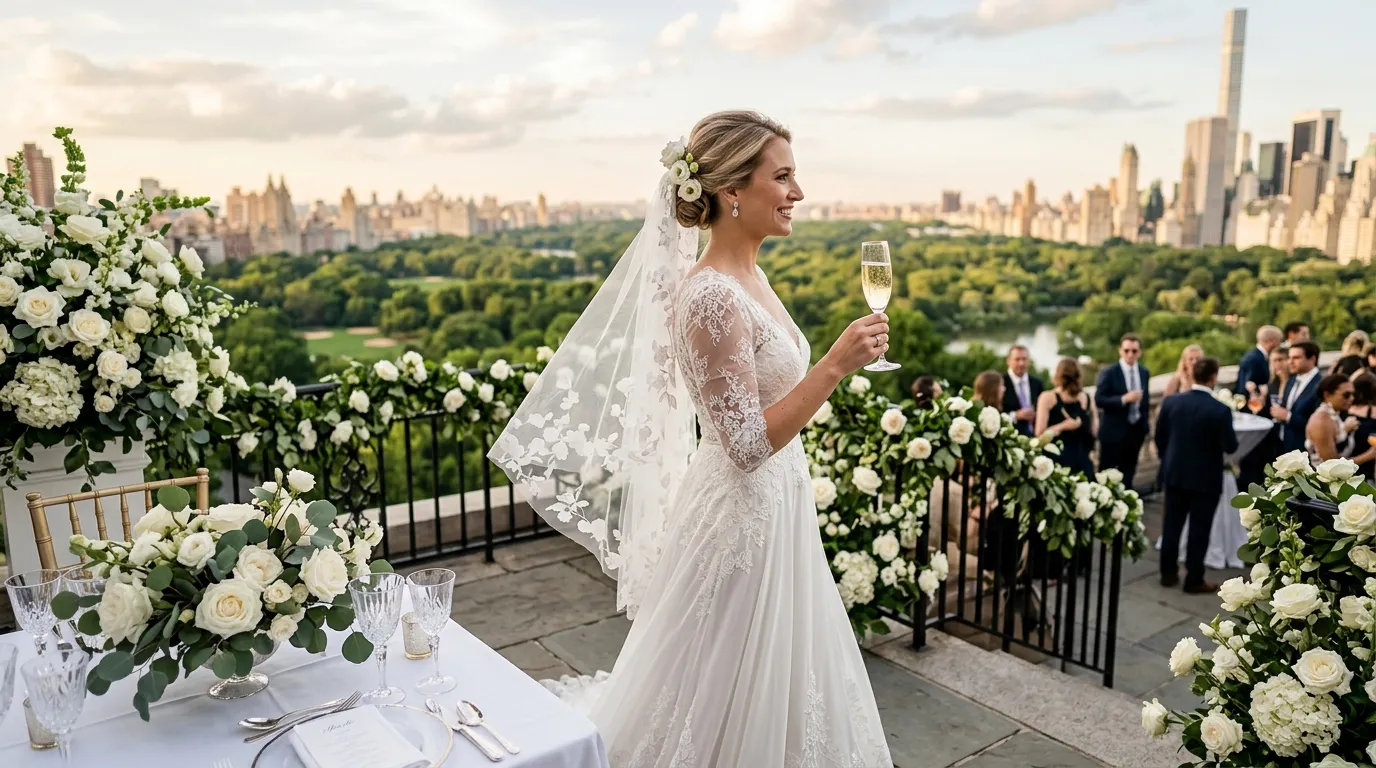
The day suddenly belonged to me again. I refused to surrender my entire day to their betrayal.
Taking Back the Day
Sebastian spoke softly beside me. “You don’t owe anyone a performance.”
I looked at him, grounding myself in his steady presence.
“You also don’t owe anyone a decision while you’re standing in shock,” he added.
That one sentence changed the entire trajectory of the day. A lesser man—the kind of man Danielle imagined in her dramatic narrative—would have taken advantage of the moment. He would have stepped forward and aggressively announced he had always wanted me. Instead, Sebastian gave me the one thing Ryan rarely had: Room to breathe.
Danielle suddenly let out a sharp, nervous laugh. “Of course.” Everyone turned back toward her. She pointed an accusing finger at Sebastian. “This is what this is about, isn’t it? You and him. You met him months ago. You’ve been waiting for this too.”
For the first time, I saw genuine, icy anger in Sebastian’s expression. He didn’t raise his voice, but the sudden weight of his tone commanded the room.
“Ms. Sullivan.”
The stark formality alone quieted her instantly.
“Victoria declined a dinner invitation from me six months ago because she was respectfully engaged to Ryan,” Sebastian said clearly. “I respected that answer. I have had absolutely no romantic relationship with her.” Danielle looked around the room, but nobody came to her rescue. Then Sebastian delivered the final blow. “The difference between respecting a commitment and secretly undermining one should not require explanation.”
A low murmur of agreement moved through the pews. Danielle’s theatrical confidence shattered.
Ryan stepped forward, desperate to save face. “This doesn’t need to become a public trial.”
I turned toward him, feeling colder than I ever had in my life. “You’re right. So leave.”
He stared at me, uncomprehending. “What?”
“You and Danielle wanted today to become about the two of you.” I pointed toward the heavy wooden doors at the back of the church. “Congratulations. You can have the sidewalk.”
Someone in the crowd laughed openly. Ryan flushed a deep crimson. “Victoria—”
“Go.”
Danielle crossed her arms in a final act of childish defiance. “You can’t throw us out.”
I looked around the grand church. “My name is on the contract.”
The church coordinator, Mrs. Reynolds, appeared from the side aisle like a guardian angel. “Ms. Sullivan,” she said gently, “would you like us to clear the sanctuary?”
“No.”
Everyone looked at me in shock. I surprised even myself. “No. These people got dressed up. They traveled here. Some flew across the country. The expensive flowers are paid for. The musicians are already here.” I looked at the sea of white roses surrounding the altar. “They came for a wedding, but apparently we’re not having one.” I locked eyes with my best friend, Laura, in the second row. “So we’ll have lunch.”
Laura stood up immediately, fiercely loyal. “Absolutely.”
Several guests chuckled, breaking the tension. The heavy dread did not disappear, but it shifted. Ryan looked stunned. Danielle looked defeated. Neither of them had planned for logistical defiance.
As they were escorted out, people began clapping. Only a few at first, but then more joined. Soon, the majority of the room was applauding. It was not applause for a marriage; it was applause because I simply refused to surrender my dignity. Danielle stood in the aisle wearing her imitation gown while people openly applauded the woman she had expected to publicly destroy.
That was the very first moment she understood her plan had entirely failed.
The Messy Truth About Accountability
The reception was bizarre but oddly beautiful. Laura removed the groom from the six-tier cake, leaving the bride standing alone in the center. My friends toasted my resilience. But underneath the celebration, the reality of the betrayal festered.
Later that evening, I went back to the apartment I shared with Ryan. Alone. I spent an hour systematically moving all of his belongings into the guest room. I didn’t break anything. I didn’t scream. I simply categorized our four years together into two neat piles: His. Mine.
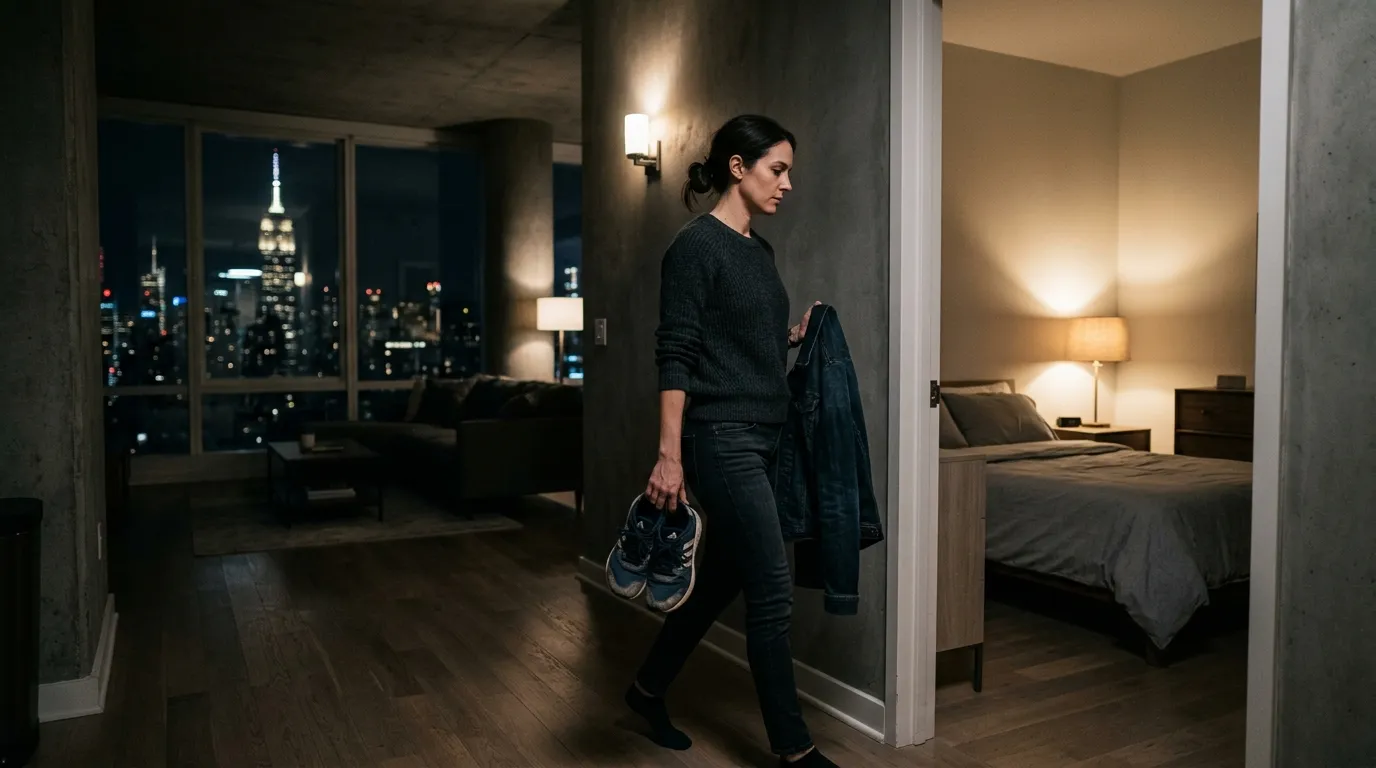
Separating four years of a shared life into categories: His and Mine.
When Ryan showed up at ten o’clock, looking exhausted, I kept the chain on the door. He tried to explain himself. He claimed Danielle had told him she was pregnant (a lie she had orchestrated for leverage, which I found out later was based on a single faint test that she knew was likely false). He claimed he was going to end things with her after our honeymoon.
“You were going to take me to Italy, come home, and then become honest?” I asked, astounded by his cowardice.
“I still love you,” he pleaded.
That was the worst part, because I actually believed him. Ryan probably did love me. He simply did not love me with the discipline and integrity required to make love safe. It took me months of healing to fully understand that vital distinction.
Building Something Real
Life marched on. Ryan’s career suffered from his own lack of focus, and he eventually moved to Philadelphia. Danielle’s grand plan collapsed the moment her fake pregnancy was exposed; Ryan left her immediately. She hit rock bottom, but for the first time in my life, I didn’t rush in to save her. I let her feel the full weight of her own consequences.
Meanwhile, Sebastian brought me coffee at work the Monday following the disaster. He waited until the dust settled, until I was breathing on my own again, before he formally asked me out. Friday dinners turned into Sunday brunches. Brunches turned into long walks in Riverside Park. He asked me hard questions. He challenged me to stop apologizing for existing. He taught me that I didn’t need to be everyone’s shock absorber.
Three months after the wedding, my sister finally offered a real apology. Not an excuse. Not a manipulation. She sat across from me at our parents’ dining table and admitted the ugly truth: “I wanted to hurt you. I was jealous of you… When Ryan started paying attention to me, it felt like I had finally gotten something you couldn’t.”
She didn’t ask for immediate forgiveness. She simply took accountability. It didn’t fix everything overnight, but it was a start.
Eight months after the disastrous church scene, Sebastian took me back to the Metropolitan Museum of Art. He stood near the exact staircase where I had rejected his first invitation a year prior. He opened a small velvet box to reveal a simple, elegant ring that perfectly matched my taste.
“I am not asking because somebody else failed you,” he said, his voice thick with emotion. “I am asking because I have spent eight months watching you rebuild your own life without needing anyone to rescue you. And I would very much like to build the next part beside you.”

I didn’t need to be rescued. I just needed a true partner.
The True Victory
We married four months later in a small ceremony with forty-two guests. No theatrical surprises. No matching dresses. Danielle was there, actively doing the hard work in therapy to become a better person. She handed me an old photograph of us as children, writing on the back that she hoped we could eventually build something new.
Whenever people hear my story, they focus on the juicy drama. The matching dress. The affair. The older, wealthy man sweeping in. They want the ending to be a spectacular, venomous revenge tale where my ex is ruined and my sister is destroyed.
But real life is so much better than that.
Nobody needed to be destroyed for me to heal. My victory wasn’t marrying Sebastian or punishing Ryan. My victory was going home alone that night and sitting with the humiliation. It was learning that love without respect eventually becomes a miserable obligation. It was realizing that forgiveness without true accountability is just permission to hurt you again.
The best part of my story isn’t that my sister tried to steal my wedding, or that my fiancé was a coward. The best part is that on the absolute worst morning of my life, surrounded by two hundred people waiting to see what I would do, I finally stopped asking everyone else who I was supposed to be.
And I finally decided for myself.
Note:This work is inspired by real events and people, but it has been fictionalized for creative purposes. Names, characters, and details have been changed to protect privacy and enhance the narrative. Any resemblance to actual persons, living or dead, or actual events is purely coincidental and not intended by the author.
All images used in this article are AI-generated and intended for illustrative purposes only.