
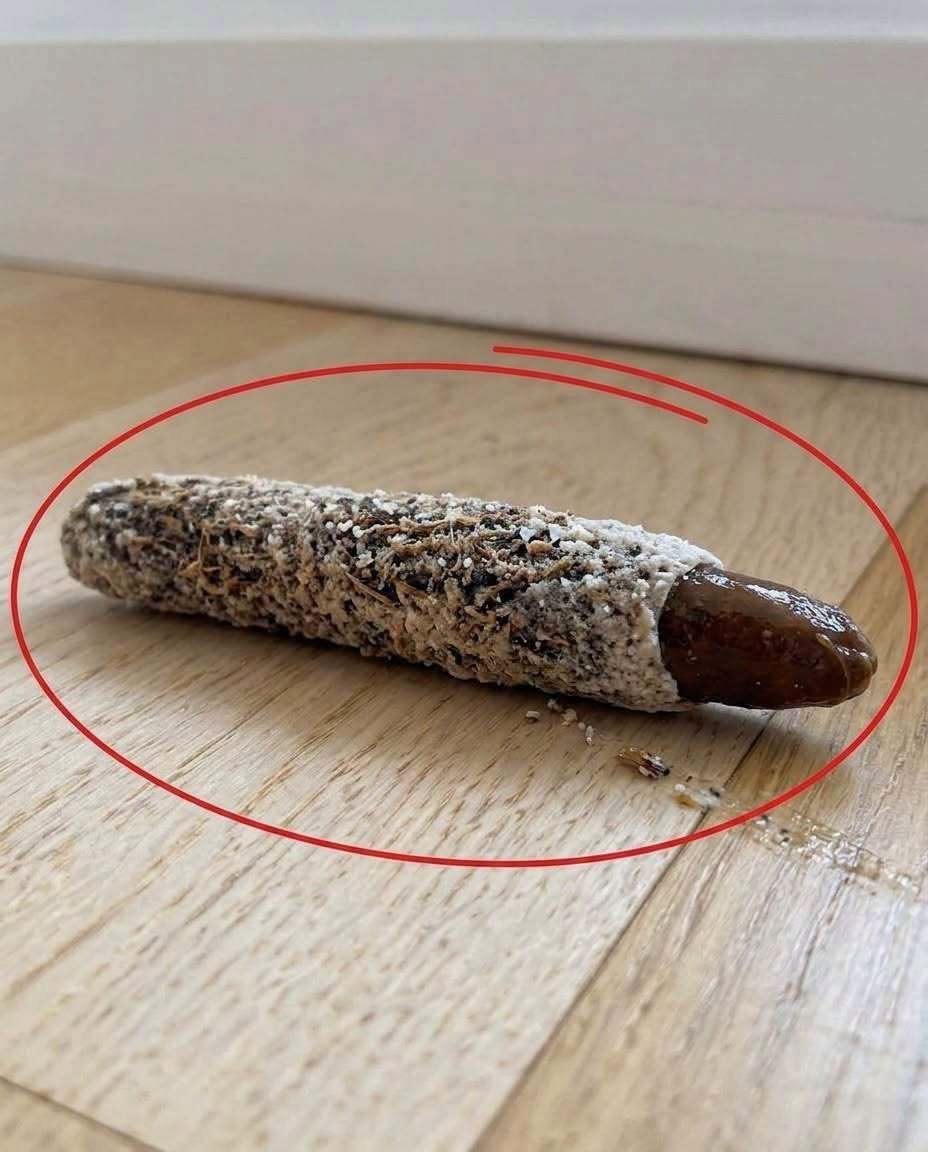
The object on the floor looked like ordinary dirt—small, dusty, and shaped like a narrow tube. But its unusual texture and carefully arranged fibers made it seem strangely different from random household debris. What appeared to be something that could simply be swept away turned out to have a surprising explanation.
The tube was the protective case of a case-bearing moth larva, commonly known as a plaster bagworm. The tiny creature creates its shelter from materials it finds nearby, including dust, hair, lint, dead insects, and other particles. “The creature remains inside and carries the case as it moves,” using openings to extend its head and legs while traveling across floors and walls. When disturbed, it can retreat safely into its portable shelter.
Plaster bagworms are commonly noticed in warm, humid areas of homes, especially around baseboards, closets, corners, walls, and underneath furniture. Because their cases blend easily with dust, they may go unnoticed for a long time. Although their appearance can be unsettling, they are tiny and are not evidence of a dangerous animal hiding inside the house.
Finding one case is usually not a reason for alarm. However, repeated discoveries can indicate that the insects have access to food and building materials. They may feed on spiderwebs, shed hair, dead insects, wool, and other natural fibers, and large numbers can sometimes damage fabrics. Regular vacuuming of corners, closets, baseboards, and areas beneath furniture can help remove both larvae and the materials they need. Reducing humidity, clearing spiderwebs, and properly storing natural-fiber clothing can also discourage them.
What makes the discovery fascinating is how such a tiny creature transforms ordinary household debris into protection. “It was evidence of a hidden life taking place at a scale most people rarely stop to observe.” Instead of being random trash, the strange little tube was a carefully constructed mobile home—an unexpected reminder that even familiar houses can contain small ecosystems that usually remain unnoticed.