
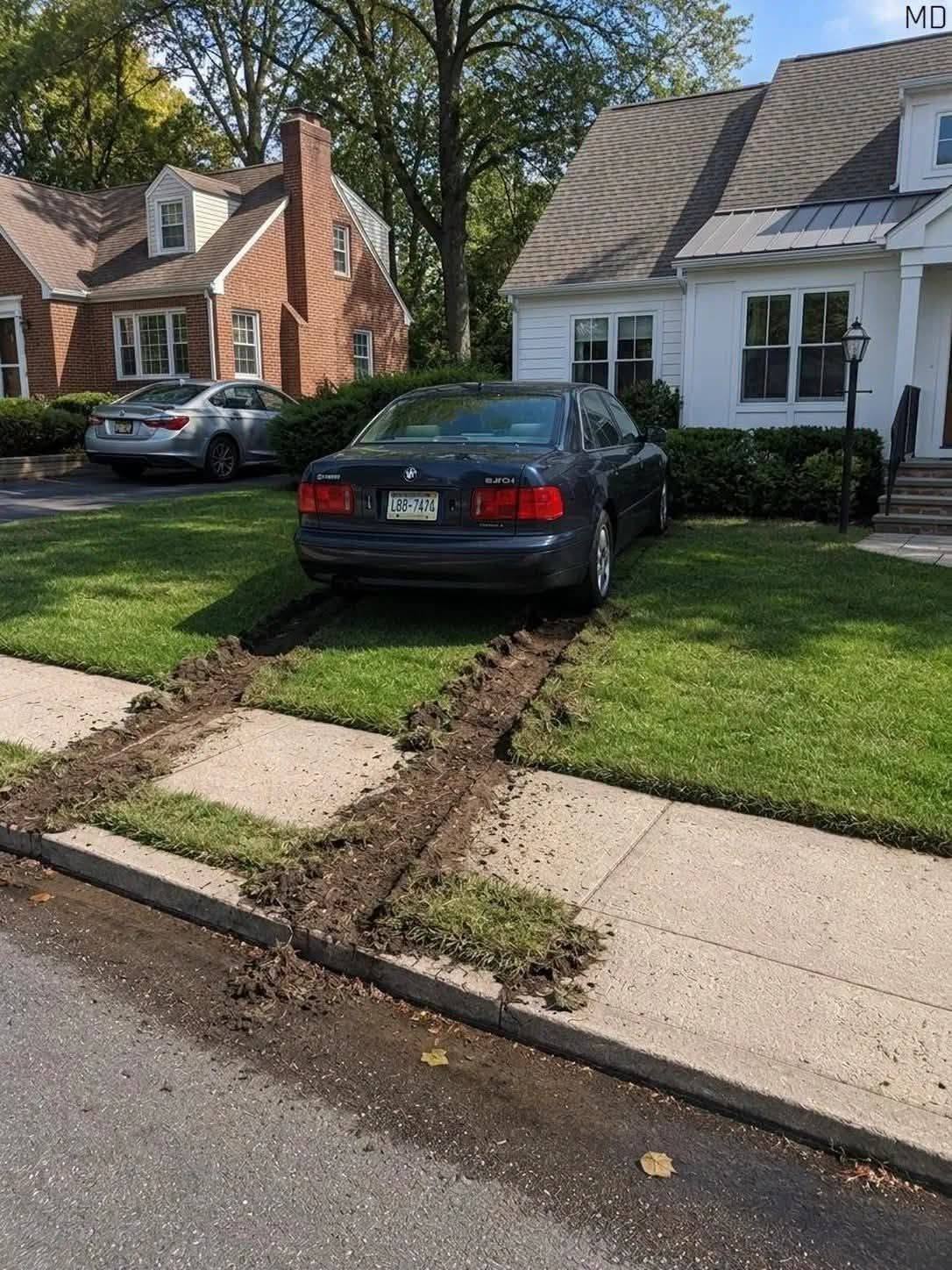
My Neighbor Parked His SUV on My Lawn — I Didn’t Touch His Car, But His Own Choice Taught Him a Lesson
I froze when I looked out my living-room window that morning.
A large black SUV was sitting directly in the middle of my front lawn.
For a few seconds, I honestly thought I was looking at the wrong house.
Then I recognized the vehicle.
It belonged to my neighbor, Sheldon.
He had driven over the curb, across part of my flower bed, and onto the grass. Deep tire marks were visible across the lawn, and several flowers I had spent months caring for were flattened beneath the tires.
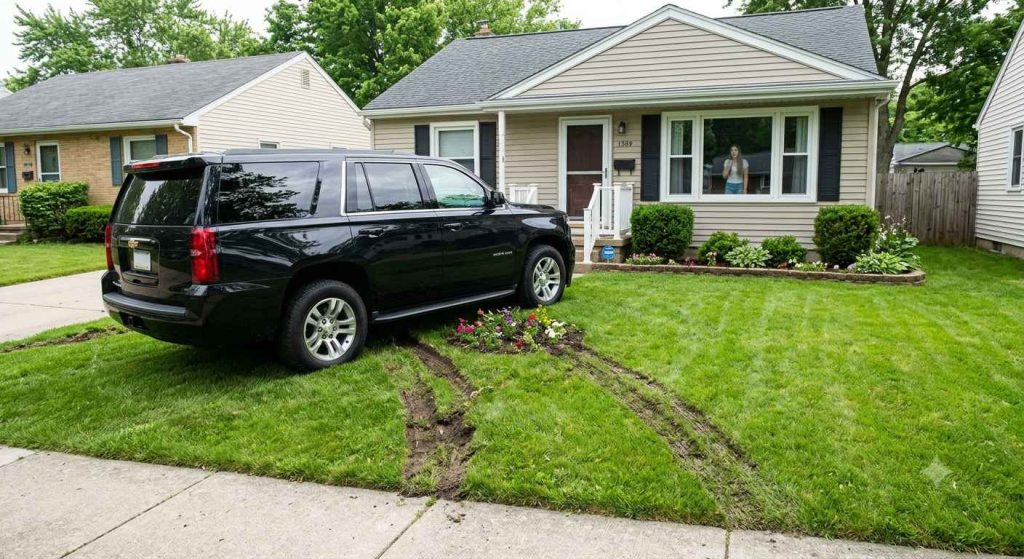
I stood there staring at it, trying to understand why someone would do something so unnecessary.
There was plenty of parking on the street.
More importantly, Sheldon had a completely empty driveway.
He simply hadn’t needed to park on my property.
And this wasn’t the first time he had crossed a boundary.
A Difficult Neighbor
I was twenty-six and had recently bought my modest two-bedroom house using years of savings and part of an inheritance from my father.
It wasn’t a huge property.
It wasn’t fancy.
But it was mine.
I had spent months repairing the lawn, planting flowers, trimming the hedges, and slowly turning the place into a home.
Sheldon, who was in his fifties, seemed to have an opinion about almost everything I did.
First, he complained about my hedges.
Then it was my porch light.
Then my trash cans.
Then the way I parked my car.
Sometimes his complaints were reasonable, but other times they seemed to be about things that had nothing to do with him.
I tried to avoid arguments.
Whenever possible, I simply smiled, nodded, and went back inside.
I thought keeping the peace was the mature thing to do.
But that morning, looking at my damaged lawn, I realized something.
My patience may have been teaching him that there were no consequences for ignoring my boundaries.
“It’s Just Grass”
I walked over to his house and knocked on the door.
Sheldon opened it a few moments later.
I pointed toward the SUV.
“Could you please move your vehicle off my lawn?”
He glanced toward the street and then back at me.
Instead of apologizing, he smiled.
“It’s just grass.”
I couldn’t believe what I was hearing.
I explained that he had driven over the curb and damaged my flower bed.
He shrugged.
“It’ll grow back.”
I could have argued.
I could have raised my voice.
I could have stood there for half an hour explaining why what he had done was unacceptable.
Instead, I took a breath.
“All right,” I said. “I’m going to handle this properly.”
His smile disappeared for a moment.
Then I walked home.
I Checked the Security Camera
Once inside, I opened the footage from my security camera.
I wanted to know exactly what had happened.
The recording showed Sheldon leaving his house at around 6:17 that morning.
His driveway was completely empty.
He paused for a moment and looked around.
Then he backed his SUV out of his driveway, drove across the curb, crossed onto my lawn, and parked.
What surprised me most was what happened next.
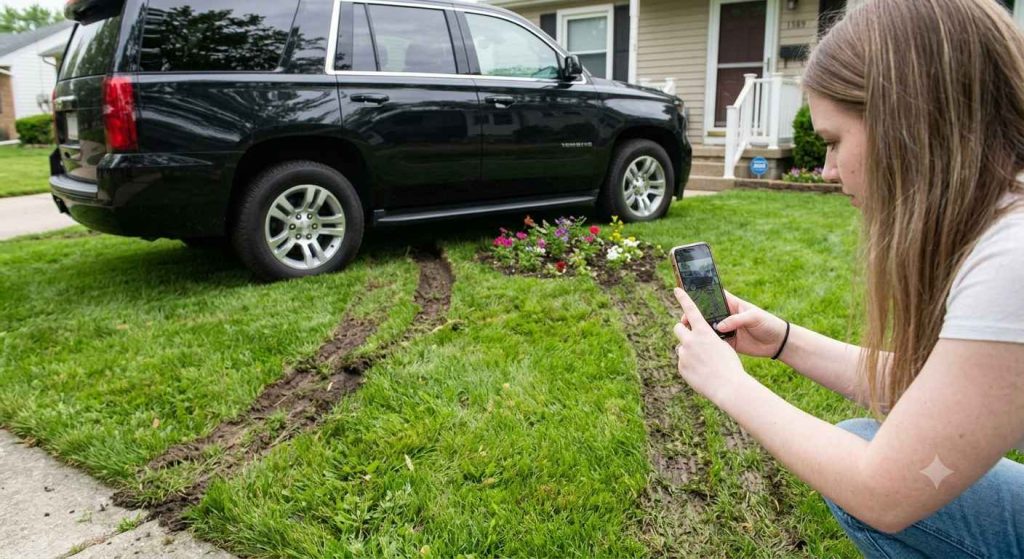
I stood there staring at it, trying to understand why someone would do something so unnecessary.
There was plenty of parking on the street.
More importantly, Sheldon had a completely empty driveway.
He simply hadn’t needed to park on my property.
And this wasn’t the first time he had crossed a boundary.
A Difficult Neighbor
I was twenty-six and had recently bought my modest two-bedroom house using years of savings and part of an inheritance from my father.
It wasn’t a huge property.
It wasn’t fancy.
But it was mine.
I had spent months repairing the lawn, planting flowers, trimming the hedges, and slowly turning the place into a home.
Sheldon, who was in his fifties, seemed to have an opinion about almost everything I did.
First, he complained about my hedges.
Then it was my porch light.
Then my trash cans.
Then the way I parked my car.
Sometimes his complaints were reasonable, but other times they seemed to be about things that had nothing to do with him.
I tried to avoid arguments.
Whenever possible, I simply smiled, nodded, and went back inside.
I thought keeping the peace was the mature thing to do.
But that morning, looking at my damaged lawn, I realized something.
My patience may have been teaching him that there were no consequences for ignoring my boundaries.
“It’s Just Grass”
I walked over to his house and knocked on the door.
Sheldon opened it a few moments later.
I pointed toward the SUV.
“Could you please move your vehicle off my lawn?”
He glanced toward the street and then back at me.
Instead of apologizing, he smiled.
“It’s just grass.”
I couldn’t believe what I was hearing.
I explained that he had driven over the curb and damaged my flower bed.
He shrugged.
“It’ll grow back.”
I could have argued.
I could have raised my voice.
I could have stood there for half an hour explaining why what he had done was unacceptable.
Instead, I took a breath.
“All right,” I said. “I’m going to handle this properly.”
His smile disappeared for a moment.
Then I walked home.
I Checked the Security Camera
Once inside, I opened the footage from my security camera.
I wanted to know exactly what had happened.
The recording showed Sheldon leaving his house at around 6:17 that morning.
His driveway was completely empty.
He paused for a moment and looked around.
Then he backed his SUV out of his driveway, drove across the curb, crossed onto my lawn, and parked.
What surprised me most was what happened next.
Before walking back toward his house, he looked directly toward my front window.
It appeared that he knew exactly what he was doing.
I saved the footage immediately.
Then I took photographs of the tire marks, damaged flowers, and disturbed soil.
I didn’t send angry messages.
I didn’t threaten him.
I simply created a record of what had happened.
The HOA Got Involved
Our neighborhood had a homeowners association, so I contacted Elise, one of the HOA board members.
I sent her the photographs and the security footage.
She reviewed everything and told me that parking on another homeowner’s property without permission violated the neighborhood rules.
She recommended filing a formal written complaint.
I followed her advice.
For the first time, I felt like I was handling the situation without turning it into a personal fight.
Meanwhile, Sheldon still hadn’t moved his SUV.
It remained on my lawn throughout the day.
By evening, the weather had changed.
Rain began falling.
And that’s when I noticed something important.
The Ground Was Already Soft
We had experienced several days of heavy rain.
The lawn was already extremely soft.
The SUV was large and heavy, and its tires were sitting directly on wet soil.
I remembered the irrigation equipment stored in my garage.
I thought about what would happen if I simply continued taking care of my lawn normally.
I decided to do exactly that.
I watered my own lawn according to my usual routine.
I didn’t touch the SUV.
I didn’t block it.
I didn’t place anything around it.
I didn’t damage the vehicle.
I simply continued caring for my property.
By Morning, Things Had Changed
The next morning, I looked outside.
The SUV’s tires had sunk noticeably into the soft ground.
Sheldon eventually came outside and tried to move it.
The wheels spun.
The tires dug deeper.
He tried again.
The same thing happened.
Instead of getting closer to the driveway, the SUV appeared to sink farther into the mud.
A few minutes later, Sheldon came to my door.
His frustration was obvious.
“You need to help me get this out.”
I looked at him calmly.
“You chose to park there.”
He didn’t like that answer.
He argued that I should have warned him about the condition of the lawn.
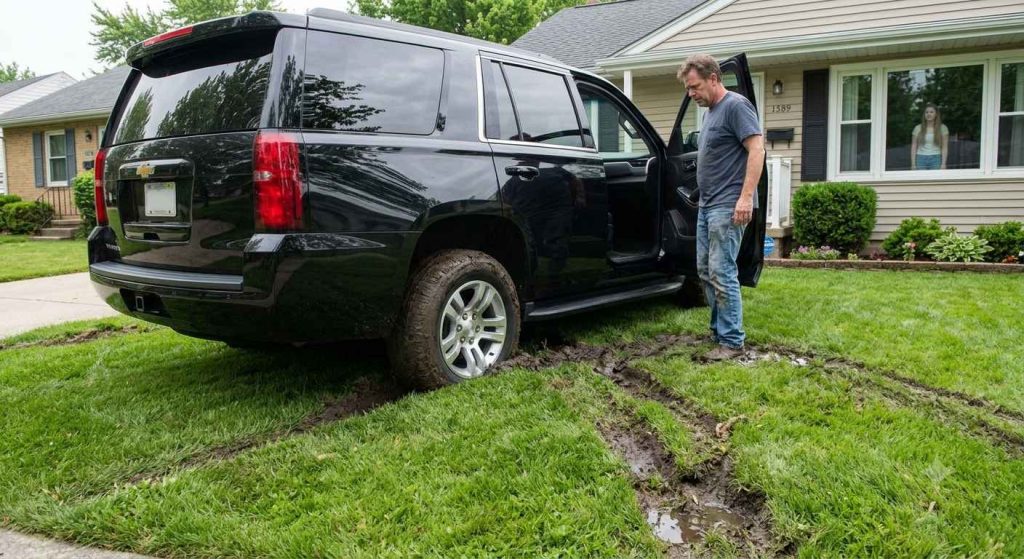
I reminded him that the lawn was my property and that he had chosen to drive onto it despite having an empty driveway and street parking available.
I didn’t argue any further.
At that point, the situation was no longer something I needed to solve for him.
A Professional Recovery Was Needed
Eventually, Sheldon called a vehicle recovery company.
Because the SUV was sitting deep in soft ground, the recovery team couldn’t simply attach a standard tow line and pull it out.
They brought equipment designed for the situation, including ground mats and a winch.
The process took time.
The SUV was finally removed without significant damage.
But the lawn was another matter.
There were deep tire tracks across the grass, several damaged plants, and sections of soil that needed to be repaired.
The recovery and landscaping costs were now part of the problem created by his decision to park there.
The HOA also documented the violation.
For me, the important thing was that I had evidence.
The photographs showed the damage.
The security footage showed how the SUV arrived.
The timestamps showed when it happened.
There was no need for a dramatic argument.
The facts were enough.
The Situation Finally Changed
Something unexpected happened after that.
Sheldon became much quieter.
For months, he had found reasons to comment on my property.
Suddenly, those comments stopped.
He didn’t complain about my porch light.
He stopped criticizing my landscaping.
He stopped moving things that belonged to me.
Most importantly, he stopped crossing the property line.
For the first time since I had moved into the neighborhood, I felt like I could enjoy my home without constantly wondering what complaint would come next.
A couple of weeks later, we eventually spoke again.
It wasn’t a dramatic reconciliation.
We didn’t suddenly become close friends.
But our conversations became polite and limited to things that actually affected both properties.
And honestly, that was enough.
What I Learned
Looking back, I realized I had confused avoiding conflict with maintaining peace.
They aren’t always the same thing.
Sometimes avoiding every disagreement simply encourages someone else to keep pushing.
There is nothing wrong with being patient.
There is nothing wrong with being polite.
But being respectful doesn’t mean allowing someone to repeatedly ignore your boundaries.
The most important part of the situation was that I never needed to damage Sheldon’s SUV or create some elaborate revenge plan.
I didn’t touch his vehicle.
I didn’t block him in.
I didn’t sabotage anything.
I simply documented what happened, followed the proper process, and allowed him to deal with the consequences of his own decision.
The property line between our houses had always been there.
It was visible.
It was established.
I had simply assumed everyone would respect it.
After that morning, Sheldon finally did.
And sometimes, that’s all a boundary needs—a clear line, a calm response, and the willingness to stand behind it.