

It was a typical, cozy Friday evening, and the craving for some warm comfort food had completely taken over. Naturally, I did what anyone would do: I ordered a hot, fresh pizza from my favorite local joint. The anticipation built as I waited for the doorbell to ring. But when it finally arrived and I eagerly opened that familiar cardboard box, I noticed something a little strange. Staring back at me wasn’t a perfectly flat sea of cheese, but a landscape full of golden, crispy domes. My pizza was covered in giant cheese bubbles!
When I first saw the bubbly cheese, I admit I was a little confused. Had the oven been too hot? Was something wrong with the dough? But after diving into some culinary research, I learned that this bubbling isn’t a mistake at all—it’s a fascinating, natural part of the cooking process. If you’ve ever wondered why your pizza looks like a delicious lunar landscape, pull up a chair, grab a slice, and let’s explore the tasty science behind the bubbles.
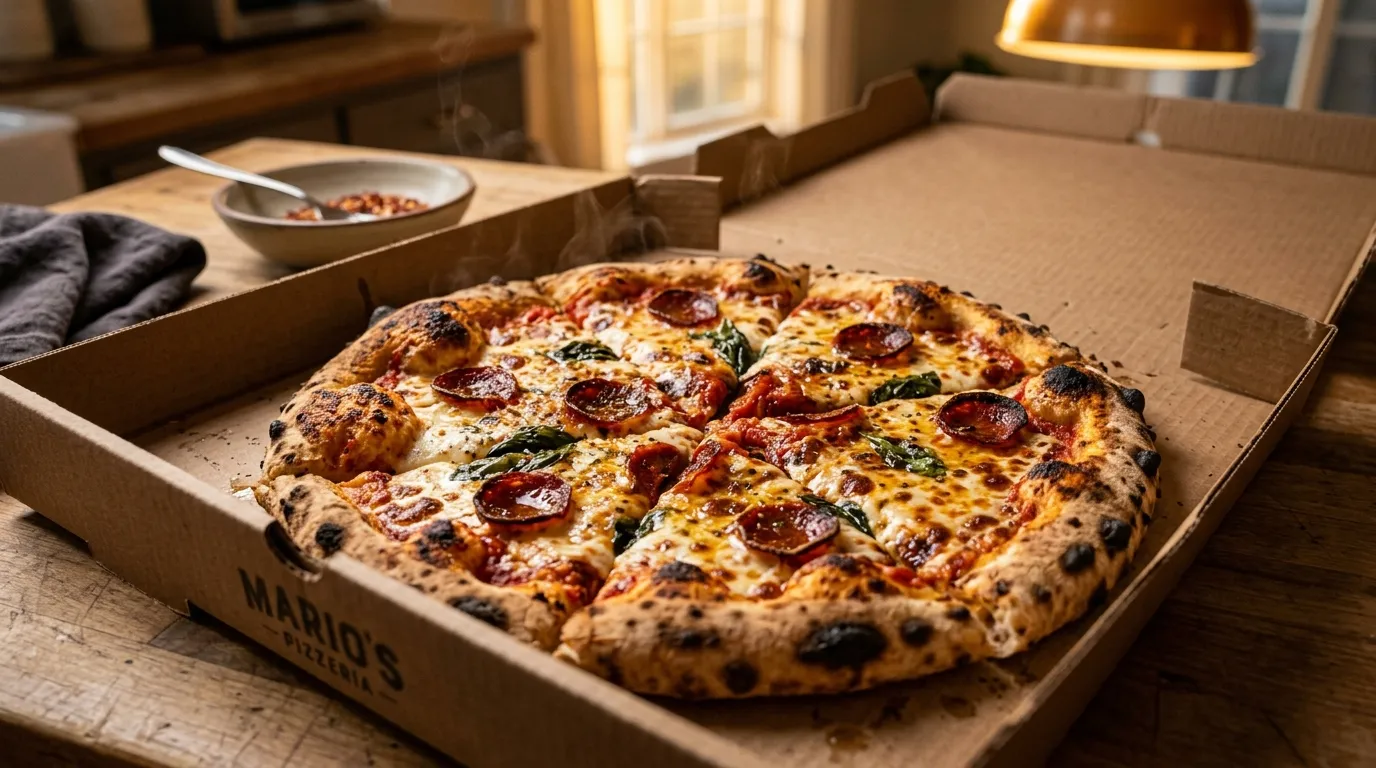
Opening the box to a beautifully bubbly masterpiece.
The 4 Main Culprits Behind Pizza Bubbles
Creating the perfect pizza is a delicate dance of chemistry and heat. That bubbling effect you see is actually the result of several different factors working together inside the oven. Here is a breakdown of why it happens:
1. Moisture in the Cheese
Cheese, especially fresh mozzarella, is packed with water. When your pizza slides into a scorching hot oven, that internal moisture begins to heat up and evaporate, turning into steam. Because the melting fats in the cheese create a sort of blanket over the sauce, that steam gets trapped. As the steam expands, it pushes upward, creating a bubble. The takeaway: Moisture evaporation is a primary cause, and it’s a completely natural process.
2. The Intense Heat
Heat is the engine that drives the whole pizza-making process. The sudden blast of heat not only causes the cheese to melt quickly but also causes the dough underneath to rapidly expand. This rapid expansion of both air in the dough and steam from the wet ingredients forces the cheese upward. The takeaway: Heat causes rapid expansion, leading directly to those beloved bubbles.
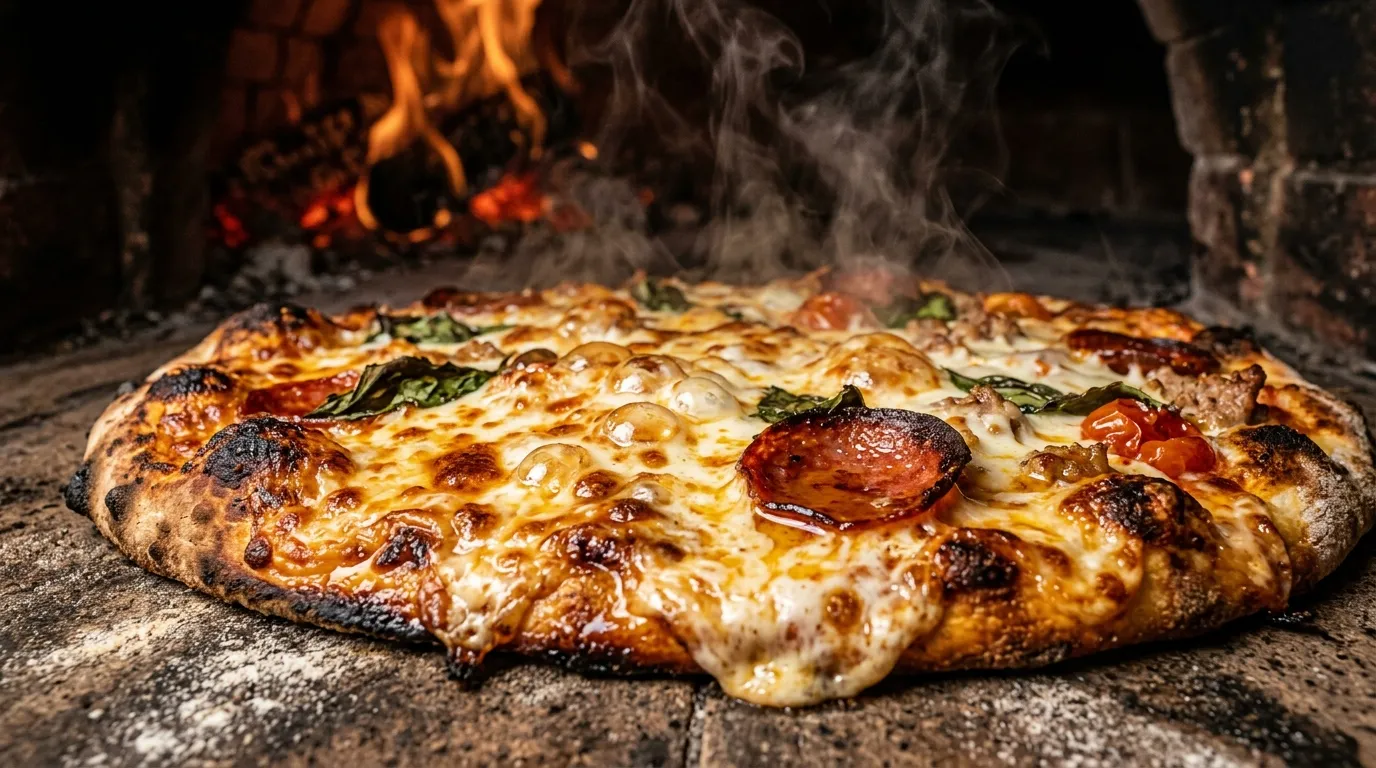
The intense heat of the oven turns moisture into trapped steam.
3. The Type of Cheese Matters
Not all cheeses are created equal, especially when it comes to melting. Some cheeses are just more prone to bubbling than others. High-moisture, elastic cheeses like mozzarella are the undisputed kings of the bubble. On the other hand, harder, aged cheeses with less water content will melt flatter and oilier. The takeaway: The specific blend of cheese your pizzeria uses heavily dictates the final texture of your pie.
4. The Cooking Temperature
There is a big difference between baking a pizza at 350°F (175°C) and blasting it at 800°F (425°C) in a commercial wood-fired oven. High heat creates a flash-baking effect. The crust crisps up instantly, and the cheese boils and browns rapidly, creating a heavily blistered, bubbly surface. The takeaway: The higher the temperature, the more aggressive the bubbling will be.
Is It Actually Safe to Eat?
When I first saw my blistered pizza, a tiny part of me wondered if it was overcooked or spoiled. The answer is a resounding yes, it is perfectly safe to eat!
Those bubbles are an entirely natural result of the baking process. In fact, in the world of artisanal and Neapolitan pizzas, a heavily blistered, bubbly crust and cheese surface (often referred to as “leopard spotting”) is highly sought after. It’s absolutely not a sign of spoilage or poor ingredients. Instead, it’s the hallmark of a well-cooked pizza that has been baked with the right amount of heat to bring out maximum flavor and texture. The takeaway: Grab a napkin and enjoy your pizza without a second thought.
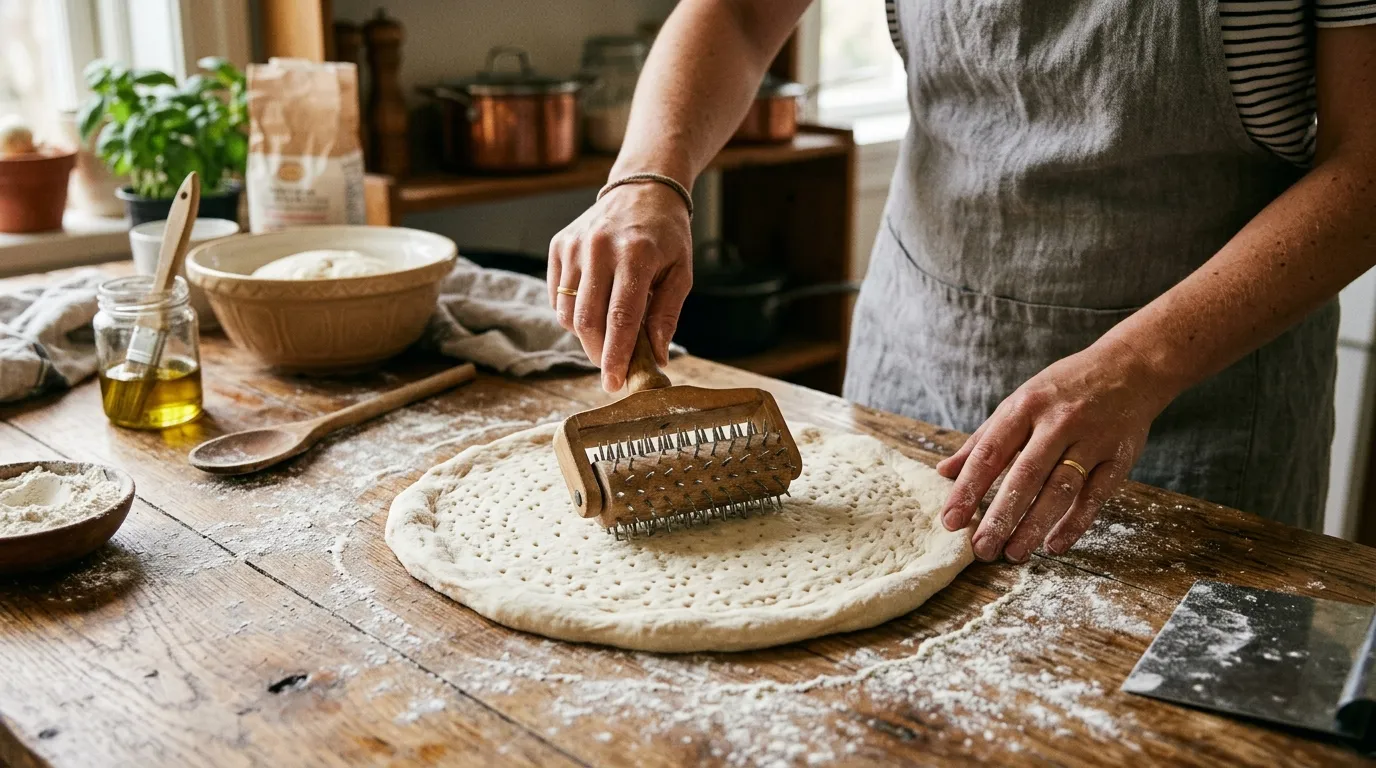
Docking the dough is a simple way to let steam escape and prevent bubbles.
How to Prevent Bubbles (If That’s Your Preference)
While I’ve grown to love the crispy, chewy texture of a bubbly cheese topping, I know it isn’t for everyone. Some folks prefer a perfectly smooth, uniform layer of melted cheese. If you are making pizza at home and want to keep things flat, here are a few simple tricks:
- Poke holes in the crust: Using a fork or a specialized tool called a dough docker, pierce the rolled-out dough before adding your sauce and cheese. This gives the steam a clear escape route, preventing large pockets of air from forming.
- Use a lower cooking temperature: Dialing back your oven temperature slightly allows the pizza to cook more slowly and evenly, giving steam time to gently escape rather than violently bubbling up.
- Experiment with different cheese: If you are tired of bubbles, try swapping out high-moisture mozzarella for a lower-moisture alternative, or blend it with harder cheeses like provolone or cheddar which are far less prone to blistering.
The takeaway: Bubble prevention is entirely possible with just a few minor tweaks to your prep and baking routine!
Frequently Asked Questions
Why does my pizza cheese have bubbles?
It is a completely natural result of the cooking process! As the pizza bakes, moisture turns to steam and expands, pushing the melting cheese upward.
Is it safe to eat bubbly cheese?
Yes, absolutely. It is completely safe and, in many styles of pizza, highly encouraged for added texture and flavor.
How can I prevent bubbles from forming?
The best methods are to poke small holes in your dough crust before adding toppings, bake your pizza at a slightly lower temperature, or use a cheese with lower water content.
What exactly causes the bubbles to inflate?
The combination of trapped moisture turning into steam and the intense heat of the oven causing rapid expansion.
Is bubbling a sign of a bad pizza?
No way! It’s actually a sign of a very well-cooked pizza that was baked in a properly heated oven.

Embrace the bubbles—they just mean your pizza is cooked to perfection!
A Final Thought
When I opened that delivery box earlier this evening and saw the blistered, bubbly cheese staring back at me, my initial confusion quickly turned into curiosity. After a little digging, I realized that I wasn’t looking at a culinary mistake, but rather the beautiful, natural science of baking in action. So, the next time you order a pie and find it covered in golden domes, don’t worry. It’s safe to eat, packed with flavor, and a sign that you are about to enjoy a seriously good slice of pizza.
If you found this article interesting, please SHARE it with your friends and family!
Note: All images used in this article are AI-generated and intended for illustrative purposes only.