

Stepping into a car with fogged-up windows can turn an ordinary morning commute into a frustrating, delayed, and potentially unsafe experience. The glass appears cloudy, the cabin feels damp, and an unpleasant, stale odor often lingers in the trapped air.
Most drivers react the same way: frantically wiping the windshield with a sleeve or cranking the heater and ventilation system to the highest possible setting. Although these actions can temporarily clear the glass so you can get moving, the mist almost always returns if the underlying issue—excess moisture trapped inside the vehicle—is not addressed.
This recurring condensation is much more than a minor morning inconvenience. Crystal-clear visibility is absolutely essential when driving, especially at higher speeds, in stop-and-go traffic, or during dark, rainy conditions. When your windshield, side windows, or rear glass repeatedly fog up from the inside, it drastically impairs your ability to see other vehicles, road signs, pedestrians, and changing traffic lights. Even a brief delay in clearing the glass can create unnecessary stress before your journey even begins.

How and Why Interior Fog Develops
To defeat the fog, it helps to understand why it forms in the first place. Fog develops when moisture suspended in the air settles onto a cooler surface. Inside your vehicle, warm and humid cabin air comes into direct contact with the cold exterior window glass. This drastic temperature difference causes the water vapor to condense, leaving tiny, blinding droplets across your windows.
But how does all that moisture get inside a sealed car? It enters through completely ordinary, everyday activities:
- Wet Weather Gear: Rain-soaked shoes, damp jackets, and dripping umbrellas introduce significant amounts of water.
- Winter Weather: Snow carried inside on your boots slowly melts into your fabric floor mats, creating a hidden reservoir of moisture.
- Human Breath: Simply breathing releases warm moisture into the air. When multiple passengers sit inside a closed vehicle during colder weather, humidity levels skyrocket in minutes.
If that damp air has nowhere to escape, it settles inside the cabin. Once the temperature of the windows drops, the trapped moisture condenses, creating that familiar, stubborn layer of mist. Wiping the glass only removes the droplets that have already formed; it does absolutely nothing to remove the humidity lingering in the air. This explains why your windows can completely fog up again just minutes after you wiped them down.
The Simple Salt Method: A Household Solution
Fortunately, you do not need expensive dehumidifiers or complex chemical sprays to fight back. One incredibly inexpensive and highly effective approach involves placing a simple cup of ordinary table salt inside your vehicle.
Salt is naturally hygroscopic, meaning it attracts and holds onto water molecules from its surrounding environment. By placing it in your car, the salt acts as a sponge for humidity, quietly absorbing the excess dampness present in the cabin air.
 A simple cup of salt placed securely in your center console works silently to absorb excess cabin moisture.
Why This Hack is Brilliant
This DIY method requires zero electricity, no wiring, no complicated installation, and no specialized automotive products. It utilizes a basic, dirt-cheap kitchen ingredient that you almost certainly already have sitting in your pantry.
The beauty of this approach is its passive nature. It continues working round-the-clock while your vehicle is parked. The salt sits there overnight, during your working hours, or while the car is sitting in the driveway, constantly pulling moisture from the air so you return to a drier cabin.
How Lower Humidity Transforms Your Driving Experience
A vehicle with less moisture in its interior air is significantly less likely to develop heavy condensation. When there is less water vapor inside the cabin, there are simply fewer droplets available to collect and cloud up the windows.
Lower humidity also acts as a massive boost to your car’s built-in defroster. When you activate your heater or ventilation system, the windshield clears much more quickly because the HVAC system has far less damp air to battle. Instead of constantly fighting a losing battle against a swampy cabin, your defroster can do its job efficiently.
Banishing the Stale, Damp Cabin Smell
Excess moisture affects a lot more than just your windows. A consistently damp car will eventually develop a sour, musty, or “basement-like” odor that hits you in the face the second you open the doors.
Soft, porous materials such as carpeting, floor mats, fabric seats, and the headliner can hold moisture for weeks. If these surfaces are never given the chance to dry properly, mildew can begin to form, and the smell will linger long after the visible window condensation has evaporated.
By using salt to reduce the overall humidity, your interior will feel drastically fresher and less clammy. Unlike hanging air fresheners that merely mask foul odors with heavy perfumes, absorbing the moisture actually addresses the root cause of the stale smell.
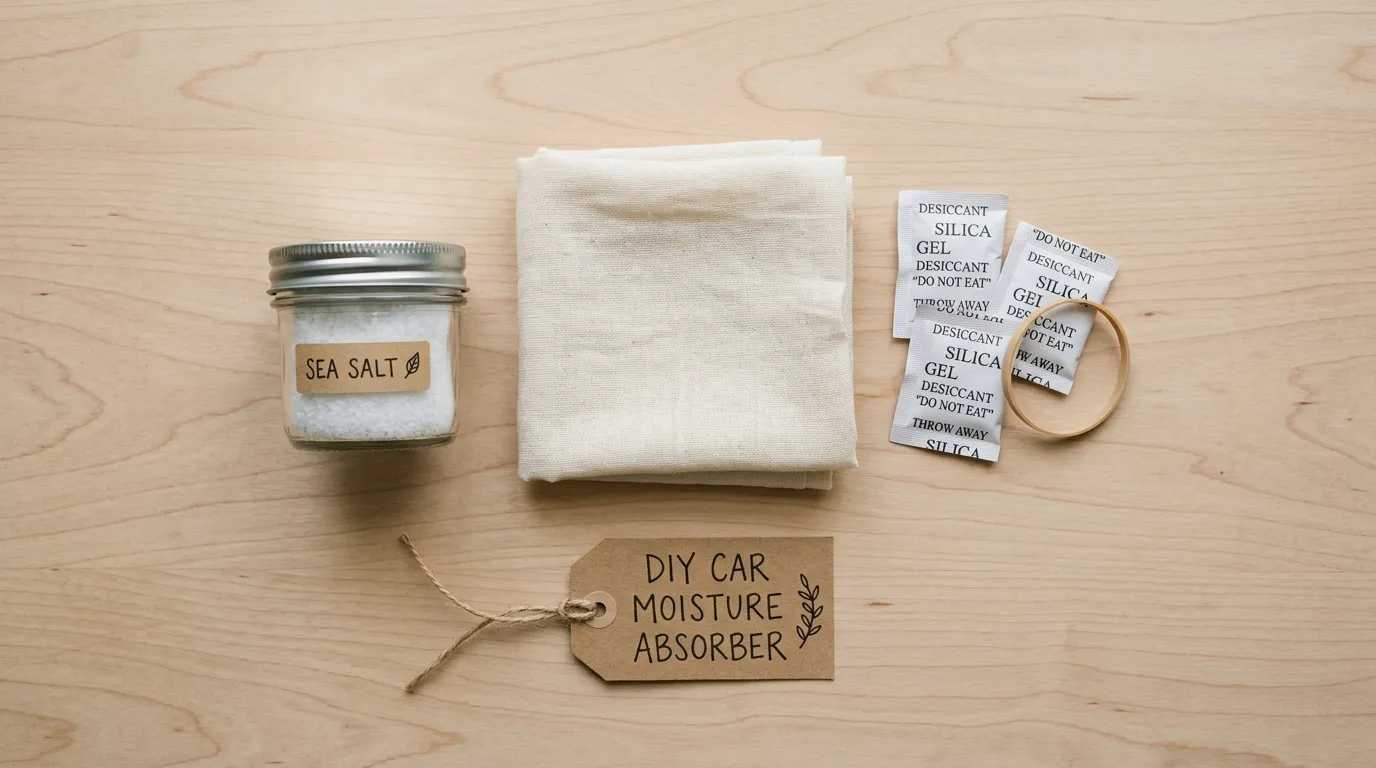 Creating your own moisture-absorbing kit is easy, affordable, and highly customizable to your car’s needs.
Safety and Placement: Doing It Right
While this trick is incredibly easy, any loose object inside a moving vehicle must be positioned thoughtfully. A cup of salt should never be placed where it could slide around, fall near the floor pedals, block essential controls, or distract the driver.
- Choose a Stable Container: A small plastic container or mason jar with a wide base is much more stable than a narrow or top-heavy drinking cup.
- Utilize Cup Holders: Keeping the container securely wedged in a center console cup holder drastically reduces the likelihood of it tipping over during sharp turns or sudden braking.
- Keep Away from Pets and Kids: While table salt is non-toxic and ordinary, an open cup dumped all over your backseat by a curious dog or child will create a massive, frustrating mess.
- Use a Breathable Cover: To prevent spills while still allowing the salt to breathe, cover the top of your container with a piece of cheesecloth, a thin fabric scrap, or a clean sock, secured tightly with a rubber band.
Alternative Everyday Moisture Absorbers
Salt is fantastic, but it is not the only everyday material that follows this scientific principle. Here is how salt stacks up against other common household desiccants:
| Material | How it Works | Best Use Case |
|---|---|---|
| Table Salt / Rock Salt | Naturally absorbs moisture from the air. Clumps as it gets wet. | General, long-term humidity control in cup holders. |
| Crumpled Newspaper | Highly porous paper physically pulls moisture from wet surfaces and the air. | Placing under soaked floor mats after a heavy rain or snowstorm. |
| Silica Gel Packets | Engineered desiccant beads that trap water vapor efficiently. | Tucking into small, hidden spaces like door pockets or gloveboxes. |
Note: If you use newspaper for a quick fix, remember to remove it the next day. Leaving soaked paper inside the car will simply trap the moisture in the cabin, defeating the entire purpose.
Maintenance: When to Replace Your Salt
As the salt works its magic, its texture will begin to change. You will notice it starting to clump together, harden into a solid block, or feel noticeably damp to the touch. These visual cues are proof that the method is working!
Once the salt becomes heavily saturated, it can no longer absorb more water. Replacing it with a fresh, dry batch will maintain your car’s defenses against fog. The replacement schedule depends entirely on your climate. A car exposed to endless winter rain, wet winter coats, and snowy boots might need a fresh cup every few weeks. A vehicle dealing with only occasional morning condensation might get away with the same cup of salt for a few months.
 The ultimate goal: A crystal-clear windshield that ensures you and your passengers stay safe on the road.
Reducing Moisture at the Source
While salt is a fantastic passive defender, preventing unnecessary water from entering the cabin in the first place is equally important. A few small, conscious habits can drastically reduce the amount of humidity trapped inside your car:
- Shake It Off: Vigorously shake out umbrellas before bringing them inside.
- Don’t Store Wet Gear: Never leave damp coats, gym towels, or wet shoes in the vehicle overnight.
- Maintain Your Floor Mats: Check your mats after heavy rain or snow. If they are soaked through, take them out and let them dry in your garage or house.
Clear Glass Remains the Immediate Priority
It is incredibly important to remember that a cup of salt is a gradual, preventative moisture-control measure. It is not an instant magic wand when your windshield is already completely whited out.
You should never begin driving until your glass provides an absolutely clear, unobstructed view of the road. Your car’s heater, AC compressor (which naturally dehumidifies air), and defroster remain your primary tools for clearing condensation right before a journey. The salt method is a supportive ally—its true value lies in creating a drier baseline environment so that heavy fog forms less frequently and clears up much faster when it does.
A Small Habit With Highly Practical Benefits
Placing a container of salt in your car might initially seem a bit unusual, but the science behind it is sound and straightforward. Moisture causes interior fog, damp fabrics, and stale odors; absorbent materials pull that moisture out of the air.
This small, inexpensive change in your routine can help transform foggy, stressful, and frantic mornings into a much more manageable and pleasant experience. By taking a few minutes to set up this simple moisture trap, you can enjoy clearer windows, drier surfaces, and a car that smells fresher every single time you open the door.
If you found this article interesting, please SHARE it with your friends and family!
Note: All images used in this article are AI-generated and intended for illustrative purposes only.