
The Quiet House on Briar Lane
Everyone on our street thought they knew Miranda’s story intimately. She was the neighborhood’s quiet widow, the gentle woman who had supposedly given her life to other people’s children because she never had the chance to have any of her own. They were only half right, and it took thirty years for the rest of the truth to finally come to light.
When I first moved into my little blue bungalow on Briar Lane, I honestly assumed Miranda’s house next door was completely empty. It sat snugly between my place and the massive, ancient maple tree at the end of the block. It was neat as a vintage postcard, but it possessed a profound quietness—the kind of silence that made you instinctively lower your voice as you walked past its white picket fence.
Her curtains were always drawn open by the time the sun peeked over the horizon. The wooden porch was swept meticulously clean every single morning without fail. Clay pots lined the broad front window, spilling over with vibrant golden marigolds in the sweltering summer months, and holding nothing but bare, dark brown soil when winter rolled in. And yet, despite all this evidence of life, for weeks, I never once saw a physical person come or go.
Then, on my third morning of living there, disaster struck. I dropped a heavy cardboard box of kitchen dishes right on my front steps. The bottom split completely open, and my late grandmother’s cherished ceramic soup bowls went rolling across the porch like they were making a desperate break for freedom. Before I could even let out a proper string of curse words, a woman in a pale yellow cardigan hurried over from the adjacent yard.
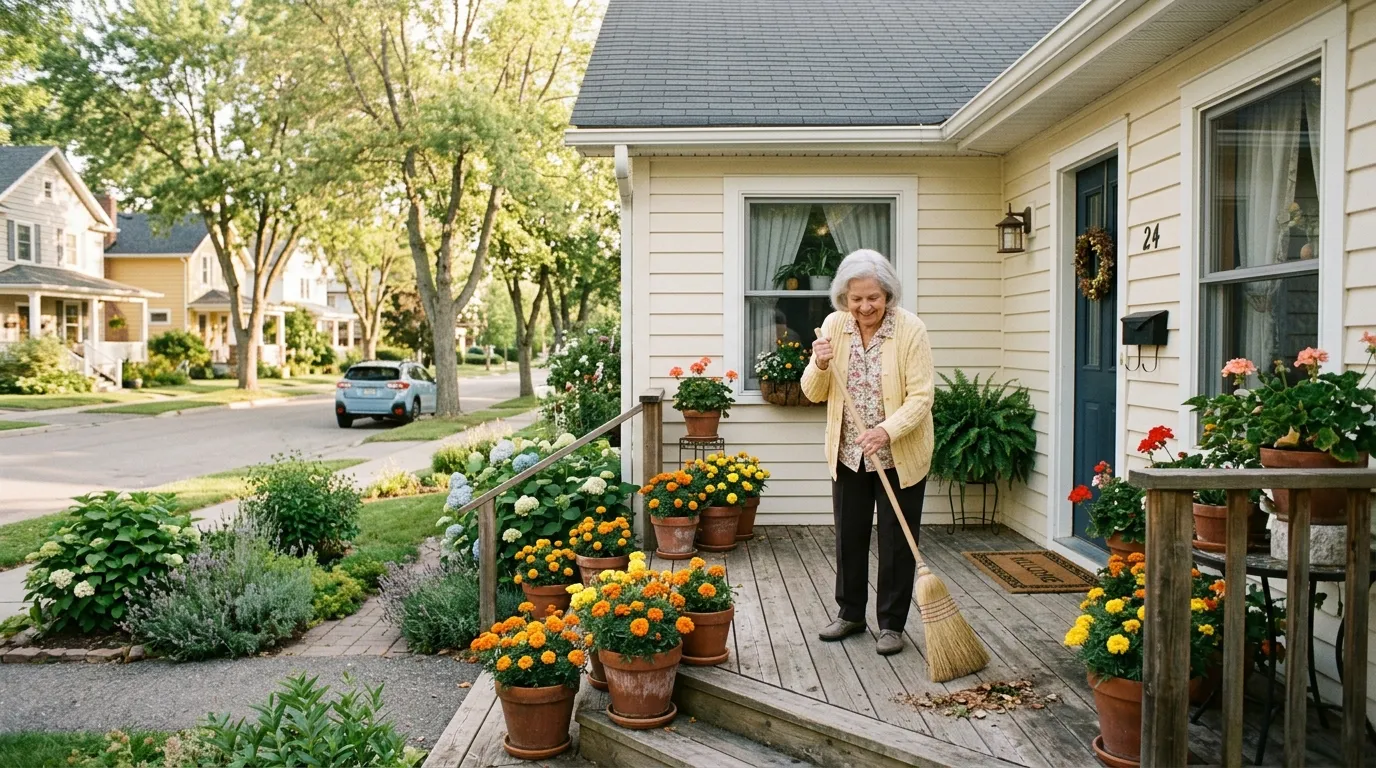
Miranda’s house was the picture of quiet perfection, hiding a lifetime of secrets.
“Oh, honey, don’t move a muscle,” she called out, her voice soothing but firm. “There’s a sharp piece of glass right by your shoe.”
That was the very first time I met Miranda.
She was sixty-three years old then. Sometimes she seemed much older, especially when a deep exhaustion pulled at the corners of her face, but she looked decades younger the instant she offered a genuine smile. Her stunning silver hair was pinned back with a meticulous kind of care that made me wonder, even in that chaotic moment, if she had once gotten ready every single day for a grand life that had simply never shown up.
She knelt down onto the hard wood, helping me gather the broken, painted pieces. She clicked her tongue sympathetically at the chipped bowls and insisted, leaving absolutely no room for argument, on marching me into my house and making us both a strong pot of tea.
“I’m Irina,” I told her, once we were finally sitting at my chaotic, half-unpacked kitchen table, surrounded by towering boxes.
“Miranda,” she replied softly, her hands wrapped around a steaming mug. “And let me tell you this right now: if anyone on this street ever gives you an ounce of trouble, you send them straight to me.”
I laughed aloud. She was so incredibly small and soft-spoken that the fierce threat seemed almost sweet. But then she raised one sharp eyebrow at me.
“I mean it, Irina.”
The Local Legend of Miss Miranda
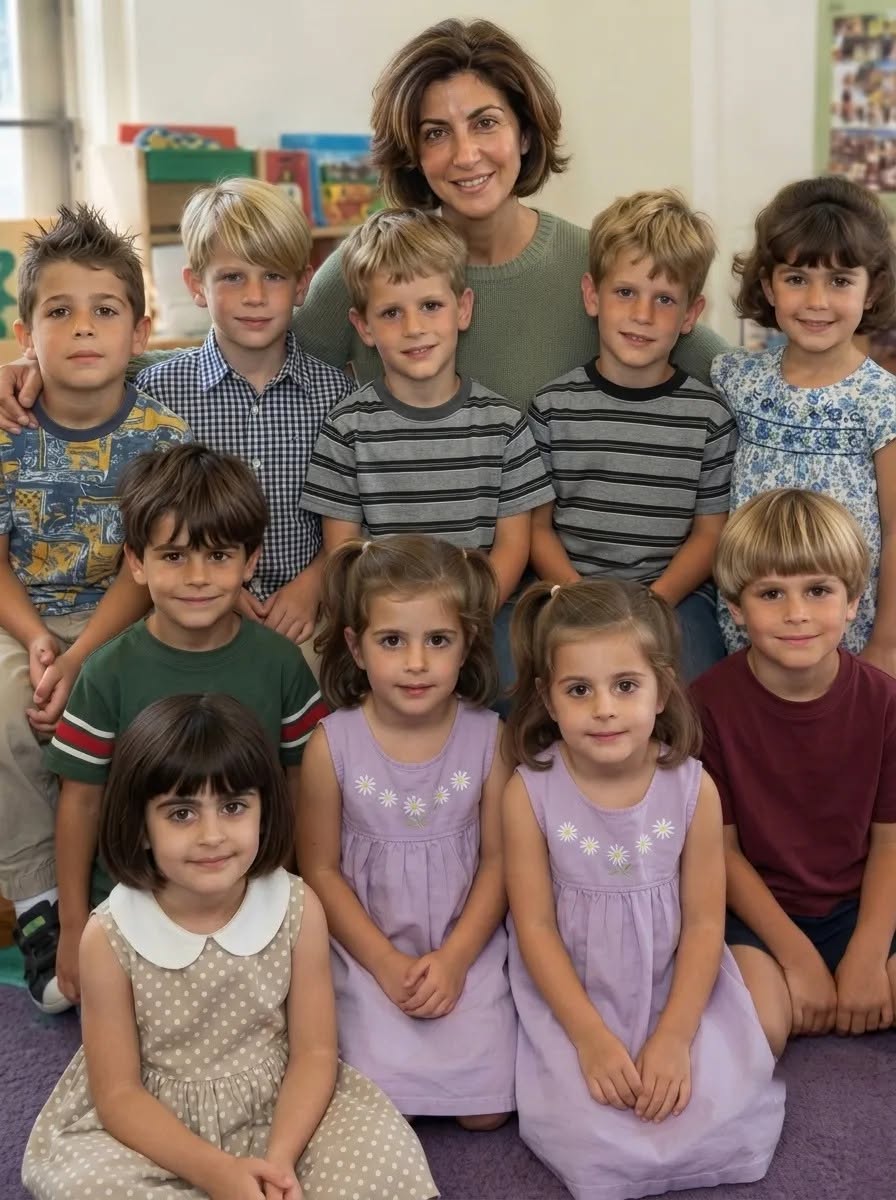
By the end of my first week on Briar Lane, I had learned exactly what everyone in the neighborhood already knew. Miranda had spent thirty grueling years working at the local town daycare. Somewhere along that long, exhausting journey, she had essentially raised two sets of twins as if they were her very own flesh and blood. That was how the neighbors always phrased it—nearly word for word, the way a sentence gets passed from front porch to front porch until it hardens into unshakeable local legend.
“Miranda basically raised half the population of this town,” my cheerful mail carrier, Sonya, told me one humid afternoon, shifting a heavy stack of envelopes onto my top step.
But I quickly noticed a pattern. Whenever people talked about Miranda, their voices subtly changed. They went incredibly soft. Their eyes always drifted toward her pristine little house as if it held both a profound blessing and a deep wound that they didn’t quite know how to articulate.
I learned, too, the tragic reason why she’d ended up at that bustling daycare in the first place. Her husband, a handsome man named Pavel, had died suddenly and violently in a construction accident decades earlier. It left her a grieving widow long before she’d even had the time to imagine what the word “widow” actually meant.
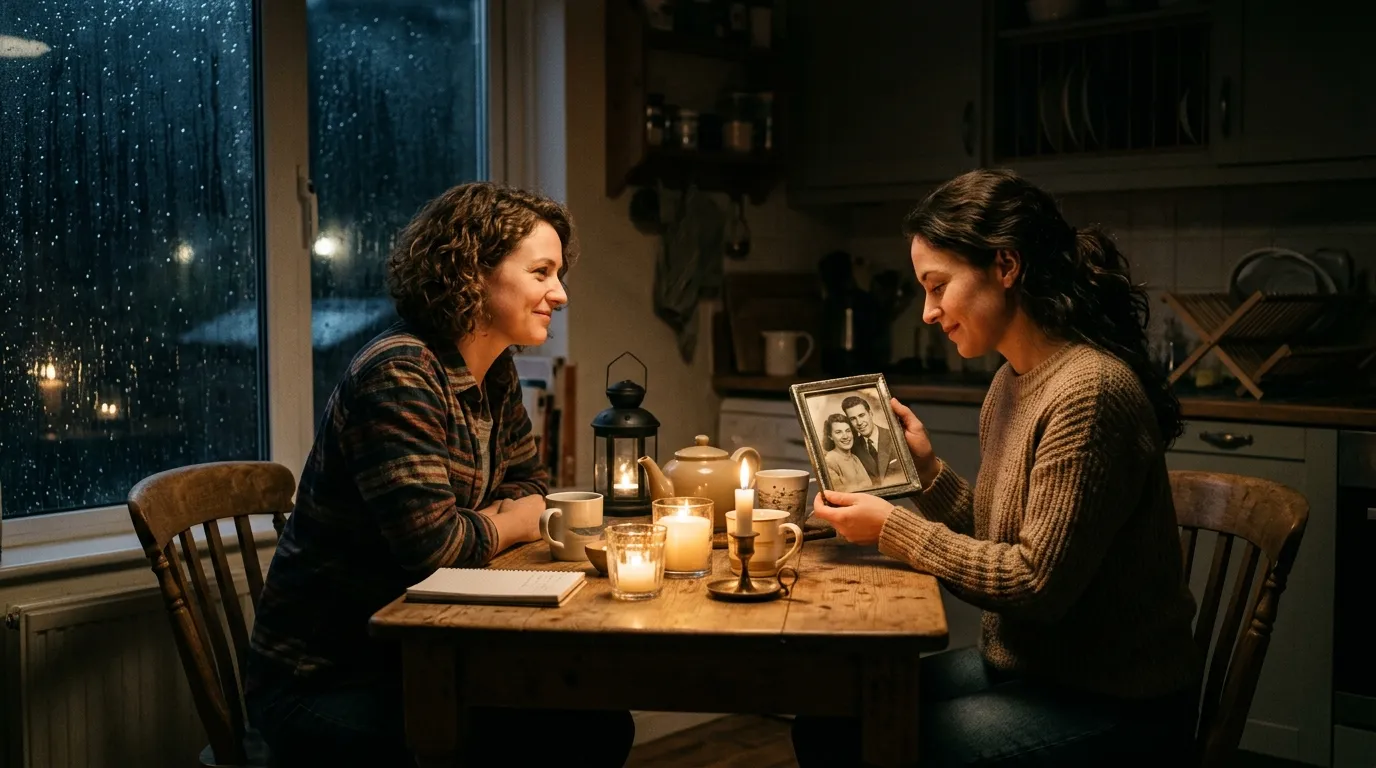 Grief was an ocean she had learned to swim in long before I met her.
She showed me his photograph only once. It was during a violent summer storm that had completely knocked out the neighborhood’s power grid. We sat across from each other at her small kitchen table, the shadows dancing as candles flickered between us. In the faded picture, Pavel had one strong arm wrapped securely around her waist, wearing a grin that was wide enough to push the whole world open.
“He was only twenty-eight,” she whispered, tracing the worn edge of the wooden frame with one trembling finger. “I was twenty-five. We were so foolish. We thought we had all the time in the world.”
I sat there, utterly speechless. I was thirty-six at the time, freshly and painfully divorced, still lugging my own small, private shames around in cardboard moving boxes and manila legal folders. But whatever grief I thought I had survived felt like a shallow rain puddle compared to the vast ocean of her loss.
“I’m so sorry,” I finally managed to croak out.
She handed the photograph across the table to me, studied my sympathetic face for a long moment, and then gently took the frame back.
“Everyone is sorry, sweetheart,” she said with a heartbreakingly calm voice. “That’s the ultimate trouble with death. It leaves people feeling sorry. It doesn’t leave them being useful.”
She had been a terrified young widow with absolutely nothing to her name, forced to take a demanding, low-paying job at the local daycare just to keep the electricity on and put food on the table. She told me that part of her history without a single ounce of theatrical drama in her voice. She spoke the way you’d read off a mundane grocery list.
“I desperately needed work,” she stated simply. “And they desperately needed hands. Babies don’t much care whether your heart is shattered into a million pieces. They still need their bottles warmed, their diapers changed, and their tears wiped.”
That was Miranda encapsulated in a single breath—she could casually say something that would completely split your soul wide open, and then stand up a second later to calmly check whether the tea kettle had boiled.
The Children She “Never Had”
For thirty long years, she gave that chaotic daycare everything she possessed. Mothers who were now gray-haired grandmothers still routinely stopped her in the pharmacy aisle just to catch up. Broad-shouldered, grown men in dirty work boots and thick beards would bend down in the grocery store produce section just to give her a massive bear hug. Teachers, cashiers, weary nurses, covered-in-grease mechanics, and sharp bank tellers—people old enough to be managing teenagers of their own—still affectionately called her “Miss Miranda” without a single trace of irony.
Through all those exhausting decades, she never once complained. Not about the terrible pay. Not about the grueling, endless hours. Not about her arthritic hands stiffening every brutal winter after decades of buttoning tiny coats, double-tying shoelaces, wiping sticky faces, and rinsing out thousands of tiny plastic juice cups. She didn’t even complain about the deafening silence that waited for her in her pristine home every single night.
I, on the other hand, complained enough for the both of us.
“You should have retired years ago,” I scolded her one brisk evening, helping carry her heavy canvas grocery bags inside. “Or you should have demanded better pay. Or at the very least, you should let people help you more often.”
She just laughed her musical laugh and slid a cardboard carton of eggs into the refrigerator. “Irina, my dear, I have survived far too long in this world to be lectured on self-care by a grown woman who genuinely thinks black coffee counts as a balanced dinner.”
“It does count,” I argued playfully, “if you add enough milk.”
“It most certainly does not.”
But her entire demeanor shifted—her whole face practically glowing—whenever the conversation turned to the two sets of twins she had cared for all those years ago. Olive and Olena, the brilliant girls. Harry and Hayden, the boisterous boys. She spoke of these four children so frequently and with such vibrant detail that eventually, I felt like I knew them intimately myself, even though I had only ever seen their frozen faces in the old, faded photographs she kept tucked safely inside her wicker sewing basket.
- Olive: She had been the fiercely brave one. She was always climbing the playground equipment far too high, always aggressively insisting she wasn’t scared, even when tears of pure terror were actively streaking down her flushed face.
- Olena: She was the gentle, quiet one. The sort of tender-hearted child who would immediately hand her last cracker to a hungry kid, and who would cry inconsolably if a classmate accidentally stepped on a wandering garden beetle.
- Harry: Even as a wobbly toddler, Harry possessed serious, ancient eyes. He meticulously lined up his collection of toy cars by color and size, and grew genuinely, deeply upset if anyone dared to disrupt his perfect order.
- Hayden: He was a chaotic whirlwind of curls and dimples. He had an uncanny, almost magical gift for wedging his small body into tight spaces no human child should physically be able to fit inside.
“One frantic afternoon,” Miranda told me once, laughing so hard she nearly spilled her teacup, “I found Hayden completely hidden inside the staff laundry basket, happily eating a banana he had stolen from the kitchen.”
“How old was he?” I asked, amazed.
“Three.”
“That sounds physically impossible.”
“With Hayden, darling, absolutely nothing was impossible. I swear that boy could have escaped a locked maximum-security room armed with nothing but a plastic spoon and a charming smile.”
Every single time she spoke of those four specific children, something buried deep in her expression lit up from the inside out. She clearly loved them with a ferocity usually reserved for one’s own flesh and blood. She had sacrificed her own worldly dreams so that they would be safe, fed, and cherished every single day of their young lives. At first, I simply assumed this was just the immense pride of a dedicated worker reflecting on a job well done.
But as the months turned into years, it became abundantly clearer: Olive, Olena, Harry, and Hayden hadn’t just been random children she once watched during the workday. They had become the exact, precise shape her love took after Pavel tragically died. They had somehow managed to fill every dark, empty room in her heart that profound grief had violently hollowed out.
She had never had biological children of her own—or, at least, that was what I wholly believed at the time.
When I asked her about it once, trying to be as careful and sensitive as possible, she looked right past me, her gaze fixing on the grand old maple tree at the end of the street.
“Not in the way people usually mean,” she said, her voice carrying a strange weight. Then she offered a small, melancholic smile. “But I had children, Irina. I had them in all the ways that truly mattered.”
I never pushed or asked again after that day.
The Phone Call That Changed Everything
Eventually, of course, those children grew up. Their respective families moved away to different cities, chasing new jobs and bigger houses. And Miranda was inevitably left behind in her small, meticulously quiet house, aging gracefully but alone in a neighborhood that loved her deeply, yet from a very comfortable, distracted distance.
The beloved daycare itself finally closed its doors three years before I ever arrived on Briar Lane. A shiny, expensive new private preschool had opened across town—a sterile place boasting high-tech security cameras, bright modern murals, and exorbitant tuition fees that absolutely no ordinary, working-class family could ever hope to touch. The old, memory-filled daycare building was unceremoniously gutted and converted into a sterile dental office.
Miranda valiantly pretended not to mind this change. But I always noticed how she paused, just slightly, whenever I drove us past it on our way to the grocery store.
“That corner room used to be the nap room,” she murmured once, nodding sadly toward a large window that now featured a massive teeth-whitening advertisement taped inside. “Olena absolutely hated taking naps. She used to lie there and whisper fantastical stories to the ceiling tiles instead of sleeping.”
Her voice thinned out painfully on the very last word, and I quickly changed the subject to the weather, mostly because I didn’t know how to physically hold a sadness of that immense size.
Over the years, Miranda beautifully wove herself into the fabric of my daily routine, and I happily wove myself into hers. I brought her homemade chicken soup when the winter chill made her arthritis flare up angrily. She faithfully watered my excessive collection of houseplants whenever I had to travel out of state for work. We developed a sacred tradition of watching classic black-and-white movies together on Friday nights, though she always fell fast asleep long before the grand ending, stubbornly insisting the next morning that she had merely “rested her eyes for a moment.” She constantly corrected my terrible posture, openly criticized my habit of burning toast, and secretly left warm blueberry muffins on my porch on the mornings she somehow intuitively knew I’d been up all night crying.
I loved her deeply for all of it. The whole town loved her, too, in its own distracted, half-attentive, busy way. People cheerfully waved at her from their cars. People diligently remembered to send her a card at Christmas. People frequently said to their spouses, “We really should go visit Miss Miranda this weekend,” and then immediately went back to the overwhelming chaos of their own lives.
I was incredibly guilty of that same behavior, more often than I’d ever like to admit out loud. I told myself I was too tired from work. I told myself she was independent and understood.
Then, about a week before her big milestone birthday, the axis of her world—and ours—shifted completely.
I was outside fighting a spectacularly losing battle with an overgrown hedge outside my house, aggressively dodging a thick branch that kept springing back to smack me in the face, when I heard the familiar, rhythmic creak of Miranda’s front gate opening.
“Irina!” she called out, and there was something incredibly bright, breathless, and totally unfamiliar in her tone.
I spun around so fast I nearly nicked my own arm with the sharp garden shears. She was standing on the concrete sidewalk in her best blue dress, the one elegantly scattered with tiny white embroidered flowers, clutching her smartphone in both hands as if it were a fragile bird that might suddenly take flight.
“Miranda, what happened?” I asked, dropping my arms.
Her wrinkled cheeks were flushed a deep, vibrant pink, and her eyes were shining in a luminous way I hadn’t witnessed in all the years I’d known her.
“They called,” she gasped out.
“Who? Who called?”
She pressed the glowing phone tight against her chest, treating it as if it were a sacred letter sent directly down from heaven itself.
“The twins,” she whispered, her voice thick with emotion. “Olive and Olena. Harry and Hayden. They all called me.”
For a brief, stunned second, I just stared at her, waiting for my brain to make sense of the sentence. Then, I unceremoniously dropped the heavy shears onto the grass and hurried down the stone path toward her.
“Miranda, oh my goodness, that’s wonderful!”
“They actually remembered my birthday,” she said, her voice violently trembling on the precarious edge of both laughter and weeping. “After all these long, silent years, they remembered me. They’re coming here. To Briar Lane. They are driving down to celebrate with me.”
Her mouth wobbled uncontrollably on the last word. She tried bravely to smile through the sheer overwhelm of it all, and failed completely. I stepped forward and hugged her as carefully as I could, because in that transcendent moment, she felt as delicate and fragile as hand-blown glass.
“I told them not to make a big fuss,” she babbled into my shoulder, half-laughing and half-crying. “I said to them, ‘I’m just an old woman now, you absolutely don’t need to drive all this way for me.’ But little Olive—she’s a lawyer now, you know—she said, ‘Miss Miranda, you don’t get to argue with us this time.’”
I smiled into her silver hair. That sounded exactly like the fierce, stubborn Olive from every single story Miranda had ever shared.
Word of the impending visit spread rapidly down Briar Lane before the sun had even managed to set. By the very next morning, the whole street was buzzing. Sonya the mail carrier dropped off an elaborate, oversized card. Mrs. Albright, the sweet but nosy woman from the corner house, came by to offer her famous baked lemon bars. My other neighbor, Suri, excitedly suggested buying helium balloons. Even grouchy old Desmond from number fourteen, who complained about everything, offered to haul over his heavy folding chairs if extra seating was needed.
The entire neighborhood was genuinely, quietly, deeply thrilled for her. After absolutely everything she’d selflessly given up over the decades, it finally felt as though the universe was balancing the scales. Miranda was about to get the beautiful, Hallmark-movie moment she had so rightfully earned.
She tried her absolute best to act calm about the impending arrival, but the nervous energy was infectious. She washed her front windows twice, inside and out. She pressed her good lace tablecloth perfectly flat with a heavy iron I hadn’t seen her use in years. She practically ran to the grocery store to buy four entirely different kinds of tea because she couldn’t quite remember, after all this time, which specific flavors the twins had preferred as small children.
“Miranda, honey, they’re adults now,” I reminded her gently, leaning against her doorframe.
“I know that, Irina,” she shot back, frantically rearranging a crystal bowl of wrapped hard candies for the third time in ten minutes. “But people always keep fundamental pieces of themselves. Harry loved peppermint. Or wait, was that Hayden? No, no—Harry liked peppermint. Hayden was the one who tried to eat a green crayon once.”
“Well,” I smirked, “maybe skip setting out the crayons this year as an appetizer.”
She paused, shooting me a withering look. “You think you’re very funny, don’t you?”
The long, restless night before her birthday, I stayed late to help her set out her very best china plates. She had carefully arranged the old, cherished photographs all along the fireplace mantel—not hidden away, but not overly, aggressively obvious either. There was Olive and Olena in their matching bright red winter coats. There was Harry and Hayden wearing crooked paper birthday crowns. And there was the grand centerpiece: all four of them wrapped tightly around Miranda’s knees, their tiny arms holding onto her as if she were the center of gravity itself.
She reached out and lightly touched the edge of one wooden frame with her fingertip.
“I just hope they remember me kindly,” she whispered into the quiet room.
“Miranda, they are driving hours out of their way just to see you,” I answered softly. “Of course they remember you kindly. They love you.”
She nodded silently, but I couldn’t help but notice that her hands were shaking terribly as she went back to folding the linen napkins.
The Car That Didn’t Belong on Our Street
The whole street seemed to wake up unusually early on the crisp morning of her birthday. I was up making a strong pot of coffee at seven A.M., looking out my window to watch Suri meticulously tying cheerful yellow ribbons along Miranda’s porch railing. Mrs. Albright arrived exactly on time with a massive platter of foil-covered lemon bars. Desmond slowly lumbered down the sidewalk carrying two heavy metal folding chairs under each arm, loudly grumbling to anyone who would listen that birthdays had absolutely no business starting before a man had eaten his breakfast.
Miranda finally opened her front door right at nine o’clock. She was dressed in the beautiful blue floral dress again, but this time, she was wearing a stunning, delicate pearl necklace that I had never once seen her wear before.
“Pavel gave me these,” she explained softly when I stepped over to compliment her on how elegant she looked. “He saved up for months. Gave them to me on our second anniversary.”
“You look absolutely beautiful, Miranda.”
She patted her perfectly styled hair, looking deeply embarrassed by the praise. “I look incredibly nervous.”
“You look loved.”
That simple statement made her eyes well up with immediate tears, so I quickly busied myself adjusting a slightly crooked yellow ribbon on the railing and pretended I hadn’t noticed.
By ten o’clock, half the neighborhood had cleverly invented terrible reasons to be lingering outside their homes. People were aggressively sweeping sidewalks that were already spotless, checking empty mailboxes for mail that hadn’t come, and watering front-yard plants that definitely didn’t need any more water. Nobody wanted to intrude on the private reunion, but absolutely nobody wanted to miss witnessing the magic of it either.
Miranda stood rigidly just inside her doorway, repeatedly peeking through the sheer lace curtain every few minutes like a deeply anxious child waiting for Christmas morning.
And then, it happened. A sleek, imposing black luxury car turned slowly onto Briar Lane.
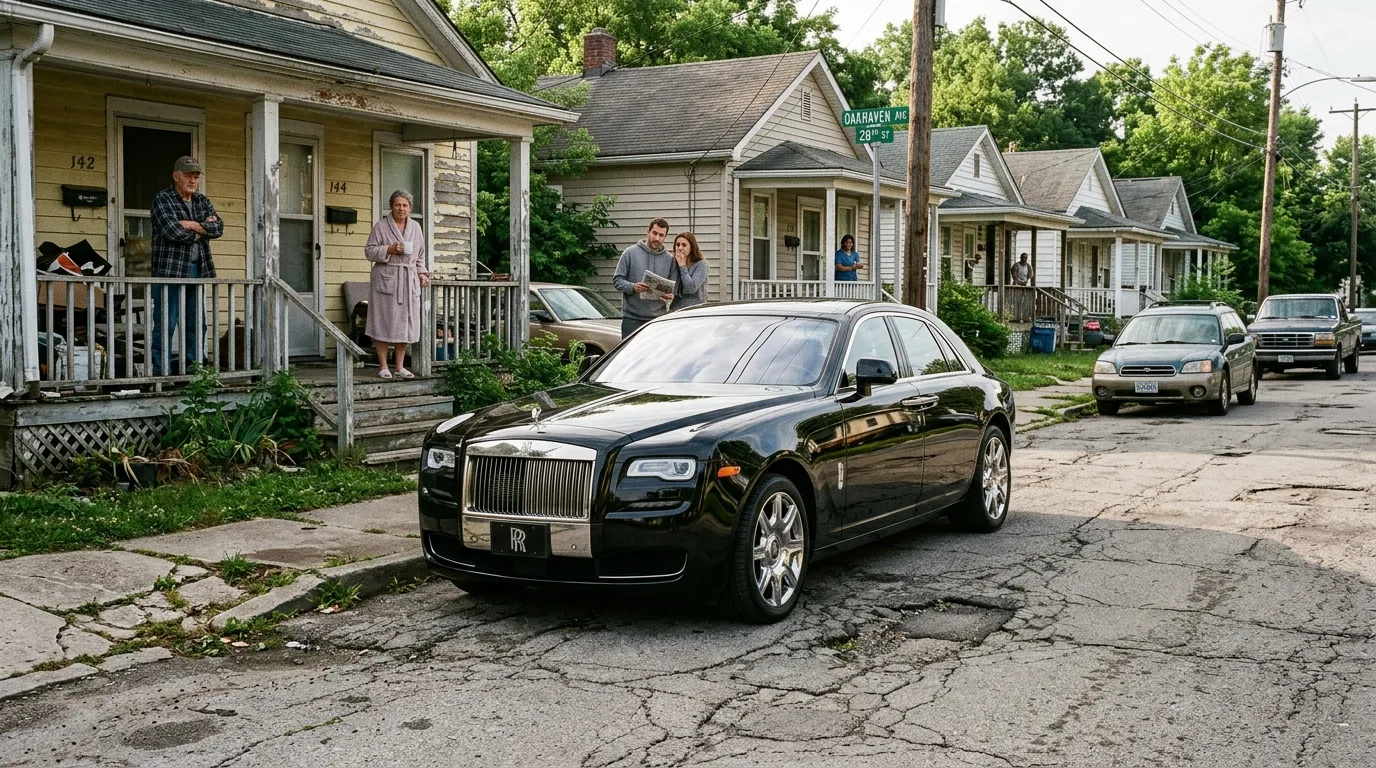 The arrival of the twins felt less like a celebration and more like a reckoning.
It was the kind of astronomically expensive car that had absolutely no business being driven on our cracked, modest little suburban street. It was polished to a dark mirror shine, brutally reflecting our tiny, modest houses back at us in dark, warped little funhouse images. The heavy engine cut off with a purr, and for one strange, thickly suspended moment, absolutely nobody on the block moved a muscle.
I stood frozen on my own porch holding a plastic tray of paper cups, watching the heavy doors slowly open.
Four adults stepped out onto the concrete.
The two women emerged first. They were tall, strikingly poised, sharing the exact same intense dark eyes, but they carried themselves in completely different manners. One moved briskly and purposefully, her shoulders squared like a CEO walking into a hostile boardroom. The other paused beside the gleaming car, staring intently at Miranda’s house as if she were bracing herself for a physical blow.
Olive and Olena, I thought to myself.
Then came the men. One was aggressively buttoning his expensive suit jacket before he’d even managed to shut his car door. The other nervously ran a hand through his thick hair and glanced anxiously up and down our quiet street, taking in the watching neighbors.
Harry and Hayden.
I stood there waiting for the joyous shouts. I waited for the colorful bouquets of flowers. For a giant boxed cake. For one of them to let out a booming laugh and come bounding up the wooden porch steps exactly the way the joyful children in Miranda’s endless stories always had.
Instead, the oldest of the men was tightly clutching a faded, highly official-looking legal envelope. Before I could even understand why, something deep inside my chest tightened in warning.
Miranda, unable to wait another second, pushed open the screen door before they’d even reached the walkway.
For half a beautiful second, pure, unadulterated joy transformed her aging face. She lifted both of her frail hands to her mouth, and from where I stood, I could actually hear her breathe out their names like a sacred prayer.
But then, the man holding the envelope stepped forward, stopping at the base of the stairs. And in an instant, every last drop of color drained completely out of Miranda’s face.
She did not look happy anymore.
She looked absolutely terrified.
The Envelope and the Truth
I took an instinctive step toward the stairs to help her, then froze in my tracks. The whole street had gone deathly silent around me. Even Desmond, who always had some loud, grumbling remark ready for any situation, stood completely still beside his metal folding chairs.
I watched in growing horror from my porch as one of the twins reached into the envelope and pulled out a crumpled, thirty-year-old contract. Before my brain could even begin to process what on earth was happening, the man looked Miranda dead in the eye.
He didn’t raise his voice. He didn’t need to shout. The silence was so heavy that every single person on Briar Lane heard him clearly anyway.
“You remember this, don’t you?”
Miranda’s pale lips parted, but absolutely no sound came out. Her right hand shot out to the wooden doorframe, gripping it so desperately hard that her knuckles instantly went stark white.
The man holding the heavy envelope had the exact same serious, intense eyes Miranda had always described in her stories about the toddler who lined up his cars. Harry, I realized. It had to be Harry—older now, his face sharper-featured, carrying an expression that looked uncomfortably close to profound pain.
Beside him, Hayden stared stubbornly down at the porch floorboards, looking like he couldn’t yet bring himself to physically look at the woman standing before them. Olive stood rigidly, her arms crossed tight like a shield over her chest. Olena had a shaking hand pressed firmly over her own mouth.
“Harry,” Miranda whispered, her voice barely a breath of wind.
At the familiar, loving sound of his name, his incredibly stern expression cracked open, just for a fleeting second.
I stepped off my porch and onto the grass without even deciding to do it. “Miranda? Do you need me?”
She turned her head just far enough to find my face, and what I saw burning in her eyes wasn’t confusion. It wasn’t even surprise.
It was sheer, unadulterated terror.
“Please,” she said, though I genuinely couldn’t tell if she was begging them, or begging me.
Harry unfolded the crumpled pages with agonizing slowness. The paper had gone a sickly yellow with age, its sharp corners worn soft and fuzzy from years of being handled. “We found this hidden in their safe deposit box,” he said, his voice thick.
Miranda flinched violently, as if he had physically struck her.
Olive’s voice trembled with barely contained emotion as she spoke up. “After our parents died last year, we had to go through absolutely everything. Decades of bank statements, life insurance papers, old property deeds. We honestly thought it was just more boring legal clutter to sort through.”
“Our parents,” Hayden repeated quietly, and his mouth twisted bitterly, like the words suddenly tasted toxic in his mouth.
Olena finally lowered her shaking hand. Tears were already sliding rapidly down her elegant face. “Then we opened this folder. And we saw your name in it.”
For a long, agonizing moment, nobody on that porch, or that sidewalk, or that whole street, dared to move. The entire block seemed to be holding its collective breath, trapped in the amber of the moment.
Miranda seemed to physically shrink inside her beautiful blue dress. The priceless pearl necklace at her throat caught the bright morning light, and for the very first time all day, it looked significantly less like a romantic gift and much more like a heavy noose.
“I never, ever wanted you to find out like this,” she said, her voice cracking.
“Like this?” Olive’s voice finally broke wide open, echoing with decades of betrayal. “We grew up calling you Miss Miranda.”
Miranda closed her eyes in defeat, and I understood, in that horrifying, crystal-clear instant, that the beautiful, tragic story we’d all believed for years had only ever been the safe, sanitized half of the truth.
Harry looked back down at the yellowed contract and began to read aloud—not aggressively loud, but clearly enough that every open window and every silent, listening neighbor on that street heard every single devastating word.
“‘This binding agreement strictly prohibits Miranda from disclosing any biological relation to the adopted minors. Any violation of this clause shall result in the immediate termination of her employment, the permanent forfeiture of all agreed visitation access through the daycare setting, and severe financial penalties as outlined below.’”
A collective sound of shock rippled through the neighbors gathered on the sidewalk, a soft, stunned gasp from a dozen throats all at once. My own hand flew to cover my chest.
Biological relation.
Miranda had told me, once, that she’d never had children of her own. But then she had looked at the maple tree and added, “Not in the way people mean.”
Now, finally, the pieces clicked into place. I understood exactly what she’d meant.
Olena stepped closer to the stairs. “We had to read it five times. We sat on the floor of the bank vault and we just kept thinking it couldn’t possibly be real. It was a nightmare.”
Hayden finally found the courage to lift his eyes and meet Miranda’s directly. They were red-rimmed, angry, and raw. “Were we yours? All of us?”
Miranda’s face crumpled entirely. The stoic facade of the neighborhood widow collapsed. She covered her mouth with both of her shaking hands, and for one breathless, heartbreaking moment, she didn’t look sixty-three. She looked exactly twenty-five again—young, violently widowed, and cornered by a cruel world that had shown her absolutely no mercy for having empty pockets and a broken heart.
“Yes,” she breathed, the word carrying thirty years of weight. “God forgive me. Yes.”
Olive let out a small, broken sound, almost a wounded sob, though she held her posture rigidly still.
Harry’s grip tightened around the edges of the contract. “Why? Why would you do this?”
That single, agonizing word seemed to split Miranda wide open. She stepped backward, visibly swaying on her feet, and I immediately hurried up the stairs to her side to steady her. She didn’t resist when I tightly gripped her elbow to keep her from falling.
“Because Pavel died,” she said, her voice as thin and fragile as tissue paper. “Because there was absolutely no money left. The bank took the savings. There was no family close enough to help me. I had no time to even grieve my husband properly. I had two sets of newborns—you were so tiny—and a landlord aggressively demanding rent every day, and some days I was so starved and tired I literally forgot my own name.”
Olena was crying openly now, the tears falling freely onto her designer blouse.
Miranda looked desperately from one adult face to the next, as though she were frantically trying to memorize every line of their features before they could turn around and vanish on her again.
“I tried,” she begged them. “You have to believe me, I tried so hard to keep you. I sold my wedding ring first. I sold all our furniture. I watered down soup until it was just warm water. I walked to every church, begged at every government office, asked every woman who had ever once smiled at me on the street for a loan. But I was so incredibly young. I was completely broke. And I was completely, utterly alone in the world.”
“Who adopted us?” Hayden asked, his voice cracking, though he clearly already suspected the grim answer.
“Your parents,” Miranda said softly, wiping her own tears. “The wealthy people who raised you. They had money. A massive house. They could give you top doctors, warm, safe beds, incredible schools—everything in the world that I couldn’t.”
Harry swallowed hard, his Adam’s apple bobbing. “And they forced you to sign this?”
“They offered me a way to stay near you.” Her voice broke violently on the word near. “Your adoptive mother knew the local daycare desperately needed workers. She said that if I signed this non-disclosure contract, all four of you would be exclusively enrolled there—Olive and Olena first, then Harry and Hayden once you were old enough. I could hold you when you cried. I could feed you your bottles. I could watch you take your very first steps. But I could never, ever tell you the truth. If I did, I would lose you forever.”
Olive’s arms finally fell limply to her sides. “They bought your silence.”
“No.” Miranda shook her head adamantly, the tears falling onto her pearl necklace. “They bought my terror. My silence came from loving you more than I loved myself.”
That sentence shattered something open inside me too. The absolute magnitude of her sacrifice was staggering.
Behind us on the sidewalk, Mrs. Albright had started sobbing into the tin foil covering her lemon bars. Suri pressed both hands firmly over her mouth to muffle her crying. Desmond turned his back, but not before I clearly caught the gruff old man aggressively wiping tears from his wrinkled eyes.
“I used to wonder,” Olena whispered, her voice carrying up the steps, “why I always felt safer with you than with anyone else in the world.”
Miranda’s frail shoulders shook with the force of her weeping. “I sang to you. All four of you. Every day at nap time. I sang the exact same lullaby your father used to sing to my belly, the night before he died. I thought if I could just give you that much, maybe some small part of him would stay with you as you grew.”
Hayden let out a wet, broken laugh. “I remember that song.”
Miranda’s eyes widened. “You do?”
He nodded, the tears sliding unashamedly down his face. “I never knew where it came from or why it was in my head. I just knew that whenever I hummed it, it made me feel like I belonged somewhere.”
Harry looked back down at the damning contract in his hands. For the first time since he arrived, real, dangerous anger flashed across his face—but I realized with a shock that it wasn’t aimed at Miranda at all.
“They threatened to completely ruin you,” he said, his voice hardening.
“Yes.”
“They threatened to take us away from you a second time.”
“To make absolutely sure I could lose you twice,” Miranda whispered, defeated.
She pressed a tight fist to her chest. “I was a coward. I should have fought them.”
“No,” Olive said suddenly, her voice sharp and authoritative enough to cut straight through the heavy emotion of the moment.
Miranda looked up at her daughter, startled.
Olive marched right up the wooden porch steps, her voice shaking violently but her dark eyes burning fierce. “No. You were not a coward. You were trapped.”
The End of the Secret
Harry moved forward to stand shoulder-to-shoulder beside his sister. Olena immediately followed. Hayden came up last, still crying quietly, still staring at Miranda like he was deeply afraid she might dissolve into mist if he blinked too long.
“We came here today because we needed to hear the truth from your own mouth,” Harry said, his voice steadying. “But we also came here to end this. Forever.”
He held up the torn, yellowed, hateful contract.
Miranda’s breath caught sharply in her throat. “Harry, please, don’t. I don’t know what that paper still means legally. I don’t know everything their expensive lawyers wrote into it. They could take you—”
“They’re gone,” he interrupted her gently, his eyes softening completely. “Their lawyers are gone. Their cruel threats died with them. We already spoke to the best attorney we could find. This piece of paper has absolutely no power over you anymore. And neither do they.”
Olena reached out with a trembling hand and took firm hold of one corner of the paper. Olive reached over and gripped another. Hayden’s large hand closed securely around the bottom edge.
Together, moving as one, the four of them pulled. They tore the contract right in half.
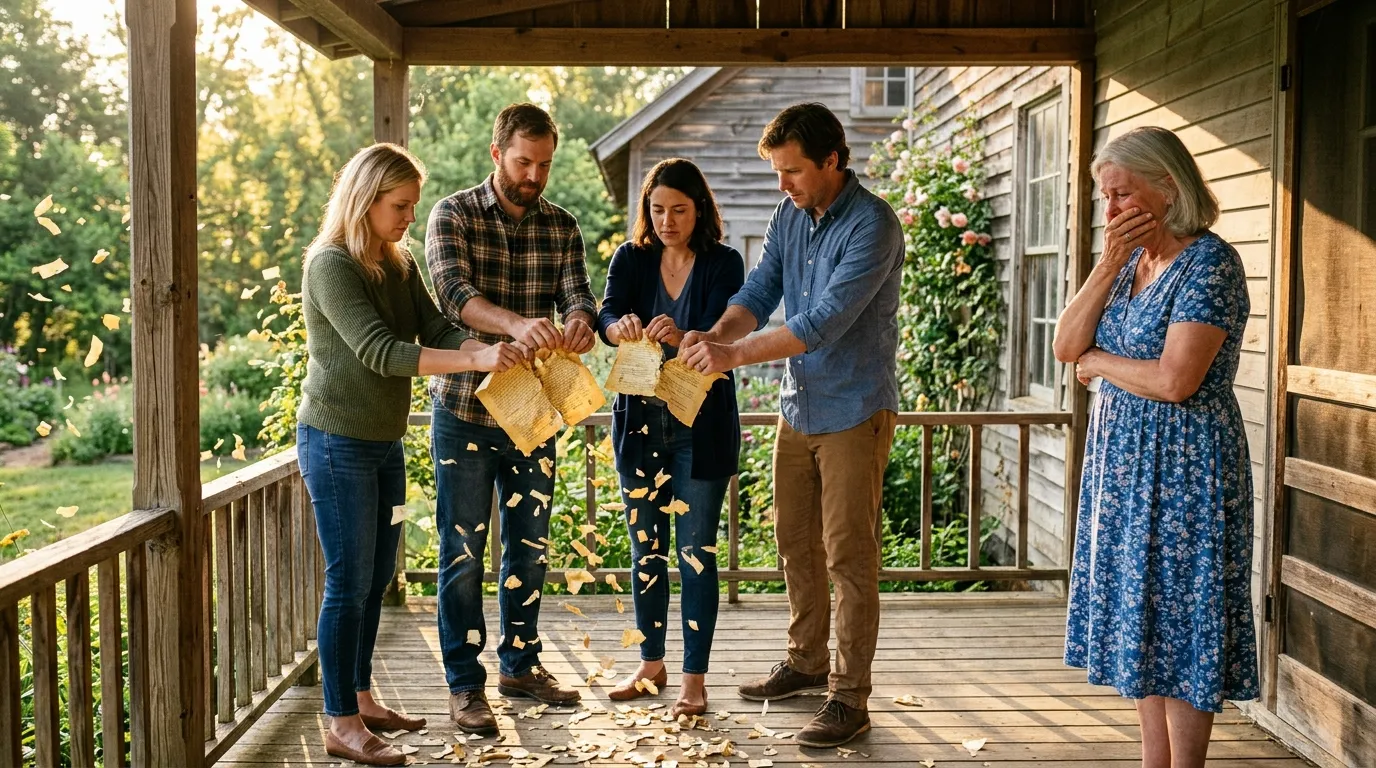 Thirty years of fear and enforced silence, destroyed in a matter of seconds.
It was such a remarkably small sound—just dry paper ripping in the quiet morning air—but it landed on our street like a thunderclap. They aligned the pieces and tore it again. And again. Yellowed, meaningless scraps of legal jargon drifted down onto Miranda’s swept porch like dead autumn leaves finally letting go of a dying tree.
Miranda stared down at the pieces scattering lazily around her sensible shoes, both hands pressed firmly over her mouth to hold back a scream.
Harry stepped right over the torn remains and stood directly in front of her. For the very first time since the black car had pulled up, his whole face transformed, revealing the little boy with the serious eyes who used to line up his toy cars.
“The secret is over, Mom,” he said.
The word Mom hit Miranda with such physical force she actually stumbled backward. I caught her shoulders—but only for a second, because before I could blink, all four of them surged forward and reached for her at once.
Olive wrapped her strong arms fiercely around Miranda’s frail shoulders. Olena collapsed weeping against her side, burying her face in the blue floral dress. Hayden bent his tall frame and buried his face into her silver hair like a lost little boy who had finally been found. Harry wrapped his long arms protectively around all three of the women, his eyes squeezed tightly shut against his tears.
Miranda made a sound from the depths of her soul that I will never, as long as I live, forget.
It wasn’t just crying. It was the visceral, agonizing release of thirty years of solitary grief finally leaving a physical body that had been forced to hold it all alone in the dark.
“My babies,” she sobbed, burying her face into them. “My beautiful, beautiful babies.”
“We’re here,” Olena cried into her shoulder. “We’re here now.”
“I loved you every single day,” Miranda chanted frantically into their hair, into their shoulders, into whatever part of them she could reach with her shaking hands. “Every single day. I never once stopped. I never stopped.”
“We know,” Harry murmured, kissing the top of her head. “We know now.”
And then, as if the whole town had finally been given permission to breathe again, absolutely everyone standing on Briar Lane began to cry right along with them.
Mrs. Albright abandoned her lemon bars on the bottom porch step and hugged Suri tightly. Desmond ripped off his baseball cap and stared hard up at the bright blue sky, blinking furiously to clear his eyes. Sonya, who had just rounded the corner with a fresh stack of mail still in her arms, stopped dead in the middle of the sidewalk and wept openly, the letters scattering forgotten at her feet.
I stood beside the open door with hot tears streaming down my own face, feeling simultaneously honored and entirely heartbroken to be witnessing a real family being born out in the open air, after thirty long years of being buried alive in silence.
What Was Left When the Crying Stopped
After a long while, the desperate holding shifted. Miranda pulled back just far enough to look intently at each of their flushed, tear-stained faces.
“I don’t deserve to be called that,” she whispered, her voice rough, referencing the word Mom.
Hayden wiped his wet cheeks aggressively with the heel of his large hand. “Too bad. We’ve waited long enough to say it.”
A watery, genuine laugh rippled through everyone still gathered on the porch and the adjacent sidewalk.
Olive reached out and firmly took Miranda’s shaking hand in hers. “We don’t get those years back. We know that.”
“No,” Miranda agreed softly, looking down. “You don’t.”
“But we get today,” Olena said, a bright, resilient smile breaking through her tears.
Harry nodded toward the open front door, looking into the house that had watched them from afar for so long. “And we get tomorrow too, if you’ll have us.”
Miranda looked at each of their hopeful faces slowly, one at a time, as though the answer to that question were far too sacred to rush through.
Then, she smiled—not the polite, guarded smile she gave her neighbors when sweeping the porch, and definitely not the brave, weary one she used to wear whenever old, painful memories caught her off guard in my kitchen. This smile rose up from somewhere far deeper, somewhere young, somewhere that was finally, irrevocably healed.
“I have had room for you,” she said with total certainty, “since the exact day you were born.”
They walked inside the house together after that, stepping right over the torn, scattered pieces of the contract without casting a single backward glance. The yellow birthday ribbons fluttered cheerfully in the morning breeze. The foil-covered lemon bars sat completely forgotten on the wooden steps. The sleek, out-of-place black luxury car sat abandoned at the quiet curb, already becoming just another minor detail in a much grander story.
And on Briar Lane, where everyone had once falsely assumed Miranda’s little house stayed quiet because her life had simply grown small and empty, we finally understood the profound truth.
Her love had never been small.
It had only ever been utterly silent—hidden away, violently threatened, and bruised by fear for thirty long, agonizing years.
But on that beautiful morning, with her grown children finally holding onto her and calling her Mom at last, that love became the loudest, most undeniable thing on that entire street.
So here’s the thought worth sitting with today: when the person you only ever knew as a peripheral part of your childhood turns out to be the fierce mother who loved you in agonizing silence the whole time, do you spend your energy punishing her for the years you lost together, or do you finally let yourself open your heart and hear the profound truth she was forced to bury?
Note:This work is inspired by real events and people, but it has been fictionalized for creative purposes. Names, characters, and details have been changed to protect privacy and enhance the narrative. Any resemblance to actual persons, living or dead, or actual events is purely coincidental and not intended by the author.
All images used in this article are AI-generated and intended for illustrative purposes only.