
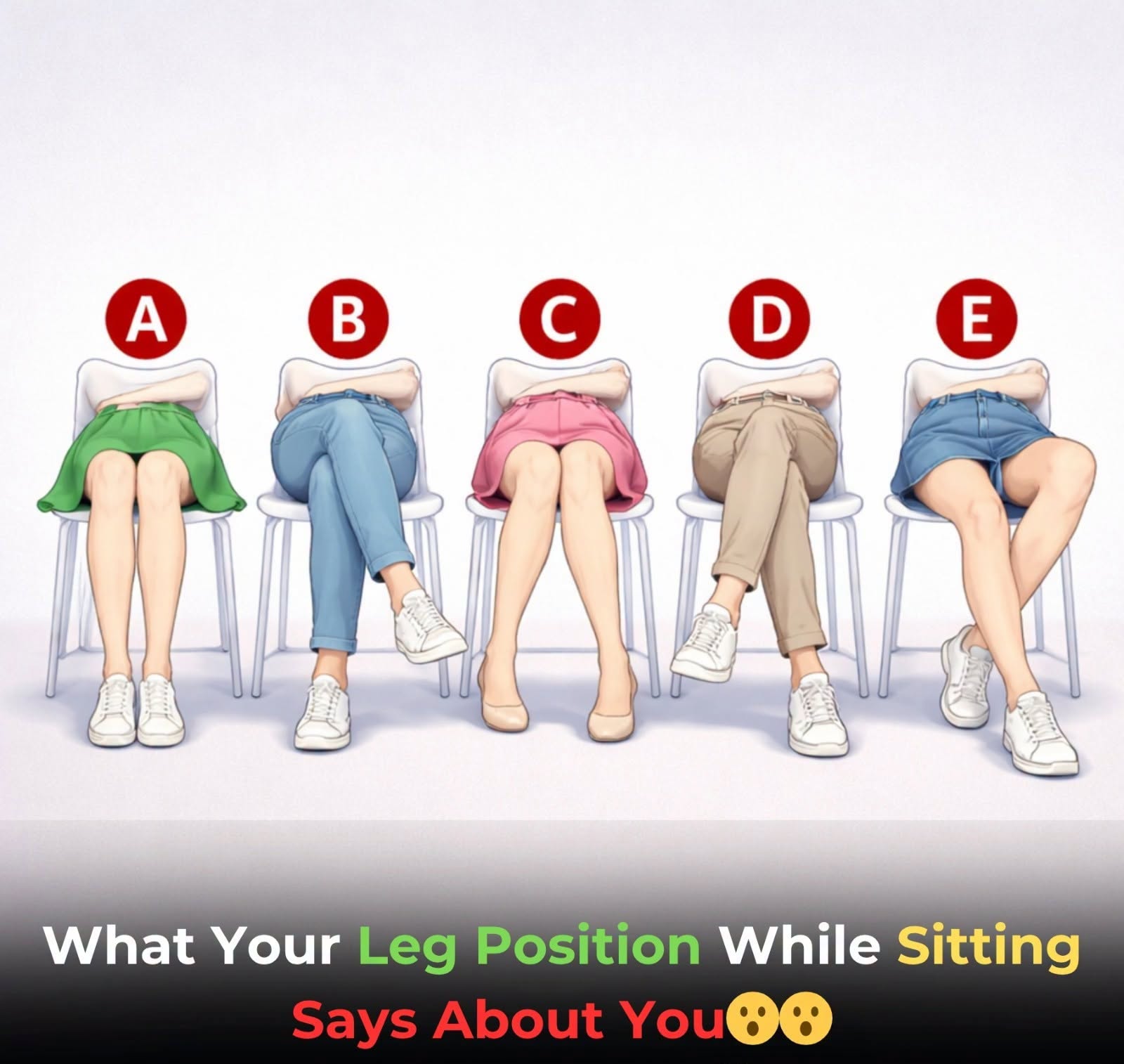
While no single posture defines your personality, how you sit can offer subtle clues about your mood, confidence, and even stress levels—especially in relaxed or social settings. Psychologists and body language experts note that habitual sitting positions often reflect underlying emotional states.
Here’s what common poses might suggest (remember: context matters!):
 1. Legs Crossed (Ankle Over Knee – “Figure Four”)
Possible signal: Confidence, assertiveness, or defensiveness.
Often seen in negotiations—it can be a subtle dominance pose.
But: If paired with crossed arms, it may indicate resistance or closed-off energy.
, 2. Sitting Upright, Feet Flat on Floor
Possible signal: Focus, readiness, or professionalism.
Common in interviews or meetings—shows engagement and respect.
May also indicate nervousness if overly rigid.
 3. Slouched, Hunched Shoulders
Possible signal: Fatigue, low energy, or emotional withdrawal.
Can also reflect deep thought or comfort in safe spaces.
Chronic slouching may correlate with low self-esteem—but not always!
 4. Leaning Forward, Hands on Knees or Table
Possible signal: Interest, enthusiasm, or eagerness to connect.
Shows active listening and openness in conversation.
 5. Curled Up (Legs Tucked Under or Side-Sitting)
Possible signal: Comfort-seeking, introversion, or self-protection.
Common in cozy settings—often a “safe zone” posture.
In stressful situations, may indicate anxiety or desire to disappear.
 6. Open Posture (Arms Relaxed, Legs Uncrossed)
Possible signal: Approachability, calm, and confidence.
Invites connection—seen as warm and trustworthy in social settings.
 A Gentle Reminder
Posture is influenced by physical comfort, habit, culture, and health—not just personality. Someone with back pain may slouch not from sadness, but from strain. A quiet sitter isn’t necessarily shy—they might just be observing.
“Your body speaks, but it doesn’t tell the whole story.”
So while it’s fun to interpret sitting styles, never judge someone solely by how they sit. Instead, use it as one small piece of a much richer human puzzle.
And if you’re curious about your own posture? Ask yourself:
“Do I feel open… or closed off?”
That’s where true insight begins. 