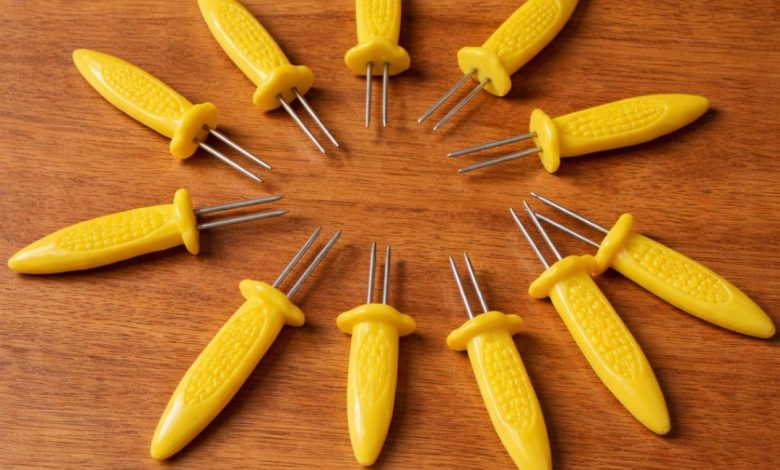
- Freshly cooked and very hot
- Coated in butter, salt, and seasoning
- Difficult to grip without making a mess
That’s why corn holders became a practical solution, especially in households where corn was served frequently.
A Look Back: The History Behind Corn Holders
As corn became a widely eaten staple, tools for serving it evolved. Earlier versions of these holders were often made from wood or bone, built to be sturdy, reusable, and simple to handle.
Over time, the design modernized:
- More durable materials replaced fragile or porous ones.
- Handles became more comfortable to grip.
- Safety improved with better prong design and easier handling.
In other words, the tool didn’t just survive—it got upgraded.
More Than a Tool: The Cultural Meaning
These holders may be small, but they’re closely associated with shared moments. They often appear at:
- Summer barbecues
- Picnics and outdoor gatherings
- Family dinners where corn is a seasonal highlight
Because of that, many people connect them with social bonding, tradition, and the warm familiarity of classic home cooking.
How Modern Corn Holders Have Changed
Today’s versions can include small improvements that make a difference, such as:
- Ergonomic grips for comfort
- Heat-resistant handles
- Decorative or themed designs that add personality to the table
Even with upgrades, the purpose stays the same: help people enjoy corn easily and cleanly.
Quick Guide: How to Use Corn on the Cob Holders
- Insert one holder into one end of the cob.
- Insert the second holder into the other end.
- Hold both handles and eat without touching the hot surface.
- Remove carefully when finished (the prongs are sharp).
Helpful tips:
- If the cob is very firm, twist gently while pushing the prongs in.
- Keep them away from small children when not in use because of sharp points.
Why a Simple Discovery Went Viral
Sometimes the internet lights up over something ordinary—because it’s not really about the object. It’s about the feeling attached to it.
A pair of yellow corn holders can instantly bring back memories of buttered corn, outdoor meals, and family traditions—the kind of everyday nostalgia people don’t realize they miss until they see it again.