
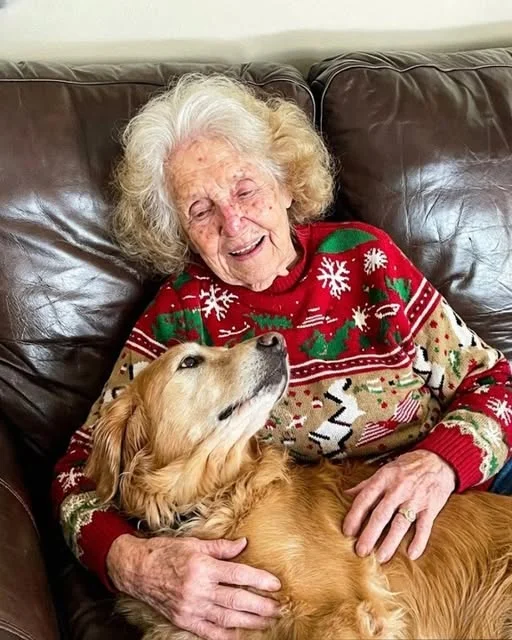
They came for the money, but I came for the dog. In the quiet aftermath of my grandmother’s funeral, that was the dividing line. My family, estranged and entitled, saw her passing as a transactional event. I saw the loss of a tough but guiding presence and the plight of her loyal, aging companion, Berta. I had been Grandma’s caretaker at the end, not out of duty to a future payout, but because she needed someone. She had always been blunt about her philosophy: build your own life. She funded our educations but never our comforts, a choice that fostered a deep resentment in my mother, uncle, and aunt.
The will reading was a spectacle of greed. The lawyer’s announcement that Grandma had disinherited them all was met with vitriol. They called her a witch, their masks of decorum completely gone. When Berta was mentioned as a nuisance to be disposed of, I couldn’t stay silent. Despite the practical problems it would cause, I said I would take her. My family’s scornful laughter followed me out the door. To them, I was a fool taking on a burden. To me, Berta was a last piece of Grandma.
Back in my small apartment, with my budget stretched thin by pet fees, the harassment began. My family was obsessed with the idea that I had conspired with Grandma. My mother’s visit was particularly cruel, a torrent of accusations that left me in tears. In the midst of that despair, as Berta licked my hand, I noticed the edge of an engraving on her collar. It was an address. Exploring further, I found a hidden key inside her name tag. It felt like a message meant only for me.
The locker at the train station held the answer. Grandma’s letter was direct. She had designed her will as a final lesson. Her wealth would go to whoever showed unconditional kindness to her defenseless dog. The attached legal papers made it official. I was shaking, not with joy, but with the weight of her profound trust. She had seen the character of everyone in our family and had chosen accordingly.
My private moment was invaded by my furious mother and uncle. But their attempt to seize the documents was thwarted by Mr. Johnson, who appeared as if summoned by Grandma’s own foresight. He explained that the condition was irrevocable. I had passed the test the moment I chose Berta’s well-being over my own convenience. Driving away, the lawyer shared that Grandma wanted her money to amplify goodness, not greed. I knew then that this inheritance wasn’t for me to hoard, but to steward. In caring for a faithful dog, I had unknowingly proven myself worthy of a grandmother’s deepest faith, and that was worth more than any sum of money.