
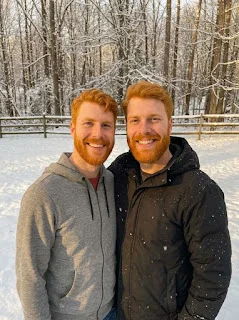
For my entire life, my identity included one immutable fact: I was an only child. It shaped my personality, my relationship with my parents, and my place in the world. A DNA test was supposed to be a footnote to that story, not the plot twist that rewrote it. When I saw the term “close family match—likely sibling,” my brain refused to process it. I checked the username, the kit number, everything. This had to be an error. I grew up in a house of three. Our family albums had no mysterious empty spaces, our holidays had no unused place settings. The evidence of my life contradicted the science on my screen.
The foundation of my life was my parents’ unwavering love. They provided a childhood of enviable stability and focus. My father, in particular, was my hero. His quiet strength was the wall against any trouble. So when I showed him the impossible result, his deflation was terrifying. He didn’t offer explanations, only a profound sorrow and a plea. “Please,” he said softly. “That chapter is closed. It’s for the best.” His words didn’t close the chapter for me; they ignited a burning need to read it. The man who had always given me every answer was now withholding the most important one.
Against a tide of guilt, I made contact. The man on the other end was gracious and open. Our first meeting was in a public library, a neutral ground. Seeing him was like looking into a familiar mirror. As he talked, he painted a picture of our first few years together—a small apartment, a shared bedroom, a parent I had no recollection of. He spoke with the assurance of someone who has carried these memories like treasures. I sat across from him, a complete amnesiac to my own early life, feeling like an imposter in my own biography.
I couldn’t let it rest. With careful digging, I found the legal footprints of my early childhood: adoption paperwork finalized by my father. The story was one of tragedy and rescue. My brother and I were separated after a crisis; my father was able to adopt and raise me, while my brother entered a different life. The narrative wasn’t one of a secret kept for shame, but of a painful history sheltered for peace. This knowledge was a heavy gift. It explained my father’s fierce protectiveness and his pained silence.
Now, I navigate a dual reality. I hold immense gratitude for the life my father gave me—the safe, loved life of an only child. And I also hold a burgeoning, precious relationship with the brother who was lost and found. We are bridging a thirty-year gap with weekend visits and long phone calls. The DNA test didn’t destroy my family; it expanded it. It taught me that family stories are not always simple, and that love can both conceal and reveal the truth. I am no longer just an only child. I am a son and a brother, and my heart has grown to hold both truths.